| Trouble viewing this email? Read it online. |

| March 20, 2026 | Submit a College Note |
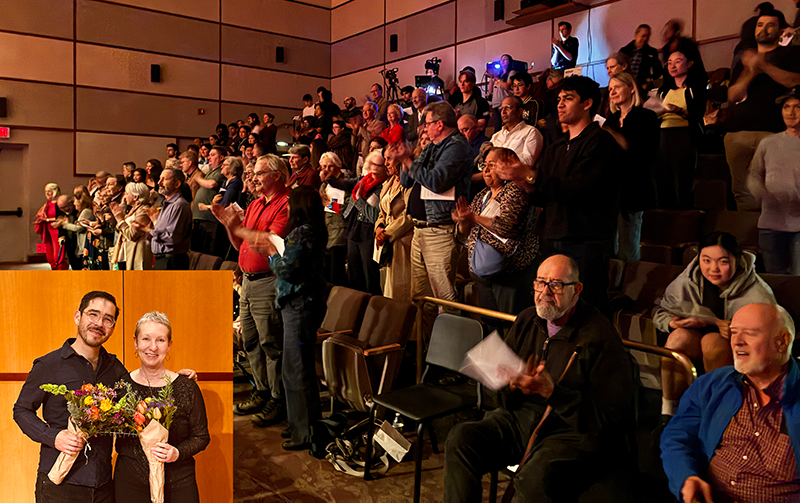
Last Friday's performance of Tres minutos received a standing ovation from the audience. Watch the video recording of this moving Frank Sinatra Chair in the Performing Arts event. Inset: Composer Nicolás Lell Benavides '10 with Sinatra Chair Teresa McCollough.
We have made it to the end of another quarter. As you finish up finals and grading, I hope you are able to take a breather, however short, before we jump head first into Spring Quarter and all that brings with it. Last Friday, Tres minutos, part of Teresa McCollough’s Sinatra Chair in the Performing Arts concerts for this year, hit it out of the park. This chamber opera, composed and conducted by alumnus Nicolás Lell Benavides ’10, tugged on your heart strings and showcased the amazing talent of not only our alumni, but also our students! Juniors Jessica Jacoby ’27 and Nathan Tu ’27 delivered stunning performances that moved the audience. Next quarter, Nicolás will be back as part of this series, this time premiering a new work for the bowed piano. I encourage our faculty and instructional staff to consider applying for the Sustainability & Justice curriculum workshops that are taking place during Summer 2026. These online summer workshops focus on strategies for incorporating sustainability, environmental justice, and integral ecology into the curriculum. SCU participants who complete a workshop and submit their revised curricula by September 15 are eligible for a stipend. Apply online by April 7 for priority consideration. Applications close on May 4. This week's poem, by the young poet, Safia Elhillo, is, of course, about spring, but also a way to reflect on our movement through time, being young in college, and then no longer so young as we embark on our careers and the years roll by… As one of my uncles used to say, the years now come in bundles of ten! See you all next quarter, Daniel spring By Safia Elhillo
Highlights
Maria Judnick (English) recently co-presented a workshop with filmmaker Charles Loi (NorCal Public Media) and Cheney Munson (The Climascope Project) entitled "Climate California: Classroom-Ready Climate Media, Lessons, and Action Pathways (K-12)" at the 2026 Bay Area Climate Literacy Exchange held at the Chabot Space and Science Center. The featured session asked the question, "How can teachers infuse climate literacy into existing curriculum in ways that feel manageable, meaningful, and even joyful—without starting from scratch?" The 60-minute workshop featured how Climate California—NorCal Public Media’s documentary series—can help educators enhance adopted curriculum and existing teaching practices through place-based, relevant, and solutions-centered learning. Maria offered her experience featuring Climate California in her ENVS 95 classes and CTW1. She also shared a faculty perspective on practical strategies for using visual media and curated digital resources to support discussion, inquiry, and student action. The session also introduced The Climascope Project and the Climate Literacy Geovisualizer, with an invitation for educators to contribute local stories and resources.
Giselle Laiduc (Psychology) presented a talk titled "Paradoxes and Possibilities: Centering feminist wisdom in strengths-based psychological research" at the 2026 Society for Personality and Social Psychology Conference in Chicago. The theoretical talk, based on work with collaborator Rebecca Covarrubias, was part of a symposium focused on countering deficit-based narratives in universities and workplaces. The presentation addressed the core motivations for meaning-making—such as the need to understand, the need for self-integrity, and the need to belong—often studied in social psychological intervention research. In the talk, Laiduc argued that drawing on interdisciplinary frameworks allows social psychologists to more effectively capture and attend to the paradoxes and conflicting tensions that students from historically marginalized backgrounds experience during the transition to and through college. This approach enables researchers to better recognize how students both navigate and resist marginalization, offering new pathways for humanizing, strengths-based research that honors the fullness of students' lived experience.
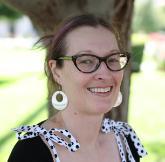
Christine Wieseler (Philosophy) gave an invited presentation entitled "Undoing Suicidism without (Assisted) Suicide?" for a Symposium on “Disability Rights and Euthanasia/Assisted-Suicide” at the Albert Gnaegi Center for Bioethics at Saint Louis University on March 5.
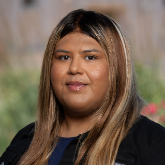
Ruby Mendoza (English) and her collaborators published their special issue of the Journal of Multimodal Rhetorics, "Composing at the Intersections: Queer, Trans*, Feminist Multimodal Rhetorics." The issue makes a thoughtful contribution showing the material consequences of multimodality, especially needed in this moment, where the queer and transgender community is under attack. As the editors write: "We recognize the risk that comes even with the visibility of this work; still, we forward that in times of uncertainty it is our boldness, our shared knowledge, our individual experiences, and our rhetorical prowess that shapes, informs, and solidifies our collective futures." This issue is the first queer and transgender issue in the journal's history!
Italian Studies students Olivia Eichman ’29 (Undeclared Business), Sydney Rodriguez ’26 (Accounting), Mica Garofalo ’29 (Political Science), and Joe Aoukar ’28 (Economics) were honored at the Italian Consulate in San Francisco on March 5, for their participation in the contest “Italian Beyond Borders: Adopt a Word” organized to celebrate the XXV Week of the Italian Language in the World. Focusing on the word “art,” they created a video that combines language, music, and visual storytelling. The project grew out of a creative workshop with Italian-Egyptian rapper and writer Amir Issaa in the Italian 21A course, “Italian through Arts,” during which students experimented with rhythm and musical beats before composing the lyrics and filming their video during a single class session. As Joe Aoukar reflected during the award ceremony, “This project allowed us to see language learning not only as studying vocabulary or grammar, but as a way to express identity and creativity. Through Italian, we explored art, music, ideas and social issues that connect people across cultures. It showed us how languages can open and shape global perspectives while helping us better understand who we are and how we communicate and interact with others.”
On February 17, students in ITAL198A: Italian Internship met with Barbara De Salvo, Director of Research at Meta Reality Labs Research. She reflected on her trajectory across Italy, France, and the United States, offering an inspiring view of what it means to build a career that crosses borders professionally, linguistically, and culturally. At the heart of her message was a dual emphasis: the importance of strong technical competence—especially for women in male-dominated fields like engineering—paired with the “soft” skills that allow expertise to travel: linguistic agility, intercultural awareness, flexibility, and the ability to collaborate across differences. Students were left with much to reflect on. One first-year business student wrote: “Her comments about the importance of being flexible and open to change made me feel like I'm doing the right thing to explore lots of different areas, and made me feel better about not having chosen one specific path yet.” Another noted: “Her journey did not seem super planned but more like it kept evolving and taking her where the opportunities were — seeing her path made me realize that professional growth can be more flexible and international than I originally thought.” A bilingual finance student added: “Language reflects culture and professional identity in subtle but important ways.” Most powerfully, students heard in her story an invitation to step outside their comfort zone as the very condition for growth.
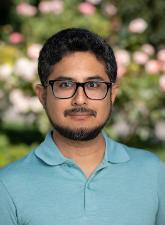
On March 8, Victor Quiroz (Modern Languages and Literatures) gave a conference presentation at the Northeast Modern Language Association (NEMLA) Convention in Pittsburgh. The title of his presentation was “If I Fall Here, They Count Me to Ten: Polyrhythm, Polymeter, and a Critique of Capitalist Exploitation in Nicomedes Santa Cruz’s ‘Muerte en el ring’ (‘Death in the Ring’),” which was part of the seminar “Latin America and Africa: Connections and Reconnections.” In this presentation, Victor explored the poem “Muerte en el ring” (“Death in the Ring”) by Afro-Peruvian poet Nicomedes Santa Cruz, showing how the poem’s formal dimension (rhythm, syllable count, fragmentation of the verses, etc.) embodies the critical vision of the text. In his analysis, Victor demonstrated how Santa Cruz’s poem employs formal resources of an Afrodiasporic aesthetic (polyrhythm, drum aesthetics, polymetry) to articulate an Afro-Marxist critique that aims to interrupt the “rhythm” of economic exploitation, symbolized by the reference to the tragic death of Cuban boxer Benny “Kid” Paret in 1962.
This symposium brought together cutting-edge studies revealing how cultural contexts influence what people pursue, value, and believe about emotions—from daily emotion regulation to linguistic patterns and social norms. Together, these findings deepen our appreciation for the rich diversity in emotional norms worldwide and the importance of culturally sensitive perspectives in psychology.
Jack Tillman ’26 (Psychology) is the recipient of the 2026 Western Psychology Association (WPA) Travel Scholarship Award for his research titled “Facing Feelings, Facing Racism: New Interventions to Reduce the Motivation for Emotional Avoidance” that he is conducting under the mentorship of Birgit Koopmann-Holm (Psychology). This prestigious award recognizes research of extremely high quality. Out of over 1,397 submissions, only 36 student awards were given—placing his abstract in the top 2.58%. Being the first author, his work received the highest ratings from three blinded reviewers. Together with Desmond Lai ’27 (Neuroscience, Psychology) and Cece Fox-Middleton ’26 (Psychology), Jack will present this work at the WPA Convention in Tacoma, WA, from April 30 to May 3.
Faculty Development
Accessibility Compliance
Accessibility Resources
Get connected!      |
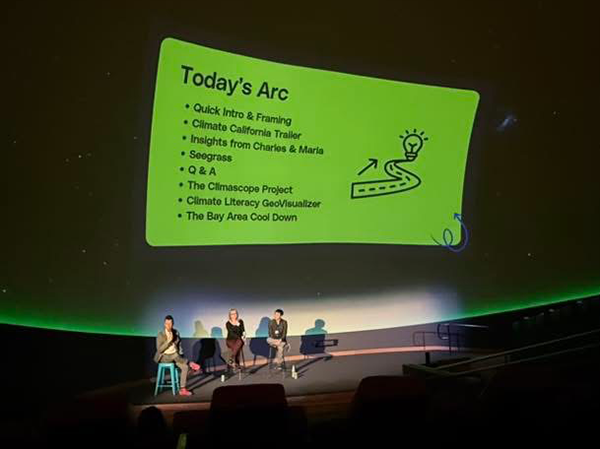 (L-R): Cheney Munson, Maria Judnick, and Charles Loi presented at the Chabot Planetarium.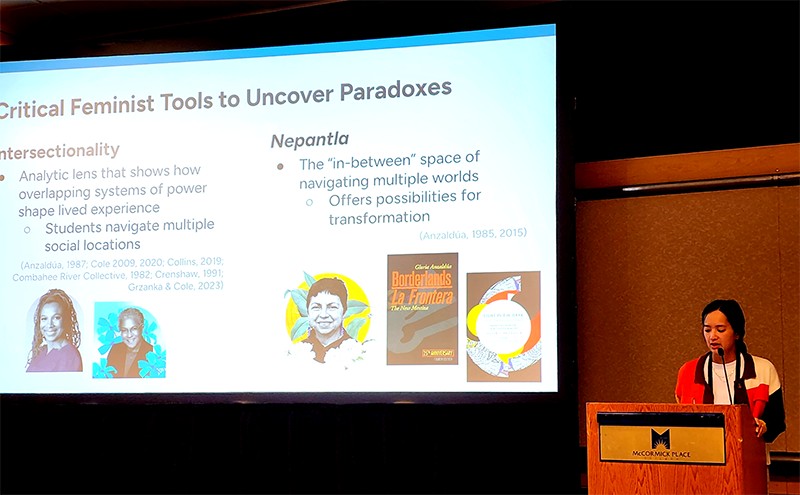
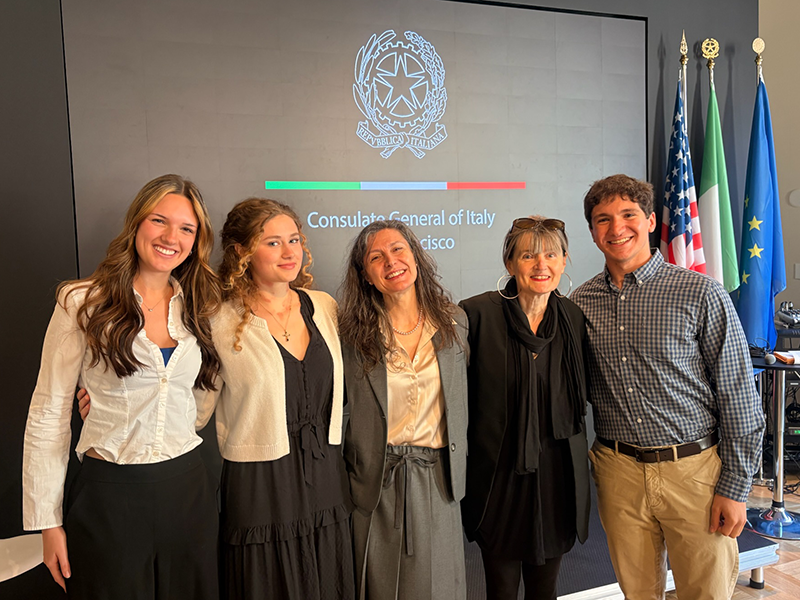 (L-R) Sydney Rodriguez, Olivia Eichman, Daniela Mazza (Italian Consulate in San Francisco), Marie Bertola (Modern Languages and Literatures), and Joe Aoukar.
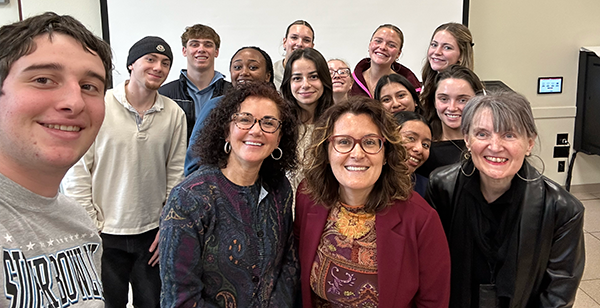 Barbara De Salvo (Director of Research at Meta Reality Labs Research), Evelyn Ferraro (Modern Languages and Literatures), Marie Bertola (Modern Languages and Literatures), and students from the "Italian Internship" course, "Italian in Social Contexts", and "Italy: Gateway to Cultures" C&I course.
| College of Arts and Sciences |
Submit a College NoteQuestions? Contact Sandy Boyer |