| Trouble viewing this email? Read it online. |

| November 7, 2025 | Submit a College Note |
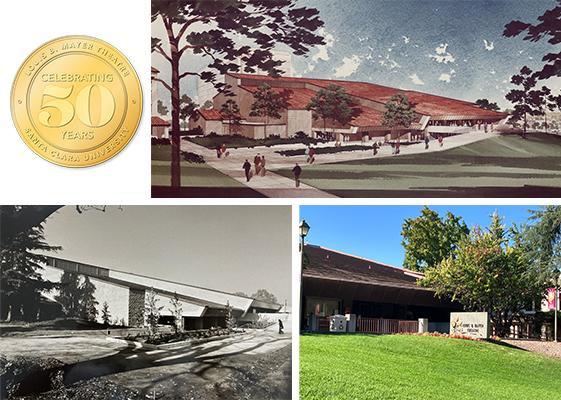
Week 8 is upon us. At this point in fall quarter, most midterms are over and our students are getting a tiny breather, but that also means lots of grading for our faculty! Hopefully you are finding ways to stay energized as we move through the final few weeks of the quarter. This weekend we celebrate the 50th anniversary of the Louis B. Mayer Theatre, which opened on Nov. 8, 1975! The theatre is named after Louis B. Mayer, acclaimed film producer and co-founder of Metro-Goldwyn-Mayer studios—yes! MGM—whose foundation partially funded the building’s construction. Actress (and SCU honorary degree holder) Helen Hayes attended the building’s dedication. Just six days later, on Nov. 14, Mayer Theatre held its first production, a staging of A Man for All Seasons by Robert Bolt. If you’re interested in learning more about the history of the theatre, I encourage you to read this brief, but informative story from Santa Clara Magazine. We had an election this week, which got me thinking about the rule of law and the separation of powers. And since we are celebrating the 50th anniversary of the Mayer Theatre—and its first production—that reminded me that, around that time, the Chief Justice of the U.S. Supreme Court, Warren Burger, quoted from A Man for All Seasons in his majority opinion in Tennessee Valley Authority v. Hill 473 US 153 (1978). The dispute in that case arose over enforcement of the relatively new Endangered Species Act. Justice Burger was clearly not a big fan of that piece of legislation, but did not feel that the Court should judicially decree “...what accords with ‘common sense and the public weal.’” To really drive home his point, Justice Burger included the following excerpt at the end of his opinion (it’s Sir Thomas More replying to William Roper): "The law, Roper, the law. I know what's legal, not what's right. And I'll stick to what's legal....I'm not God. The currents and eddies of right and wrong, which you find such plain-sailing, I can't navigate, I'm no voyager. But in the thickets of the law, oh there I'm a forester....What would you do? Cut a great road through the law to get after the Devil?... And when the last law was down, and the Devil turned round on you—where would you hide, Roper, the laws all being flat?...This country's planted thick with laws from coast to coast—Man's laws, not God's—and if you cut them down...d'you really think you could stand upright in the winds that would blow them?...Yes, I'd give the Devil benefit of law, for my own safety's sake." R. Bolt, A Man for All Seasons, Act I, p. 147 (Three Plays, Heinemann ed.1967) Keeping with the laws and elections theme, I leave you with an election day poem by Jane Hirshfield, who served as the Chancellor of the Academy of American Poets from 2012 to 2017. Onward! Daniel Let Them Not Say By Jane Hirshfield
Let them not say: we did not hear it. Let them not say: they did not taste it. Let them not say: it was not spoken, not written. Let them not say: they did nothing. Let them say, as they must say something: A kerosene beauty. Let them say we warmed ourselves by it, —2014 Highlights

Vanessa L. Errisuriz (Public Health) and coauthors from the University of Texas at Austin, CU Anschutz, UT San Antonio, Florida State University, UT Health San Antonio, and the YMCA of Austin recently published two manuscripts reporting findings from the ¡Salud, Salud! study. The study aimed to promote Type 2 diabetes management among predominantly low-income Latinos in Austin, Texas. The first article, “A Community-Academic Partnership Using Digital Solutions for Diabetes Self-Management,” published in the Journal of Healthcare for the Poor and Underserved, offers practical insights for organizations designing digital health interventions to support healthy lifestyles among underserved populations. The second, “Assessing a Community Health Worker-Facilitated, Digitally Delivered, Family-Centered Diabetes Management Program: Single-Arm Quasi-Experimental Study,” published in JMIR Formative Research, presents the intervention outcomes. ¡Salud, Salud! showed promising improvements in glucose levels, body weight, body fat, stress, added sugar intake, sedentary time, quality of life, and mindfulness. Together, these publications demonstrate that culturally tailored, digital interventions can effectively support diabetes management among low-income Latino adults while emphasizing the need to enhance engagement and the uptake of evidence-based practices.
Tim Urdan (Psychology) presented the keynote address at the Educational Psychology Conference at the University of Arizona. The talk was titled "Student Belonging in College: Definitions, Benefits, and Potential Costs." He argued that belonging is a complex, multidimensional construct that colleges often do not define or measure well and that increasing students' sense of belonging requires adaptation on the part of students, faculty, and the institution. Sometimes, these adaptations are resisted, decreasing belonging.
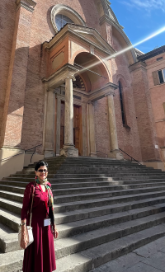
The “augmented reality” of science fiction narratives often acts as a lens on the present to make more visible what the technology of power has made invisible. The uncertainty of speculation has given way to expectation, to what Paul Virilio calls “a culture of the imminence of the disaster.” This anticipation invites us to envisage alternatives. Aparajita Nanda (English), in her presentation "From Symbiosis to Symbiogenesis: Trans-Species Alliances in the works of Octavia Butler," argues that dystopian narratives also become a form of “creative destructiveness,” a means to identify possible social transformations and imagine new forms of trans-species alliances in the common vulnerability and precariousness. With a multidisciplinary approach to lay the groundwork, Apara's presentation draws on N. Katherine Hayles and her dismantling of the liberal humanist subject in the arena of cybernetics and the emergence of the posthuman. The Butlerian posthuman, which is crucially about interspecies breeding and the evolutionary potential of such a liaison, makes use of critical theories propounded by Donna Haraway, Deleuze and Guattari, Lynn Margulis, Sherryl Vint and Marquis Bey to track and decipher trans-species alliances. Image: Apara Nanda at the University of Bologna, Italy.
Chan Thai (Communication) recently co-authored a paper along with lead author Alec Qualitza ’23 (Psychology, Public Health Science, LEAD Scholars Program) and Jasmin Llamas (Counseling Psychology) titled, "Supporting Adolescents: Perceived Parental Support Associated with Decreased Adolescent Loneliness and Emotion Suppression in a National Sample," in the journal, Children. For this study, they conducted a secondary data analysis using data obtained from the U.S. National Cancer Institute’s FLASHE survey. They found that adolescents who perceived having highly responsive parents suppressed their emotions significantly less and were significantly less lonely than teens who perceived their parents were less responsive. Their findings suggest that implementing strategies to help parents cultivate responsive behaviors towards their children may be beneficial to improving emotional well-being during adolescence and beyond. The REAL Program provided support for this project.
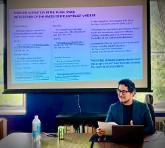
On Oct. 24, Victor Quiroz (Modern Languages and Literatures) gave an invited talk at the University of California, Berkeley. The event was organized by “EL GRUPO,” a working group on Latin American, Latinx, and Iberian Literatures and Cultures formed by undergraduates, graduate students, and faculty from the Department of Comparative Literature. The talk examined the relationships between Amerindian rhetoric (particularly Quechua), the colonial archive, Hispanic poetry, the poetry of Charles Baudelaire, and avant-garde aesthetics in the work of Peruvian writer César Vallejo. The talk focused on the poems Vallejo wrote during his European exile in the 1920s and 1930s, including those dedicated to the Spanish Civil War. Image: Victor Quiroz delivering a lecture at the Department of Comparative Literature, UC Berkeley.
Alice P. Villatoro (Public Health) recently published an article titled “Latiné Emerging Adults’ Insights on Expanding Mental Health Supports That Go Beyond Access to Care” in the Hispanic Journal of Behavioral Sciences. This community-based, qualitative study examines the perspectives of first- and second-generation Latiné emerging adults (ages 18–26) in Central Texas on the types of mental health supports they believe are most impactful for mental well-being. Their narratives emphasized the need to shift from narrow definitions of mental health care to more holistic supports that address root causes of distress. To improve community mental well-being, they recommended promoting economic stability (e.g., financial security workshops), enhancing education access (e.g., improving access to higher education), and building supportive communities (e.g., increasing civic engagement). Moreover, participants emphasized that tackling structural barriers like anti-immigrant rhetoric and reforming exclusionary policies are essential to mental health equity. The research was a collaborative effort with local community partners, students and faculty at Santa Clara University, including Alana Elop ’21 (Biology, Public Health Science), and UT Austin. The study contributes rich, underrepresented insights into how Latiné youth conceptualize care and healing. Importantly, the findings have implications for tailoring community-driven mental health strategies that go beyond traditional mental health service delivery models.

On Saturday, Oct. 25, Ana María Pineda (Religious Studies) gave a presentation on Day of the Dead as part of a special workshop offered at Santa Teresa Catholic Parish in San Jose. The parish event invited participants to learn more about traditions and rituals that honor loved ones who have passed and the rich tradition of Día de los Muertos, including its symbolic altar of the dead, and how this spiritual practice helps keep the memory of loved ones alive. Participants in attendance from across the Diocese of San José reflected on their own practices of honoring the dead while exploring the values of this Mexican/Latino spiritual tradition. The event was hosted by the Hope & Healing Connection Circle, a pastoral ministry that meets at Santa Teresa Catholic Church as part of their Mental Health Ministries. Image: Santa Teresa Catholic Church, Altar of the Dead.

Eugene Schlesinger (Religious Studies) participated in the conference Leuven Encounters in Systematic Theology XV: "Catholicity, Theology, and the University" at the Katholieke Universiteit te Leuven (Belgium) on Oct. 22–25. The conference drew 250 participants from 150 countries. His paper, "The Agonies of Catholicism," drew upon his current research on the political activities of the theologians of the 20th-century ressourcement movement, and articulated an account of the church's catholicity as expressed in agonistic contestation across serious disagreement. Image: Leuven, Belgium.
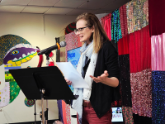
Maggie Levantovskaya (English) participated in Lit Crawl, a series of live readings connected with San Francisco's Litquake Literary Festival. She read a new essay, titled "How to Pick Over Buckwheat," in the session called "Owning Fear, Reaching for Freedom," which featured authors and translators from various parts of the former Soviet Union, including Ukraine and Kazakhstan.
Entomology Today (ET), published by the Entomological Society of America, is sent every day to 11,000 subscribers with news about insects. The hope is to share discoveries of “the little things that run the world.” Science writer Grant Bolton, Ph.D. chose as his focal piece for the Sept. 8 issue of Entomology Today the recent research article (Environmental Entomology, July 2025) on the interaction between webspinner silk and water co-authored by Janice Edgerly-Rooks (Biology), Rich Barber (Physics), and three SCU undergraduates—Emily Arias ’24 (Biology), Aidan Kaneski ’25 (Biology), Andrew Schatz ’26 (Environmental Science). Bolton’s summary of the research entitled “Why Webspinners Earn the Prize for Nature’s Best Raincoat” appeared in email inboxes of all 11,000 subscribers. Because ET articles highlight how insect science intersects with society, Bolton pulled interesting thoughts from the original research article by Janice and Rich. For example, he wrote that the transformation of webspinner silks from fiber to film could inspire new ways to create biodegradable coatings, nano-fiber textiles, or moisture-responsive materials in industry. He also suggested that webspinner silk could help researchers design the next generation of bioengineered fabrics or smart surfaces.
In back-to-back weekends this fall, Kimberly Mohne Hill (Theatre and Dance) traveled first to New Orleans to present a workshop at the Voice and Speech Trainers Association conference at Tulane University and then to Chicago to deliver a workshop for exonerated and justice-affected individuals. In New Orleans, along with co-presenters (and Patsy Rodenburg Associates) Paul Marchegiani (Stanford University) and Willie Repoley (Immediate Theatre, North Carolina), Professor Hill led attendees in physical and vocal exercises using Rodenburg’s concept of the Circles of Energy™ that reveal the powerful effect of being fully present with your audience and the ways in which this presence can be challenged by habitual physical and vocal tensions. Through the Pruno Fund, Professor Hill then traveled with Aldo Billingslea (Theatre and Dance) to Loyola University Chicago to lead a workshop for exonerees and justice-affected individuals with four research assistants—Audrey Thomson ’26 (Theatre Arts), Kenzie Hill ’27 (Environmental Studies), Gael Sotelo ’25 (Political Science, Theatre Arts) and Kennedy Dawson ’25 (Theatre Arts)—and facilitation observer Kat Koppett. The weekend-long workshop involved training participants through narrative and theatre-based voice and content exercises for the delivery of their stories. Participants came away with stronger and clearer voices, organized and effective story structures, and powerful and impactful presentation skills. The five exonerated participants in this photo endured over 100 years of wrongful incarceration.
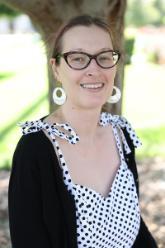
Christine Wieseler (Philosophy) presented her research on medical gaslighting at the Association for Feminist Ethics and Social Theory (FEAST) Conference in Clearwater Beach, Florida on Oct. 17. She was a lead organizer for the conference. Here is the abstract for "Phenomenological Bioethics, Medical Gaslighting, and Trustworthiness." Christine explains Elizabeth Barnes’ position on medical gaslighting, provides her own definition, and draws on insights from feminist accounts of epistemic oppression to clarify the relationship between structural oppression and medical gaslighting. She then turns to the first-person accounts of women who experienced medical gaslighting in the course of undergoing in vitro fertilization (IVF) at Yale Reproductive Endocrinology and Infertility Clinic (REI Clinic). Taking a critical phenomenological approach is useful for clarifying the relationship between structural factors and interpersonal encounters involving medical gaslighting. Christine shows that the concept of medical gaslighting is central for understanding the extent of the harm particular types of medical encounters caused these and other patients. This term also serves as an important conceptual resource for connecting with others who can support healing.

Sonja Mackenzie (Public Health) along with co-authors Nesta Johnson, Joanna Scheib, Liam Kali and Jordan Wilson published an Opinion Editorial in the American Journal of Public Health, "Flourishing Families: Promoting Public Health and Reproductive Justice for All by Protecting and Supporting LGBTQ+ Families in Policy and Practice" (Oct. 30). This piece draws on public health research and the authors' interdisciplinary work with LGBTQ+ families in law, assisted reproductive medicine, midwifery and LGBTQ+ family services to document the family as a source of resiliency for LGBTQ+ families and promotion of reproductive justice. The concept of family is integral to the queer community, and children raised by LGBTQ+ parents and same-sex couples fare similarly to children raised by cisgender, heterosexual-couple parents. The piece is a call to action for public health organizations to defend science and evidence-based practices, and to provide ethical, evidence-based care to sexual and gender minority patients. It includes a list of action items public health organizations and individuals working with LGBTQ+ populations can take to resist the onslaught of anti-LGBTQ+ policies and practices in the U.S. Drawing on key tenets of reproductive justice, it concludes that "Everyone should be free to determine and pursue their own family building plans, including whether, when, how, and with whom to build a family."
Jesica Siham Fernández (Ethnic Studies) published a short article, "What Italy Taught Me About Community (and) Psychology," in the quarterly scholarly professional newsletter The Community Psychologist for the Society for Community Research & Action (SCRA, APA Division 27). The article describes Jesica's auto-ethnographic reflections on the intersections of community and psychology during her time abroad in Florence, Italy, as a Fulbright Scholar examining youth sociopolitical development during the formation of the European Union. Additionally, Jesica was invited to deliver a virtual presentation for Hispanic Heritage Month at the Contra Costa County Office of Education. Her presentation, "Centering Latiné Youth Voices: Reflections on Coming of Age in the U.S.," offered empirical and experiential recommendations for educators seeking to support the academic enrichment and sociopolitical well-being of Latiné youth in times of heightened hostility toward immigrant/migrant and mixed-status families of Latin American descent.
Daniel Jacobius Morgan (Religious Studies) published an article, "More Beneficial than Karl Marx: ʿUbaidullāh Sindhī and Modern Receptions of Shāh Valīullāh of Delhi," in the Journal of Urdu Studies. The article examines an innovative Urdu-language tażkirah (commemorative anthology) entitled Shāh Valīullāh aur Un kī Siyāsī Taḥrīk (Shāh Walī Allāh and his Political Movement) published in 1942 by the famous Deoband-trained scholar and anti-colonial activist ʿUbaidullāh Sindhī (d. 1944). The essay shows that Sindhī’s goal in writing the text was to unite modernist and traditionalist factions amongst South Asia's Muslims by demonstrating that they shared a common progenitor in Shāh Walī Allāh, whom he presents as embodying Islam's radically anti-imperialist and socialist teachings.
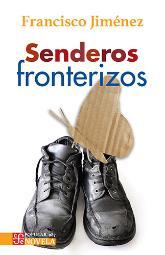
Francisco Jiménez (Modern Languages and Literatures, Emeritus) had a special edition of his book Senderos fronterizos published by the prestigious Fondo de Cultura Económica (FCE) in Mexico, one of the most respected and influential publishing houses in the Spanish-speaking world. In addition, The Circuit: Graphic Novel Edition has been selected as a 2025 Américas Award Commended Title. According to the Selection Committee, “The book exemplifies distinctive literary quality, sensitive cultural contextualization, exceptional integration of text and illustration, and strong potential for classroom use. It is a remarkable book.”
Got IT Questions or Issues?Stop by the virtual IT drop-in sessions with Charles Deleon! These sessions are designed to provide faculty and staff in the College of Arts and Sciences a friendly and casual setting for addressing general IT questions and concerns. Feel free to drop in and out at any time during the scheduled session, whether you have a quick question, need assistance with something and don't know where to start, or simply want to learn more about our IT resources. Biweekly. Next sessions: Today, Nov. 7, and Friday, Nov. 21, 11:30 a.m.–12:30 p.m. Zoom link
Get connected!      |
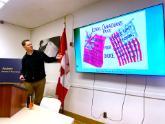
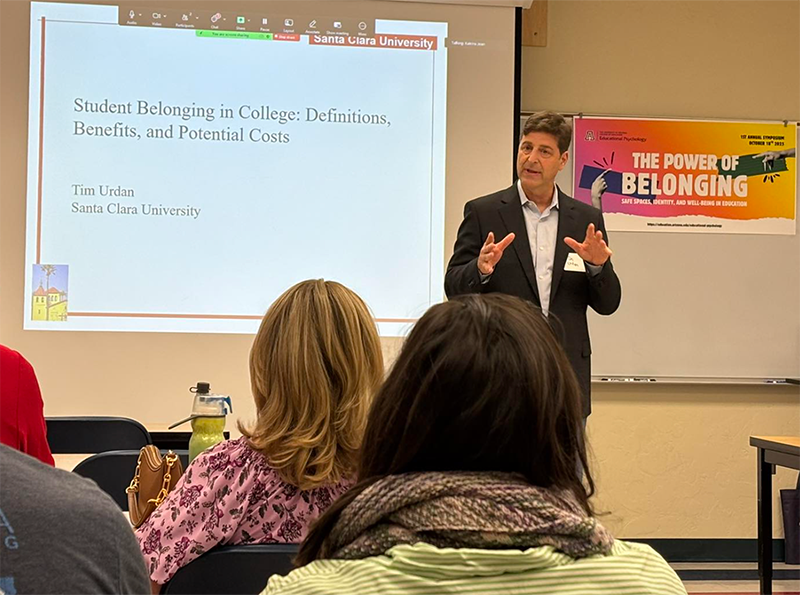 Tim Urdan delivering the keynote address at the University of Arizona conference on Belonging.
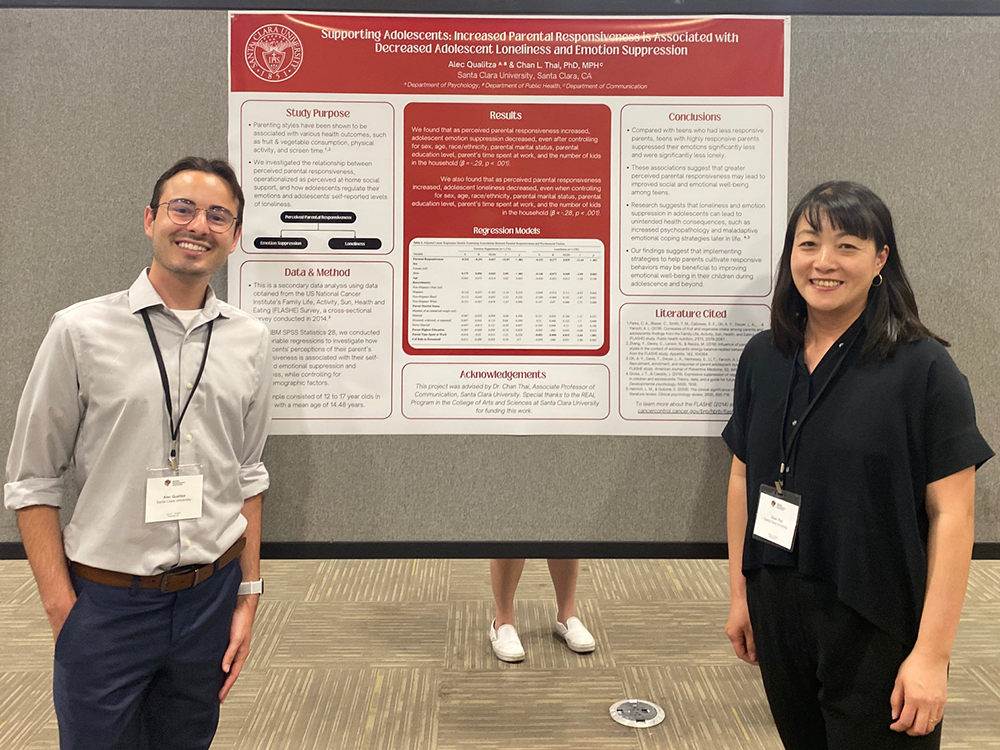 Alec Qualitza and Chan Thai presented a previous iteration of this work at the Western Psychological Association Conference in May 2023.
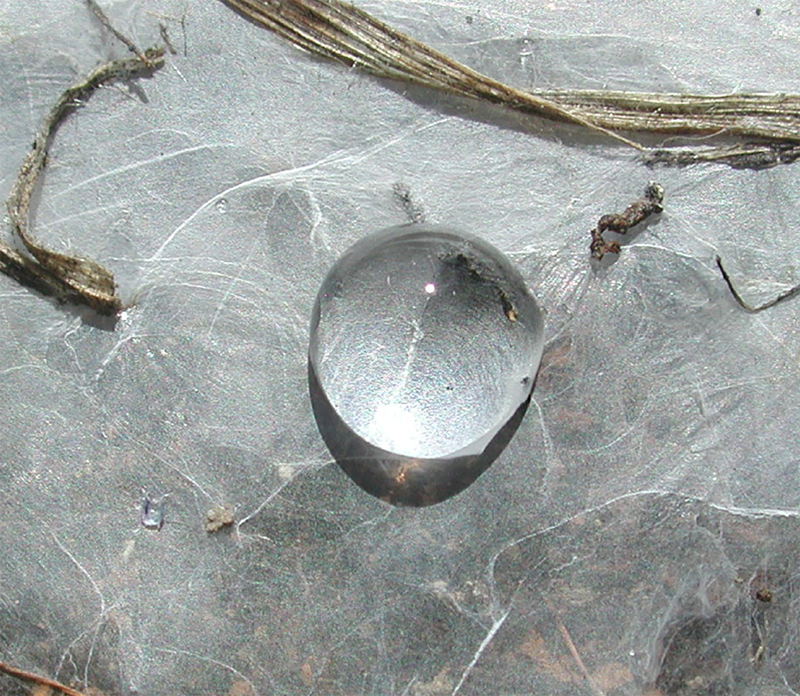 Water droplets will not penetrate this white silk; the insect weavers, known as webspinners, remain safe under their "raincoat" even when threatened by tropical downpours. Photo by Janice Edgerly-Rooks.
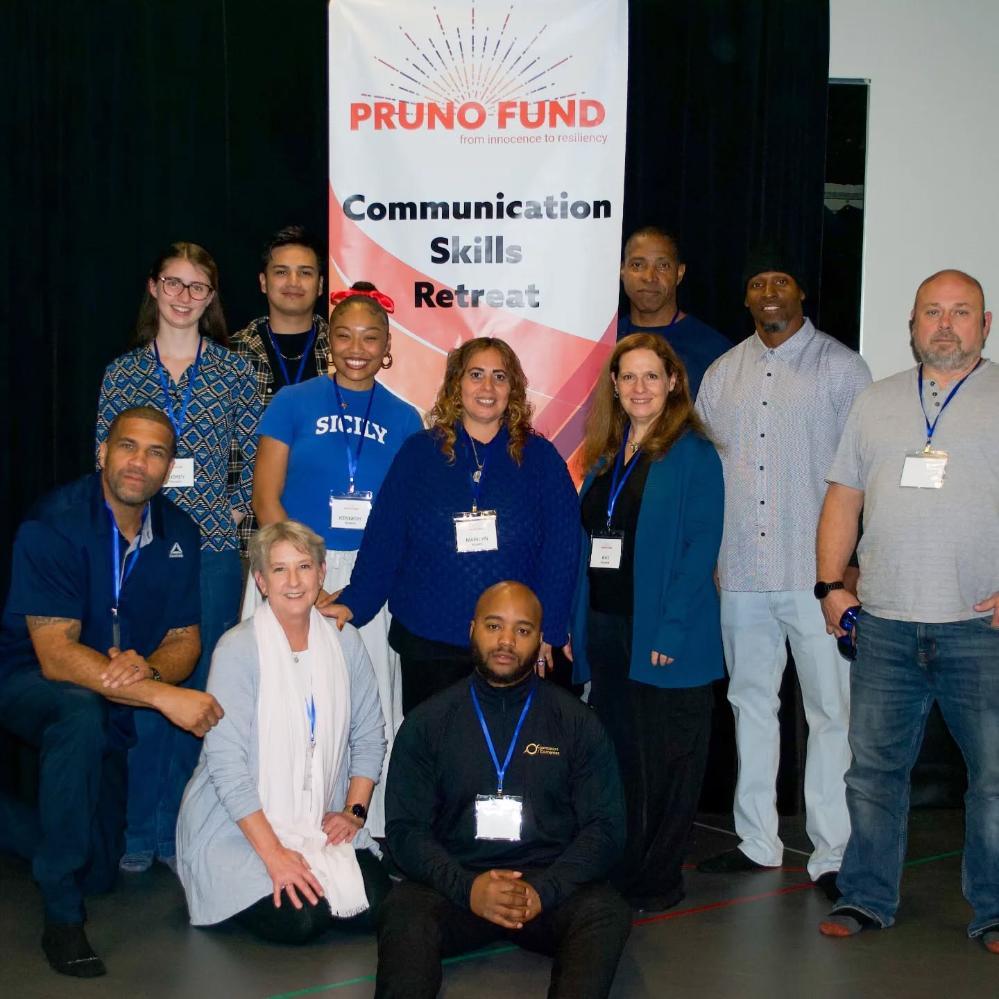 Sitting/kneeling (l-r): Lavone Hill, Prof. Kimberly Mohne Hill, Eric Anderson. Standing (l-r): Audrey Thomson, Gael Sotelo, Kennedy Dawson, Marilyn Mulero, Kat Koppett, Prof. Aldo Billingslea, Jerry Herrington, and James Kluppelberg at Loyola Chicago for Pruno Fund Communication Workshop. (Not pictured: Kenzie Hill, who took the photo)
| College of Arts and Sciences |
Submit a College NoteQuestions? Contact Sandy Boyer |