| Trouble viewing this email? Read it online. |

| February 6, 2026 | Submit a College Note |
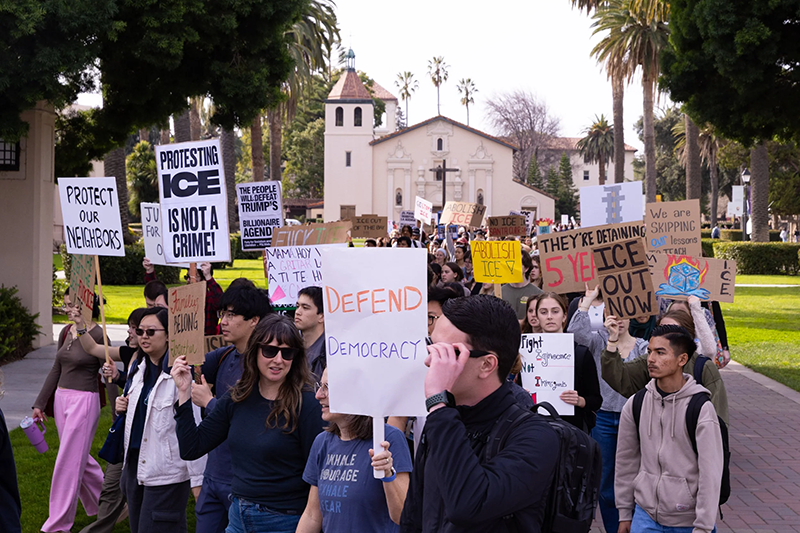
Students and faculty demonstrated as part of the "Stand with Minnesota ICE OUT" protests on January 30. Photo by Nina Glick/The Santa Clara.
Last week, our students organized a march and rally to coincide with the “ICE OUT: National Day of Action” that took place across the country. It was heartening to see our community come together in support of our neighbors who are being unjustly targeted. This week, the St. Clare Room was filled for a pop-up symposium, Leading with our Jesuit Values in Challenging Times. A terrific panel, which included the College’s own Elyse Raby (Religious Studies), spoke powerfully about meeting our frightening moment with resolve and a strong moral compass. If you missed it, the recording is available to watch. Today I’m sharing the lyrics to Malvina Reynolds’ It Isn’t Nice—a civil rights anthem which she penned in 1964. It’s chilling to think that Reynolds wrote, “Now our new ways aren’t nice when we deal with men of ice…” back in 1964 when ICE didn’t exist yet. How prophetic those lyrics turned out to be. Warmly, Daniel It Isn't Nice By Malvina Reynolds
It isn't nice to carry banners We have tried negotiations How about those years of lynchings It isn't nice to block the doorway, Inclusive Excellence Updates
The College has drafted an updated set of CAS Inclusive Excellence goals that will guide our work for the next few years. The goals are informed by initiatives from the HSI working group recommendations, the campus climate survey, feedback from the JEDI Council, as well as from other faculty and staff in the College. The goals are always available for revision so please feel free to share feedback here. We also invite you to a College-wide town hall and focus group on Feb 25 at 4 p.m., where leaders from the Inclusive Excellence Division will discuss the campus climate data for the College. Finally, please Save-the-Date of April 10 for the Black Justice Studies Collaborative’s (BJSC) special event with Ruha Benjamin, author of Race After Technology, Viral Justice, and more. A special thanks to Harry Odamtten (History), Director of the BJSC, for organizing this, and to the Silicon Valley Studies Initiative for co-sponsorship. For any questions about DEI issues in the College, please contact Maggie Hunter (Sociology, Strategic Advisor to the Dean for Faculty DEI Initiatives). Highlights
In November, SCU Center for the Arts and Humanities (CAH) Faculty Fellow Jeannette Estruth (History), with the support of Amy Randall (History, CAH Director), Danielle Morgan (English, CAH Associate Director), and Britt Cain (CAS Dean's Office, CAH Program Manager), hosted a lecture and moderated a discussion with attorney Amanda Hawes. Hawes was instrumental in the passage of California’s Proposition 65, one of the first and strongest chemical handling laws in the nation. She is the president and co‑founder of San José’s Safe Jobs, Healthy Families organization, which conducts ongoing community outreach to secure redress for workers and residents whose health has been damaged by industrial pollution and workplace hazards.

Tom Plante (Psychology) published the journal article: "Three realistic principles for nurturing ethical prosocial behavior," in Ethics in Progress. Abstract: The world is in trouble with numerous significant challenges to life and society such as climate change, divisive politics, economic disparity, war, racism and discrimination, and violence. At the core of these issues is human behavior and in particular, ethical decision making. The purpose of this reflection is to underscore three practical principles to encourage more prosocial behavior by (a) embracing the reality of egoism, (b) finding ways to merge egoism with the common good, and (c) socially engineer ethical behavior that benefits society. Considering ethical decision making and nurturing prosocial behavior in a realistic manner provides at least some hope for relieving the many difficulties that our society faces.
Image: John at the Toronto Convention Center.
Santa Clara Biology showed up strong for the 10th annual Society for the Advancement of Biology Education Research (SABER) West conference on January 17-18. Desirée Forsythe's (Biology) REdefining Science and Society Lab (RESSL) gave two talks and one poster. Amarachi Onyewuenyi ’27 (Biology and Public Health Science double major), Morgan Ventura ’27 (Public Health Science), and Tiffany Kinyua ’27 (Psychology) gave a talk titled "The impact of a non-STEM minor on STEM students." Olivia Williams ’25 (Biology) presented a poster titled "Science and Systemic Injustices: The Black student experience." Jazmine Low (Program Director, Immersions) gave a talk titled "The Experiences of Queer students in STEM within Jesuit Contexts." In addition to the RESSLab, Biology faculty members Christelle Sabatier and Michelle Badura presented posters titled, "The HOPE Workshop - a gamified approach to build communities of care" and "Mastery grading improves student perceptions and outcomes in Human Anatomy."
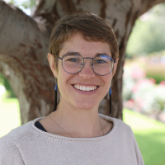
Maggie Wander (Art and Art History) published the article "‘Busy hands and a free mind’: Collaborative workshops and artistic practice in Oceania" in the Journal of New Zealand and Pacific Studies. The article examines three contemporary art projects that push art historical theories of participatory and collaborative art by engaging with Indigenous Pacific theories of materiality and climate justice.
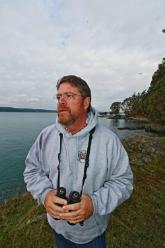
John Farnsworth (Environmental Studies and Sciences, emeritus) gave the keynote address at the La Conner Birding Festival on January 24. The presentation, "The Practice of Birding: Becoming a Better Birder," examined how birders can become involved in participatory science, habitat restoration, and advocacy about conservation issues in order to deepen their birding practices.
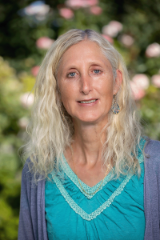
Iris Stewart-Frey (Environmental Studies and Sciences, Environmental Justice and the Common Good Initiative) was a co-author with engineering colleagues on a new peer-reviewed article, "AI and Soft Computing in Levee Risk Management: Balancing Opportunities, Challenges, and Social Environmental Impacts," in the IEEE International Symposium on Technology and Society (ISTAS). The study highlights the critical importance of levees for flood protection, yet emphasizes that climate change, aging and non-engineered infrastructure, and natural hazards are increasing the risk of failure—often with devastating consequences for historically marginalized communities living behind them. The work examines how soft computing and AI tools are being applied in levee research, including machine and deep learning for anomaly detection, fuzzy logic for flood risk assessment, and probabilistic methods for failure modeling. While these approaches can improve decision-making and resilience, we highlight critical environmental justice concerns, including data bias, algorithmic opacity, and the social and ecological costs of energy- and resource-intensive technologies. Advancing climate resilience requires balancing technological innovation with equity, transparency, and long-term sustainability.
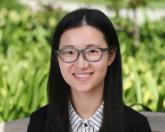
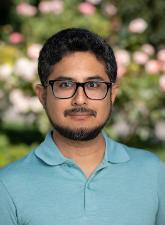
Qiuwen Li
Qiuwen Li (Art and Art History), Iris Stewart-Frey (ESS and EJ&CGI) and colleagues published a peer-reviewed publication on "Beyond Coding: Human-Centered Design in Computer Engineering Senior Projects: Lessons from the NicaAgua App," in IEEE Global Humanitarian Technology Conference (GHTC). This work stems from the development of the NicaAgua Mobile Application, a climate forecasting tool for smallholder farmers in Nicaragua that began as a senior design project by computer engineering students. Engineering students often face challenges designing digital tools for underserved communities due to limited understanding of local user contexts, particularly in cross-cultural and remote settings. Drawing on five years of iterative development, this study introduces a Human-Centered Design (HCD) approach for the exploratory phase of digital humanitarian projects, including stakeholder analysis, community context overview, user and problem definition, competitive analysis, and rapid prototyping. The case underscores the importance of early stakeholder engagement and offers best practices for translating community insights into actionable, context-responsive digital solutions.
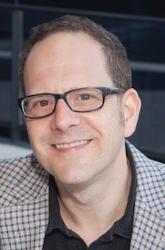
Matthew Specter (History) was quoted extensively in the January 9 New York Times Sunday Magazine article, "The Theory That Gives Trump a Blank Check for Aggression," examining the history and meaning of “realism” in foreign affairs. He provided insight into the complex uses of the concept and how it is being used in relation to the Trump administration’s actions in Venezuela, Greenland and elsewhere. Matthew also provided context in a Washington Post article on Mark Carney’s widely-discussed speech at Davos.
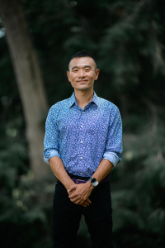
Hsin-hung (Sean) Yeh (Modern Languages and Literatures) was invited by the Department of Teaching Chinese as a Second Language at National Taiwan Normal University to deliver a featured talk on December 15, 2025. The presentation, titled "Designing Proficiency- and Communication-Based Taiwanese Language Courses Abroad: A Case Study of the Online Taiwanese Course at UC Berkeley," shares insights from Sean's recent experience designing and teaching the online Taiwanese (Tâi-gí) course. Drawing from a proficiency-based and communicative framework, Sean presented how the course utilized backward design, scaffolding strategies, and multimodal tools (e.g., Padlet, Canvas, video tasks, and real-world interviews) to foster meaningful language learning for diverse heritage and non-heritage learners. He also highlighted how the course encouraged authentic interaction and cultural sensitivity through community-based interview tasks with native speakers. The talk concluded with reflections on the sustainability and challenges of L2 Taiwanese instruction abroad, offering practical insights for international educators, program developers, and policymakers. This invited talk reflects Sean's leadership in curricular innovation, multilingual education, and his continued efforts to promote inclusive and global perspectives in second language teaching.
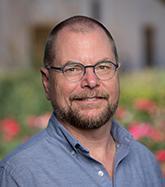
Paul Gilbert (Public Health) submitted an op-ed to the San Jose Mercury News in response to the recently updated Dietary Guidelines for Americans. As an alcohol researcher, he was especially concerned about the lack of clear guidance based on the latest research that would enable people to make well-informed choices.
The Alma Flor Ada Book Award is an annual honor established by San Diego State University’s Department of Dual Language and English Learner Education. Each year, the department selects two classic and/or contemporary works that have made a sustained and meaningful impact on children and young adult readers. The award seeks to contribute to the development of a literary canon for future bilingual educators. Previous recipients include The House on Mango Street by Sandra Cisneros and Esperanza Rising by Pam Muñoz Ryan. In addition, Savvas Learning Company incorporated excerpts from Francisco's works, Cajas de Cartón and Senderos Fronterizos, into the textbook Auténtico. Image: Alma Flor Ada Book Award presentation.
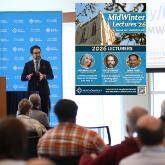
Chris Tirres (Religious Studies) recently delivered the 2026 Westervelt Lectures at Austin Seminary. He was honored to join two leading scholars in the field, Catherine Keller and David Gushee, for the seminary's "MidWinter Lectures" series, which attracted about 300 attendees. Chris discussed the pioneering contributions of cultural theorist Gloria Anzaldúa, a key figure of his new book Liberating Spiritualities: Reimagining Faith in the Américas (Fordham University Press, 2025). As Chris suggests, Anzaldúa's mature understanding of "spiritual activism" can be a helpful resource in helping seekers of justice (whether they identify as religious or not) to better navigate our dark and turbulent times. Image: Q&A Session after the first lecture.
REAL Program Information SessionsThe REAL Program is providing information sessions on the following dates: February 11, 9:30-10:15 a.m. (Daly Science 310) & 6-6:45 p.m. (Zoom) Final Drop In Session Application deadline: March 1 Faculty Development
Got IT Questions or Issues?Stop by the virtual IT drop-in sessions with Charles Deleon! These sessions are designed to provide faculty and staff in the College of Arts and Sciences a friendly and casual setting for addressing general IT questions and concerns. Feel free to drop in and out at any time during the scheduled session, whether you have a quick question, need assistance with something and don't know where to start, or simply want to learn more about our IT resources. Biweekly. Next sessions: Friday, Feb. 13, and Feb. 20, 11:30 a.m.–12:30 p.m. Zoom link
Get connected!      |
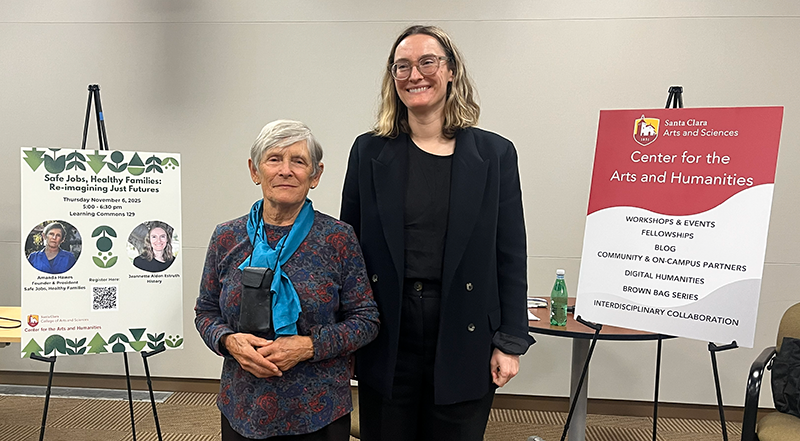 Amanda Hawes (left), Jeannette Estruth (right).
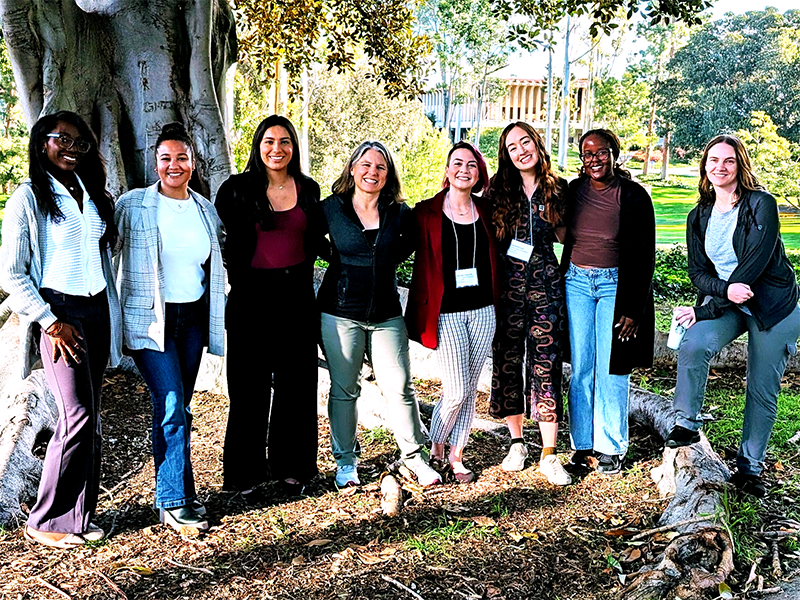 Members of the RESSLab and the Biology Department pose in front of a tree at the 10th annual SABER West conference (from left to right: Amarachi Onyewuenyi, Olivia Williams, Morgan Ventura, Christelle Sabatier, Desirée Forsythe, Jazmine Low, Tiffany Kinyua, Michelle Badura).
| College of Arts and Sciences |
Submit a College NoteQuestions? Contact Sandy Boyer |