| Trouble viewing this email? Read it online. |

| May 26, 2026 |
Welcome to the Tuesday Teaching Tip, an easy-to-implement tool that you can use immediately in your classroom teaching. Tuesday Teaching Tip: Grading Practices to Support Student Learning David Brooks made a recent argument in The Atlantic for combating the downfalls of an educational system restricted by historical meritocratic criteria (“How the Ivy League Broke America: The Meritocracy Isn’t Working. We Need Something New,” Dec 2024). The solution he proposes focuses in large part on grading and shifting our criteria for assessing student learning stating that, “Grades reveal who is persistent, self-disciplined, and compliant–but they don’t reveal much about emotional intelligence, relationship skills, passion, leadership ability, creativity, or courage [....] The system has become so instrumentalized–How can this help me succeed?--that deeper questions about meaning or purpose are off the table, questions like: How do I become a generous human being? How do I lead a life of meaning? How do I build good character?” (30, 32). Assessing disciplinary knowledge and ways of knowing are foundational and, at SCU, that learning is happening within the context of an institution that prioritizes Jesuit values. What does your grading prioritize and measure? Why? Last week’s CAFE conversation, “Grading: Strategies, Successes, and Lessons Learned,” ranged from building trust with students through transparent grading schemas to pain points associated with AI, grade inflation, and time pressures. Six faculty shared some of their strategies for maximizing student learning while managing competing priorities (i.e. research, parenting). Quick Tips: As we approach the end of the quarter, consider these practices to support meaningful closure while helping students demonstrate their learning. Emphasizing revision, clear guidance, and limited flexibility can keep students engaged and focused on improvement while streamlining your time commitment for assessing student work.
CAFE Faculty Panelist Highlights Sofia Kotsiri, Lecturer, Economics When I started teaching I used to have the mentality of "maximizing efficiency" until very recently where I accepted the fact that grading is more like a tradeoff between efficiency, fairness, and our well being. Thus, as we are heading towards week 9 I usually assign an in-class grading activity which also gives incentive for students to be present, as it is very common for attendance to drop after the Memorial weekend. There is also going to be some small credit for attendance that will be added on top of their final exam score. The weight of grading activities reduces as we move towards the end of the quarter to alleviate stress and accumulated exhaustion from the academic year but the number of grading activities remains the same until the very last week to keep that momentum of putting the effort to either improve or maintain their grade. Eugene (Gene) R. Schlesinger, Assistant Professor, Religious Studies As the increasing prevalence of AI has prompted me to rethink assignments and assessment, I’ve gotten the unexpected gift of a reminder of the whole purpose of grading: not merely to evaluate my students or their work, but to support their learning. Two practices have emerged in particular:
Sumana Sur, Associate Teaching Professor, Information Systems & Analytics While grading the weekly assignments, I shifted to focusing on timely completion rather than strict penalties as a learning step. I give pointers and focused feedback, and guide the students to identify their own mistakes and then allow them to redo the assignments. I think this approach has taught students to take feedback in a positive way. It fosters a growth mindset, treating the assessments more as progress markers rather than final judgements. In this era of AI, by this process I am trying to encourage and inculcate in them critical thinking skills and the ability to distinguish a correct result versus an incorrect one.
DID YOU DO IT? Let us know how it went. We would love to hear your feedback about how you implemented today’s Tuesday Teaching Tip in your classroom. Click here to fill out our 3-question survey. The survey is anonymous, but if you choose to enter your name, you’ll be entered in a drawing at the end of the quarter to win a new book from Faculty Development!
UPCOMING EVENTS
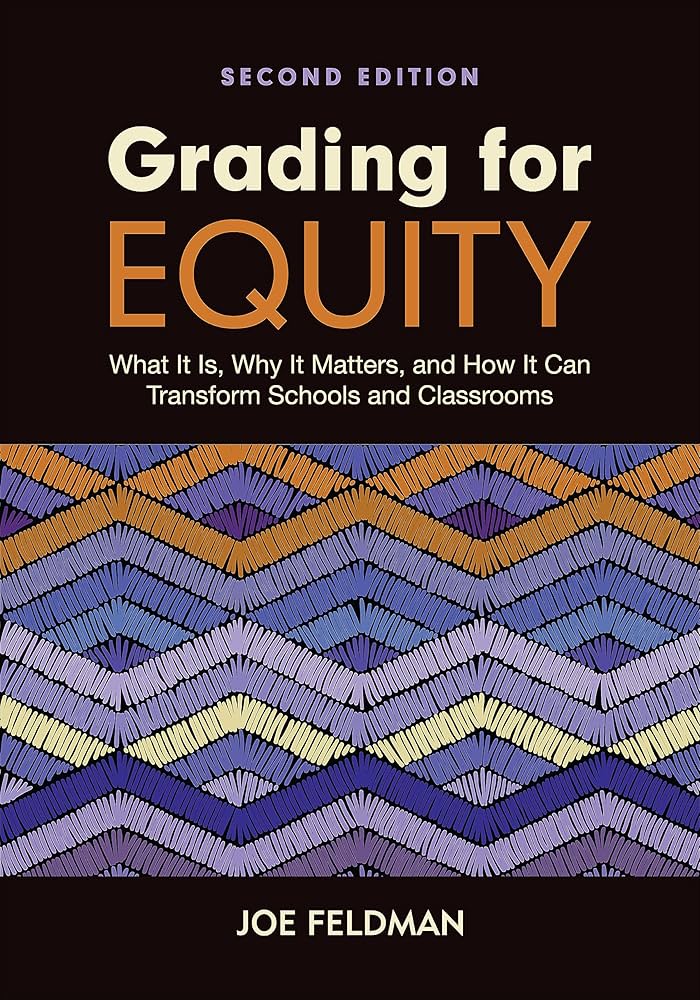
WANT TO READ A LITTLE MORE? Faculty Development Bookshelf Highlight
Additional Resources:
This week’s Tuesday Teaching Tip was prepared by Riley Caldwell-O’Keefe and Emily Park on behalf of Faculty Development and the Center for Teaching Excellence.
|
| Center for Teaching Excellence |