
I'm excited to come to work each day to help deliver on the promise of higher education for all of our students: a good job, social capital, and economic mobility in pursuit of a more humane, just, and sustainable world. I'm honored to be your Executive Director and I look forward to all we will accomplish together.
Read the Monthly Director's Message:
2026: May | Apr | Mar | Feb | Jan | 2025: Dec | Nov | Oct | Sept | Aug | July | June | May | Apr | Mar | Feb | Jan | 2024: Dec | Nov | Oct | Sept | Aug | July | June | May | Apr | Mar | Feb | Jan | 2023: Dec | Nov | Oct | Sept | Aug | July | June | May | Apr | Mar | Feb | Jan | 2022: Dec | Nov | Oct | Sept
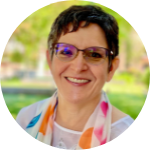
Noël Kreidler enjoys supporting students in discovering career paths where they can fully express their interests and talents in the workplace, and collaborating with campus partners to develop initiatives that connect students with their passion. Her background includes 25+ years of experience as a Human Resources professional in a variety of geographic and business environments, including tech, retail, non-profit and consulting as well as 8+ years of experience as a Career Services professional at Santa Clara University and The University of Arizona. As a person with a physical disability, she is committed to diversity, equity and inclusion and sits on the Board of Directors for two non-profits that champion inclusion for people with disabilities in the workplace and the housing community. She has a MEd with a Counseling and Human Relations emphasis from Northern Arizona University and a BA in Economics with a minor in Human Resources from The University of Arizona. In her spare time, she enjoys swimming, art, reading, writing, interior design and spending time with family and friends.

我會說廣東話和普通話。/ 我会说广东话和普通话。
Vania is a firm believer that career, in all of its adventurous, anxiety-provoking, exciting, and frustrating realities, is rarely linear. Hence, she has a strong passion for and commitment to partnering with students and the greater campus community to empower students with the tools, framework, courage, and confidence to pursue and actualize their professional goals. In her tenure as a non-profit and higher-ed professional, Vania has pivoted nimbly and effectively between being an empathetic coach and strategic program designer. Her work has supported refugees & asylees, new immigrant youth, first-gen students, and university students across Los Angeles, New York City, Peru, and the greater Bay Area. Vania holds a a M.S. in Social Work, focusing on program design & evaluation and international social welfare from Columbia University and a B.A. in Interdisciplinary Computing and the Arts, with a minor in Cognitive Science (Human Computer Interaction) from the University of California, San Diego.

Shauna brings to the Career Center nearly 8 years of experience and expertise in career development and coaching within higher education. She enjoys working with students at every stage of their career development process, from career discovery to salary negotiation and beyond. Shauna aims to support every student on their distinct academic and career path by fostering connections and collaboration across campus. Previously, she supported the Leavey School of Business Graduate Business Students in Career Development as Sr. Associate Director for Online Programs and Employer Relations. Originally from the East Coast, Shauna completed her MBA at Hofstra University and holds a Bachelor of Arts in Psychology and Studio Art from St. Mary's College of Maryland.

Yo hablo español.
Myriam joins the Career Center with extensive career transition and coaching experience with the largest providers of Global Career Placement Solutions and the Technology Industry. She is passionate about inspiring students and alumni to realize their best selves by leveraging their strengths, unique value, and purpose so they can create internship and job search strategies to pursue meaningful work and meet the needs of the community and the industry. Her background includes 15+ years of experience for a leading technology company in Customer Service, and the Executive Briefing Center as a Program Manager putting together technology briefing events with cross-functional teams for customers from Latin America, the Middle East, and Eastern Europe. Myriam holds a coaching certification from the International Coaching Federation with an emphasis in Positive Psychology and an MBA from Golden Gate University.
Coming Soon...
 View LinkedIn Profile »
Coming Soon....

MBA candidate at Santa Clara University focusing on Product Strategy and Marketing. His background combines software engineering at Amazon, Seattle, with a STEM foundation through an MS in Computer Science. Passionate about business, AI/ML, and career development, Ankit mentors students in crafting impactful resumes, optimizing LinkedIn profiles, and navigating job searches with clarity and confidence. He believes consistent, small steps in the right direction can unlock success, even from the most unexpected opportunities

Trushika Desai is a Graduate Intern with the Career Center and a master’s student in Counseling Psychology at Santa Clara University. She is passionate about helping students navigate life after grad school - whether that means exploring career paths, polishing application materials, or simply talking through what’s possible. Her time at SCU has been filled with meaningful learning and personal growth, and she’s excited to support her peers through their own journeys. Outside of work and class, Trushika enjoys re-reading Harry Potter, eating Indian street food, and going on long walks with her dog, Moony.
Coming soon ...
View LinkedIn Profile »
Coming soon ...
Yo hablo español.
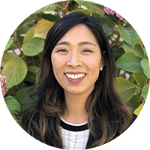
Melissa (she/her) aims to build meaningful connections between students and organizations, foster diverse talent pipelines, and create inclusive workplaces that drive both personal and organizational growth. Melissa joined SCU after working in nonprofits, K-12 education, and one tech startup. She graduated with a MA in Education from Claremont Graduate University and a BA in Psychology from Scripps College.

Mary has a passion for ensuring every student has the opportunity to build a meaningful career. She joins Santa Clara University after 9 years at Intuitive Surgical, a pioneer in robotic-assisted surgery, where she was a key player in developing their university hiring programs. She was born and raised in the city of Santa Clara and has always admired SCU values and community. She graduated from Sonoma State University with a BA in Liberal Studies with emphasis in Life Sciences and a minor in Philosophy. She is excited to join the career center team and support the talented students pursuing careers in business and entrepreneurship.

As an SCU alumna (BS in Sociology), Zarina is excited to be back on campus after more than 20 years in HR & talent acquisition. Her work primarily focused on STEM roles within the medical device, biotech, and automotive industries. She is enthusiastic about helping students explore their career goals and is eager to leverage her background to develop strong relationships and expand opportunities between SCU and employers. She is thrilled to be part of the career center team and looks forward to supporting fellow Broncos in their pursuit for STEM opportunities.
 .
.
Brooke comes to Santa Clara University with a diverse background in various industries, including serving as a senior account executive with Stanford Athletics and as a manager of the San Jose Earthquakes' Quakes University program. She is passionate about bridging the gap between students and the workforce with knowledge of building relationships, training new hires, and community engagement. She graduated with an MBA from Western Governors University and a BS in Sports Management and Marketing from Menlo College. She is excited to join the Career Center team and support students in their career exploration.

Joshua Gan is a full-time father of three young children, and is currently pursuing an MBA at Santa Clara University. Joshua relocated to the US in August 2024 with his family. Joshua most recently led the Corporate Development team at NTUC First Campus, a social enterprise and one of Singapore's largest Early Childhood Care and Education service providers, operating 170+ preschool centers across the country, serving more than 25'000 children and their families every year. Prior to that, Joshua oversaw the Asia-Pacific region for the world's #1 hospitality management university EHL Hospitality Business School, leading its regional strategy and team for almost a decade.
Contact & Directions
The Career Center is in the west wing on the first floor of Benson Memorial Center.
Office Hours
Monday - Thursday
9am-5pm
Friday (Virtual)
9am-4:30pm
Need assistance outside of our office hours? Utilize the variety of digital tools and resources available through Handshake and our website 24/7!
SCU Mask Guidelines
It is highly recommended that all individuals wear a mask that covers the nose and mouth in public indoor spaces, including when visiting the Career Center.