The Department of Music at Santa Clara University provides an intellectual and stimulating artistic environment fostering individual expression and creativity through the study of music and musical performance.
About Our Program
The Department of Music offers a degree program leading to the bachelor of arts in music as well as a minor in music. A minor in musical theatre is available in conjunction with the Department of Theatre and Dance. The Department of Music's curriculum is designed to provide students of diverse backgrounds with the skills necessary to comprehend, perform, and appreciate music's role in human history and its power to enhance the lives of all people. Because individual study and performance is essential to the expression and acquisition of music as a language and art form, private instruction and membership in all departmental music ensembles is available to all Santa Clara students.
Faculty & Staff


 Faculty Spotlight: Teresa McCollough
Dr. Teresa McCollough, Professor of Music at Santa Clara University, is the 2024–2026 Frank Sinatra Chair in the Performing Arts. An acclaimed pianist and educator, she curates SCU’s Music@Noon series and directs the SCU New Music Ensemble, bringing nationally recognized guest artists, alumni composers, and innovative programs to campus. Through residencies, new commissions, and performances, she is expanding opportunities for students and the broader community to experience contemporary music and engage directly with its creators.
News & Events
- Senior Spotlight: Riley Carpenter ’25
Bright Future in Dark Matter Research
Riley Carpenter ’25 found a well-rounded education at Santa Clara, designing cutting-edge superconducting thin-film dark matter sensors while pursuing his passions in the humanities and arts.
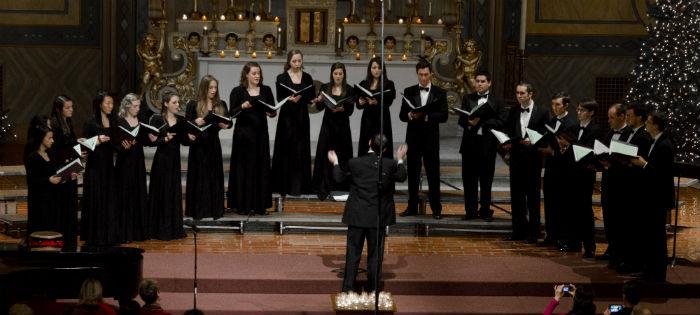
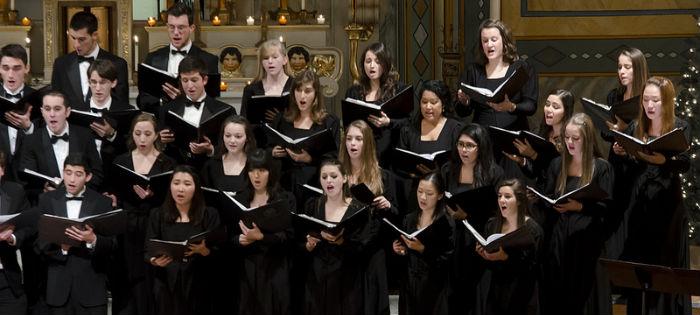
"In high school, I did a lot of choir and musical theater, and it’s been so rewarding to continue singing at SCU. It can sometimes be a lot of hard work, but I really love the community and the opportunity to produce a unique sound at every performance and rehearsal.
I also feel like our director Scot Hanna-Weir also lets us perform impactful pieces that have important messages. One of my favorite performances was a piece called “Breathe in Hope” by Dale Trumbore that we sang my sophomore year. It was this call to action to recognize that there is the possibility of overcoming the challenges and suffering in today’s world. The song ends with the message that we each must work towards bringing about the future that we want to see."

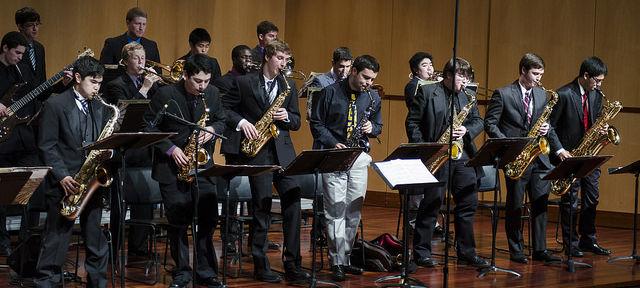
"... incredible tenor renderings seem to catalog the history of the tenor sax, invoking shades of Lester Young and Dexter Gordon..." -- All About Jazz
Shenshen Zhang plays pipa in the orchestra of 'The Monkey King' by Huang Ruo and David Henry Hwang, a spectacular new opera which premiered at San Francisco Opera in November.


- More pages:
Coming Events