
Thinking ethically about the environment
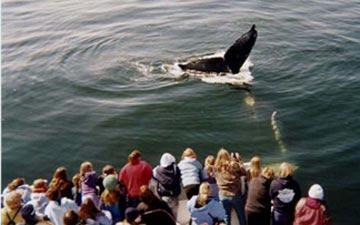
Photo used with permission of Sanctuary Cruises.
Ethics are a broad way of thinking about what constitutes a good life and how to live one. They address questions of right and wrong, making good decisions, and the character or attributes necessary to live a good life. Applied ethics address these issues with a special emphasis on how they can be lived out in a practical manner. Environmental ethics apply ethical thinking to the natural world and the relationship between humans and the earth. Environmental ethics are a key feature of environmental studies, but they have application in many other fields as human society grapples in a more meaningful way with pollution, resource degradation, the threat of extinction, and global climate disruption.
This short course introduces the key features of environment ethics for an audience without a background in ethics. It is written specifically to help students - from high school to adult learners -- to recognize and use moral language to describe how they value the earth. The learning goals are:
1. to understand the essential features of moral or ethical thinking;
2. to learn about the important and distinguishing characteristics in environmental ethics;
3. to develop the skills to recognize and deploy moral discourse for leadership in environmental fields.
Recognizing and using ethics relies heavily on language skills. This course will introduce the essential vocabulary of environmental ethics, for example, the moral significance of nature, the ethical dimension of sustainability, and environmental virtue ethics. Most people use ethics language every day, but we often do so without fully realizing that what we care about is rooted in our moral vision. When we instinctively exclaim that something is wrong, we do so on the basis of an ethical principle in the back of our minds. For example, we are consuming resources, degrading our planet's ability to provide the services we humans need, at a faster rate than they can naturally replenish; if you believe this is wrong, you are basing this on some kind of moral principle. This course is designed to help you make explicit your reasons for believing that the earth has ethical significance. Often the simple shift from implicit to explicit use of ethics language can make statements much more meaningful, much more persuasive.
Moral reasoning is not a substitute for science, but it provides a powerful complement to scientific knowledge about the earth. Science does not teach us to care. Scientific knowledge does not, by itself, provide reasons for environmental protection. Science and economics provide data, information, knowledge. Environmental ethics turns to this information and asks: how then, should we live? Why should we care? Environmental ethics builds on scientific understanding by bringing human values, moral principles, and improved decision making into conversation with science. Environmental ethics is necessarily inter-disciplinary, meaning it draws on other fields of academic inquiry; it cannot stand by itself. Often, the simple question, "What is the right thing for us to do?" can open up fresh perspectives on environmental problems. Thinking ethically about the environment has the potential to help anyone contribute to creating environmental solutions.
In the most general sense, environmental ethics invites us to consider three key propositions:
1. the Earth and its creatures have moral status, in other words, are worthy of our ethical concern;
2. the Earth and its creatures have intrinsic value, meaning that they have moral value merely because they exist, not only because they meet human needs;
3. drawing from the idea of an ecosystem, human beings should consider "wholes" that include other forms of life and the environment.
There are different trends, voices, and diverse opinions within the field of environmental ethics. This short course will provide you the essential tools for being able to develop your own moral vision for living in relationship to the Earth, and for inviting others to consider the Earth as morally significant.
General recommended reading in environmental ethics
Callicott, J.B., 1997. Earth's Insights: A Multicultural Survey of Ecological Ethics from the Mediterranean Basin to the Australian Outback University of California Press, Berkeley.
DesJardins, J.R., 2006. Environmental Ethics: An Introduction to Environmental Philosophy. Wadsworth, Belmont, California.
Martin-Schramm, J.B. and Stivers, R.L., 2003. Christian Environmental Ethics: A Case Method Approach. Orbis, Maryknoll, New York.
Keith Warner, OFM, is the Assistant Director for Education, Center for Science, Technology, and Society at Santa Clara University and David DeCosse is the Director of Campus Ethics Programs at the Markkula Center for Applied Ethics.