The Ripple Effect
Grounded in the University’s Jesuit values and Silicon Valley’s ecosystem of innovation, the new Cunningham Shoquist Center for Applied AI and Human Potential, Santa Clara's fourth center of distinction, will serve as an interdisciplinary hub where faculty, students, staff, and industry partners collaborate to contemplate, design, and deploy AI technologies that will benefit society and serve humanity. This could make a world of difference.

Meet the people bringing the new center to life

The center builds on existing strengths by advancing applied AI research and education in
healthcare.
medical imaging.
information access.
infrastructure.
intelligent robotics.
computational creativity.
human-computer interaction.
healthcare.
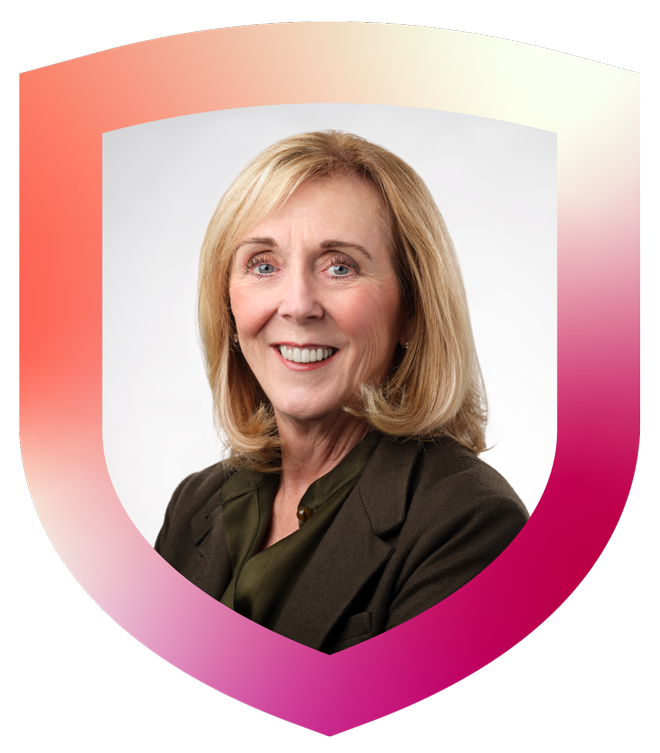
Honoring a Sister. Paying It Forward for Their Alma Mater.
With a landmark gift, NVIDIA executive vice president Debora Shoquist ’76 also honors her sister, G. Lee Cunningham, M.A. ’73.
“I’ve always been proud of being a Santa Clara graduate, but at 18, I was not planning to leave Humboldt County for college. My sister had other ideas. She brought me the application, took me on a campus tour, convinced my parents that I would be safe here, and showed up on those freshman year homesick nights. She has been by my side for every life event. For that reason, this gift is very much a family gift. Santa Clara started as just part of my sister’s history, and she made it part of mine.
The timing is right to develop this particular center. Julie is a strong and passionate president, who has provided a vision for the university’s future, and built a strong management team to pursue it. The current AI explosion is a terrific opportunity for Santa Clara to create unique value in this space.
Through this University-wide Center, Santa Clara will have the opportunity to further engage with the most innovative companies, more fully support students in achieving their goals, and accelerate its research in applied AI. I believe Santa Clara will always lead with its values, employing an ethical and humanistic lens as it taps into AI’s power to unlock human potential across thousands of applications. The AI Center will serve the University for years to come, helping ensure AI technologies serve as a catalyst for human dignity and advancement of the common good.”
AI Researchers at Santa Clara
More than 100 of our faculty are working in AI to improve quality of life. Here are just a few.
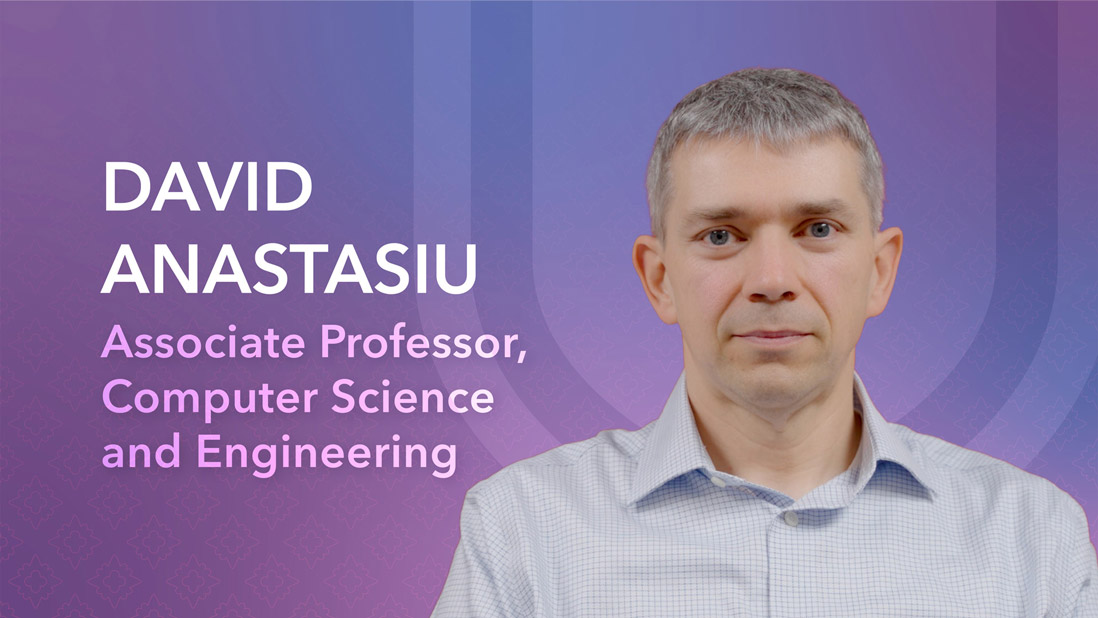
Preventing car crashes before they happen with AI
In recent years, video recognition has allowed researchers to identify when something went wrong after it went wrong. Associate Professor David Anastasiu is shifting this technology from being reactive to proactive. The goal of his research is to create AI that watches the world and communicates with other machines to stop catastrophes like car accidents or warehouse mishaps that threaten human lives.
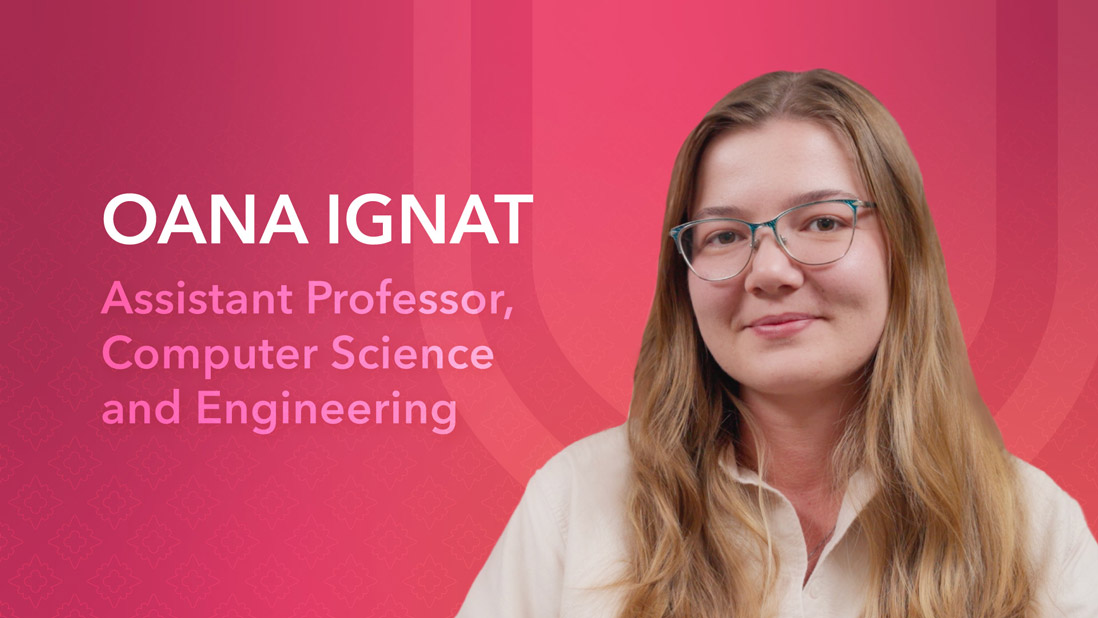
Making AI more inclusive and accurate for everyone
Current AI models are based on human-designed inputs and constraints; this means they can be influenced by human biases. That’s why AI works well for only a small fraction of cultures, languages, and income groups. The result isn’t just AI falling short of its potential, it means a fundamentally unfair and inaccessible future. Assistant Professor Oana Ignat is working to uncover these performance disparities and address them so they don’t amplify disparities and biases in our world.
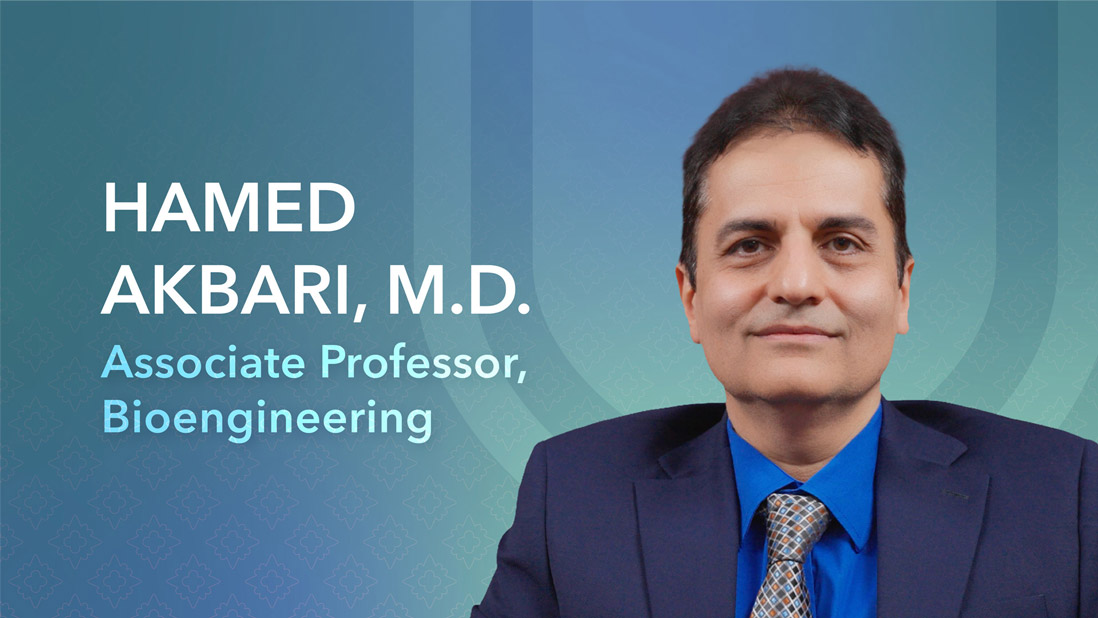
Offering fast, personalized medical care through AI
When a patient walks into a hospital, their treatment plan is informed by the experience of their doctor. But what if AI could harness not just the experience of that one doctor but thousands of doctors from around the world from different specialties? Associate Professor Hamed Akbari envisions a future where AI makes healthcare more personalized and accessible by diagnosing patients before they set foot in a hospital, which helps them get the care they need quicker. Patients will have quicker diagnoses that allow them to get the care they need, when they need it.
Maintaining safety, fairness, and transparency in AI
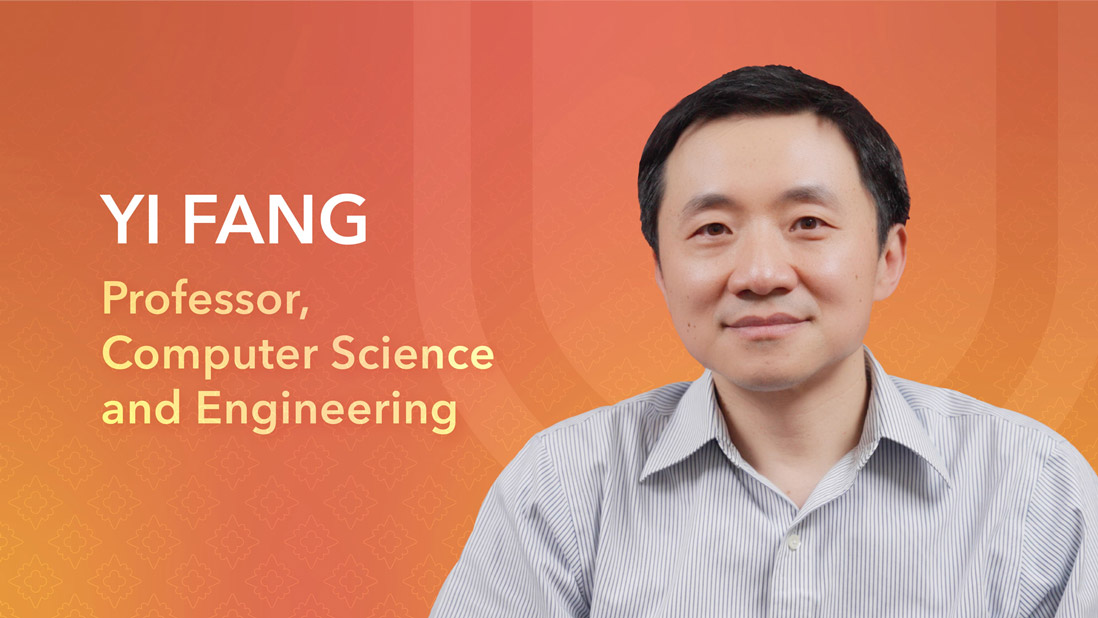
Today, AI-produced algorithms outperform the ones designed by humans—and the gap is widening by the day. So, what happens when the human in the loop becomes the human out of the loop? With his research, Professor Yi Fang is working to ensure AI models remain aligned with the goals and values of human beings, advancing the capabilities of AI while fighting for safety, transparency, accountability, and fairness.
Driving innovation that serves humanity
Read some of the latest in AI at Santa Clara.
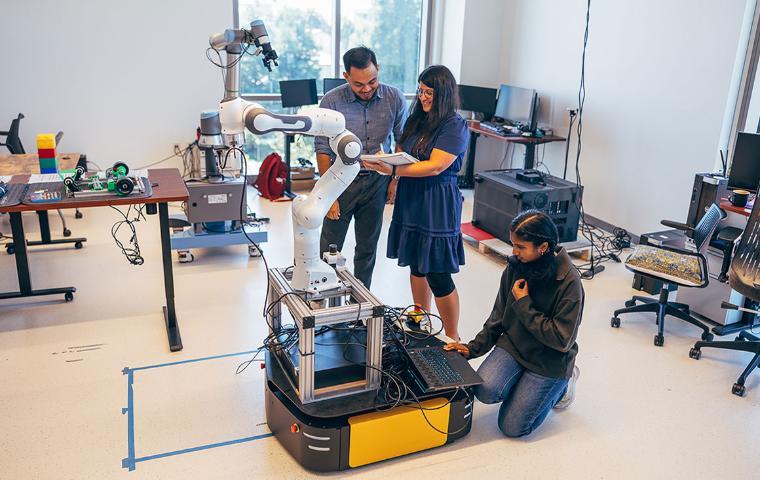
An engineering professor uses machine learning to improve human-centered robotics
What if a helper robot could sense when your brain was tired? Assistant Professor Maria Kyrarini receives two major NSF grants to design responsive robots to assist people with paralysis and industrial workers.
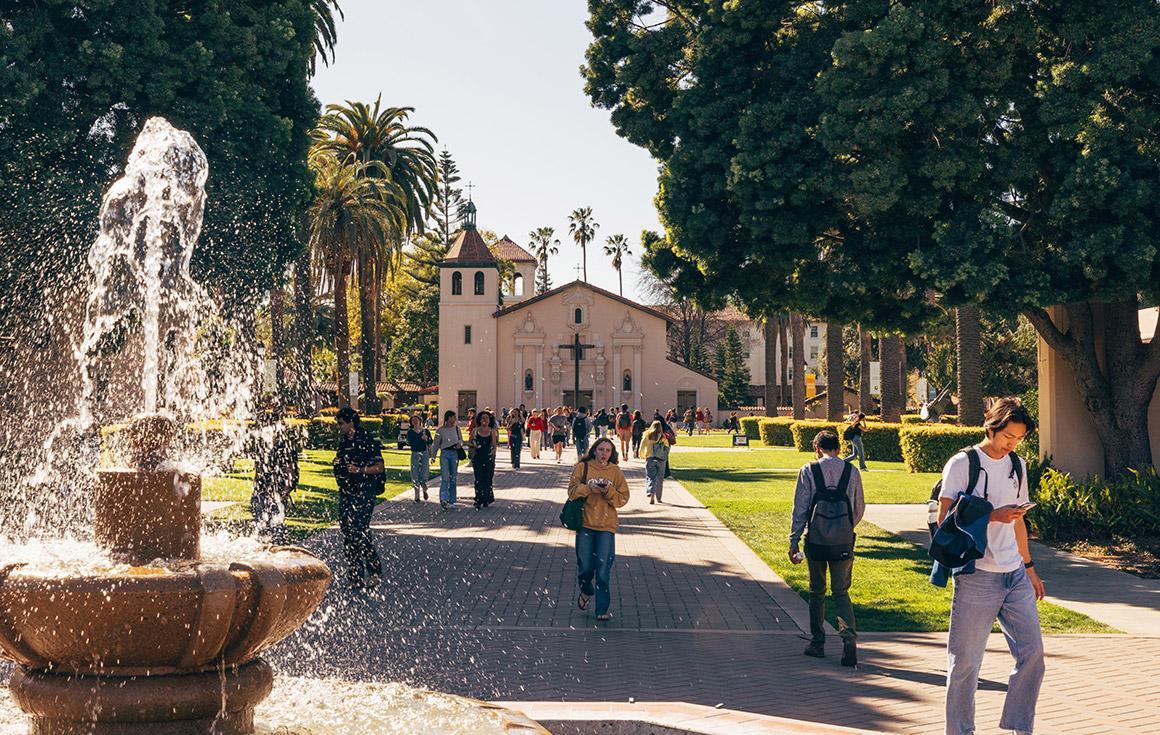
What makes us human in the age of AI?
A conversation with the Markkula Center’s Brian Patrick Green about the work of the AI Research Group, a network of theologians, philosophers, and ethicists working under the auspices of the Vatican.

A law professor says AI can support lawyers, but human discernment will drive justice.
David Yosifon argues that AI will free lawyers to focus on what matters most: moral reasoning and ethical judgement.
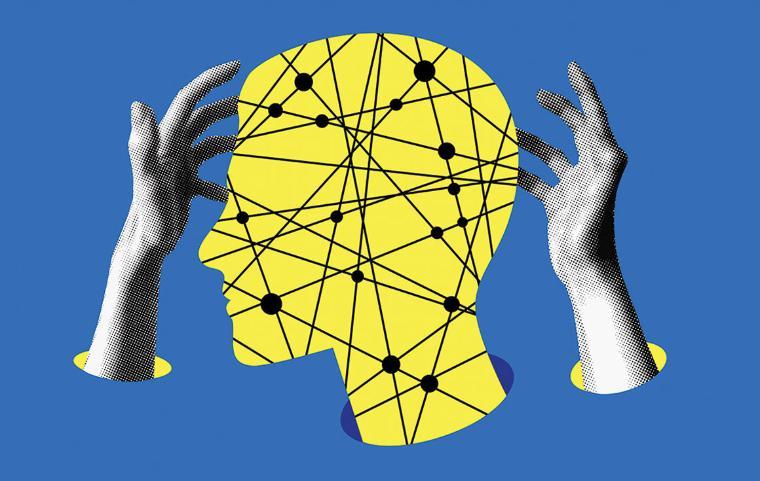
Can AI really care?
A psychologist and a computer science professor explore how generative AI is reshaping mental health support.
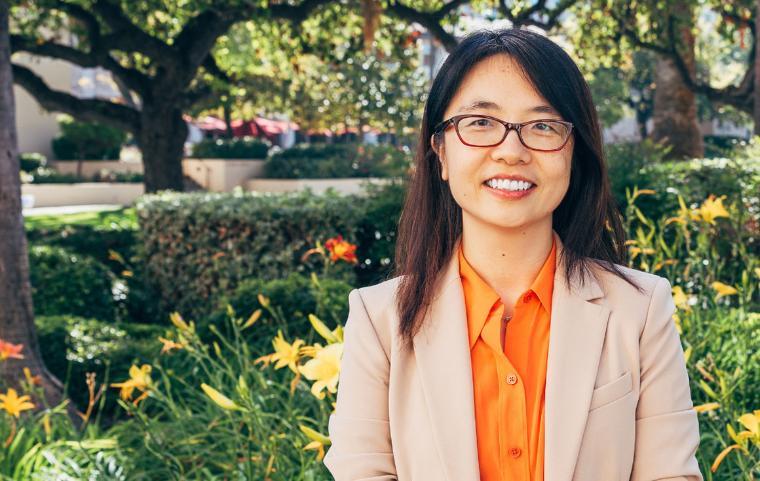
Engineering professor explores how we can build trust between humans and AI systems
Yuhong Liu’s goal is to build systems that are transparent, resilient, and grounded in human values, rather than black boxes.

Your AI queries are consuming a lot of water. These Santa Clara researchers want to know how much.
A new grant will facilitate the study of AI data centers’ impact on California water as more data centers pop up across the state.
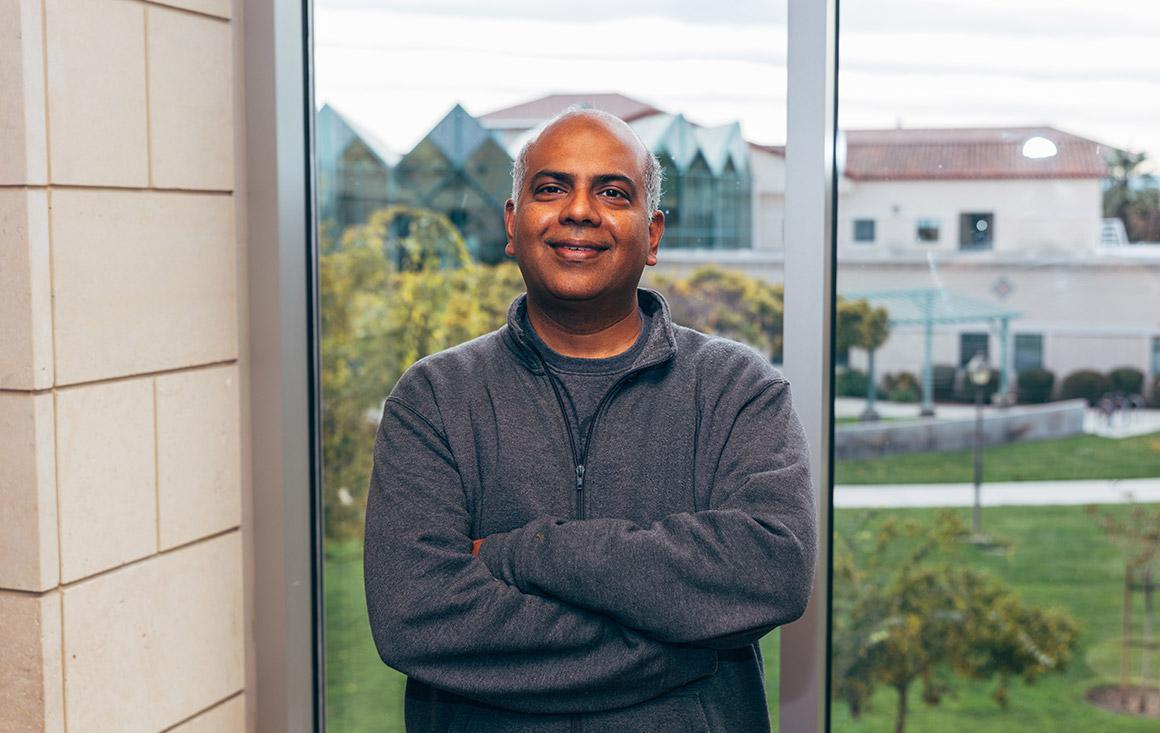
Ram Bala: What does AI know about your business?
An associate professor in information systems and analytics, Bala teaches students how AI helps businesses activate institutional knowledge into new insights and opportunities.
News and Updates
Mercury News: Santa Clara University announced plans Tuesday for a new artificial intelligence center
NVIDIA executive’s donation will create Cunningham Shoquist Center for Applied AI and Human Potential
News Release: Santa Clara University establishes the Cunningham Shoquist Center for Applied AI and Human Potential
Accelerating its role as a leader in the application of AI to address real-world challenges, Santa Clara University established the new Center, funded by a generous gift from Santa Clara alumna, trustee, and executive vice president of operations for NVIDIA, Debora Shoquist ’76.
Silicon Valley Business Journal: NVIDIA executive helps fund research hub at Santa Clara University
Santa Clara University has launched a new AI research hub focused on developing responsible AI. The Cunningham Shoquist Center for Applied AI and Human Potential was funded by a gift from Debora Shoquist, executive vice president at NVIDIA and a school alumna.
The Santa Clara: Santa Clara University Bets on AI, and on Doing It Differently
The University’s new center emphasizes ethics and interdisciplinary work, but students say access and curriculum will determine its impact.
Looking to get in touch?
Share your information, so we can better understand who is interested in our work and how we can identify opportunities for engagement.