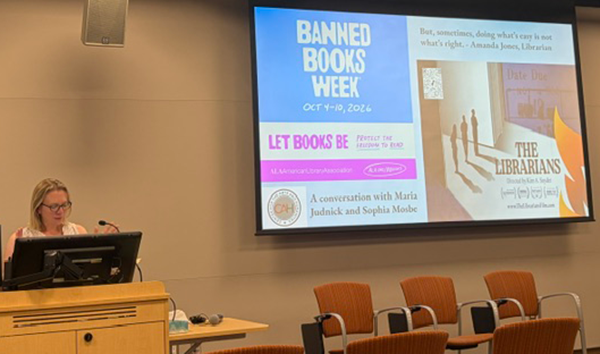
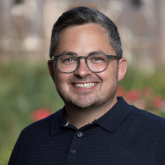
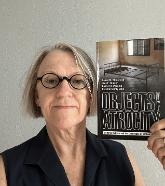
Center for the Arts and Humanities faculty fellow Maria Judnick (English) at the first of two Banned Books events this week.
Dear Colleagues,
I am writing to you from the campus of our sister school, the University of Scranton, where Kathleen Schneider and I are attending the AJCU’s annual Arts and Sciences Dean’s meeting. This is a great opportunity to connect with our fellow Jesuit institutions to share advice and information around the challenges we face in higher education. This year, in particular, is important for us to attend as we will be involved in planning meetings for next year’s session, which we will be hosting in Santa Clara!
Meanwhile, this weekend our own campus will be filled with alumni coming back for SCU’s annual Grand Reunion weekend. Stop by the CAS Reception tomorrow, Saturday, October 10th from 5:30-7:00pm in the Vari Foyer to reconnect with former students, enjoy some food and drink, and try out the photo booth. Email Alex Patton beforehand to have your nametag ready when you arrive, or select the Faculty/Staff option to register for Grand Reunion events for free!
This week's poem is by the great California poet, Gary Soto. Although October has started off hot, sunny and dry, Soto's poem invites us to imagine autumn as we usually experience it... and then winter just behind.
Warmly,
Daniel October
By Gary Soto
A cold day, though only October,
And the grass has greyed
Like the frost that hardened it
This morning.
And this morning
After the wind left
With its pile of clouds
The broken fence steamed, sunlight spread
Like seed from one field
To another, out of a bare sycamore
Sparrows lifted above the ridge.
In the ditch an owl shuffled into a nest
Of old leaves and cotton
A black tassel of lizard flapping
From its beak. Mice
And ants gathered under the flat ground
And slipped downward like water,
A coyote squatted behind granite,
His ears tilting
Toward a rustle, eyes dark
With the winter to come.
Featured Opportunity
The University of Notre Dame's Institute for Ethics and the Common Good is taking applications for the DELTA Signature Course Fellowship. This fellowship supports tenured or tenure-track faculty who have a vision for developing high-impact courses that explore the questions that AI and other emerging technologies raise for our understanding of human flourishing. The fellowship provides $25,000 for the course launch as well as a stipend for faculty and student interns for the duration of the fellowship period. The 3-week residency portion of the fellowship is in June 2027 at the University of Notre Dame. Visit their website to find more information about timeline, funding and eligibility, and to learn more about the DELTA framework.
Applications for the DELTA Signature Course Fellowship are due by November 15. Highlights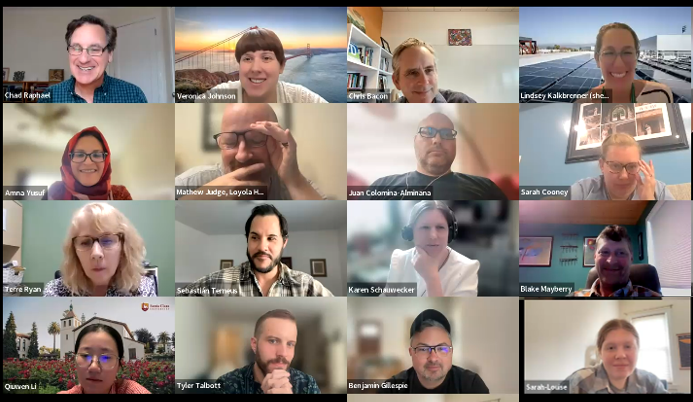 Participants in the Sustainability & Justice across the Curriculum workshops.
Fifty faculty and sustainability staff participated in SCU's Sustainability and Justice across the Curriculum workshops this summer. Eighteen faculty members from the College and other SCU schools were joined online by 32 educators from 17 other institutions across the country. The new curricula that SCU participants developed in the workshops will reach over a thousand students per year in Art and Art History, Biology, Communication, Economics, English, Environmental Studies and Sciences, Modern Languages and Literatures, Physics and Engineering Physics, Public Health, and Theatre and Dance, as well as the Jesuit School of Theology, and the Schools of Business and Engineering. All participants agreed that the workshops met their goals and said they would recommend the workshops to a colleague. The workshops are offered each summer by SCU's Center for Sustainability and SCU's Environmental Justice & the Common Good Initiative, and taught by Chad Raphael (Communication), Chris Bacon (Environmental Studies and Sciences), and Lindsey Kalkbrenner and Veronica Johnson (Center for Sustainability). SCU faculty members interested in joining next summer’s workshops and earning a stipend should look for an email inviting applications in January or contact Chad Raphael.
Paul Gilbert (Public Health) is a member of a multi-institutional team that was recently awarded a grant to study recovery capital—the set of social, physical, human, and cultural resources that people may draw on to resolve a substance use disorder. Funded by the National Institutes of Health, the “Honoring and Examining Alcohol Recovery (HEAR) Study” will follow a national sample of 300 adults who are in the first two years of resolution of an alcohol use disorder. Using a series of surveys, the study will measure the development of recovery capital and assess its association with recovery status and other indicators of wellbeing. The team is particularly interested in variations by key subgroups, such as racial/ethnic minorities and low-income people. Guided by a community advisory board, which will ensure that the perspectives of people with lived experience of alcohol use disorder and recovery are included, the team’s overarching goal is to better support people seeking recovery from substance use disorders. The HEAR Study will be administratively housed at the University of Buffalo, with additional collaborators from West Virginia University, the Ohio State University, and the University of Pennsylvania.
Amid growing threats to public health safety-net systems, a new qualitative study in Ethnicity & Health offers timely and novel insights on how Latiné adults in California navigate and experience safety-net services aimed at supporting health and wellbeing. Titled “Comparing Government-Sponsored and Community-Based Safety-Nets for Health and Wellbeing among Latiné Adults in California,” the research was led by Roberto Mercado-López ’25 (Public Health Science), recipient of the Gerald and Sally DeNardo Science Scholar Award. The publication is a collaboration with Micah Lattanner (Public Health) and Tatiana Londoño (UCLA), with Alice Villatoro (Public Health) serving as the senior scholar who mentored and supported Roberto throughout the entire research process.
The study results highlight the need to: strengthen communication strategies to improve safety-net services awareness and counteract misinformation; rebuild trust between government institutions and communities; reduce stigma surrounding safety-net service use; simplify bureaucratic processes for using government safety-nets; and foster connections between community and government systems to address upstream social determinants of health. Collectively, the study offered actionable insights on how government and community-based organizations can more effectively engage Latiné communities to advance health equity.
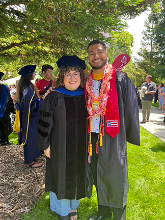
Image: Alice Villatoro and Roberto Mercado-López at SCU's 2025 Undergraduate Commencement.
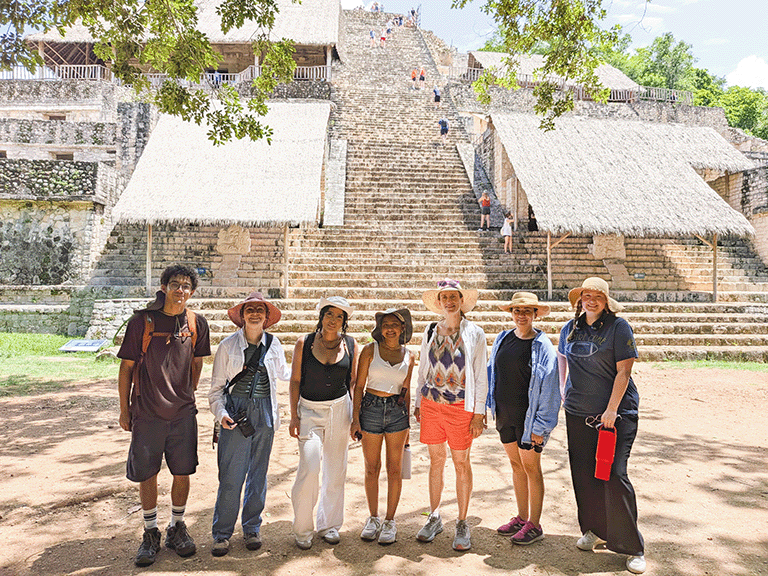 SCU Yucatán team at Ek Balam archaeological site. (L-R): Jacob Salazar ’27 (English, Anthropology), Kae Allen ’27 (Anthropology, Spanish Studies), Barbara Moreira ’28 (Anthropology, Spanish Studies), Nishi Goyal ’28 (Web Design and Engineering), Maia Dedrick, Isaura Cruz, Molly Jean Kaspura ’26 (Anthropology). Not pictured: Lorena Topete-Saenz ’29 (Anthropology) and Heather Stephan ’26 (Anthropology).
Seven SCU students and recent graduates joined faculty members Isaura Cruz and Maia Dedrick (both Anthropology) for their summer research projects related to human biology and archaeology, respectively. They stayed in Valladolid, Yucatán, México, where they joined a local team of students led by Universidad de Oriente faculty member Adolfo Iván Batún Alpuche, whose research program focuses on biocultural studies and especially Maya food sovereignty. Research took place in Tahcabo, Yucatán, where town residents participated in studies of cardiovascular and metabolic health, prototype testing of the phone application “Maya Roots,” and the documentation of ancient building foundations to compare with analyzed lidar imagery. Students gained a richer experience via visiting museums, archaeological sites, and cenotes (underground swimming holes), and of course by trying the local cuisine.
Smita Ghosh (Mathematics and Computer Science) and Xiaochen Luo (Counseling Psychology) are leading a cross-disciplinary research collaboration supported by The Whitham Family Collaborative Scholarship Awards. Their work examines how generative AI is used for mental health and emotional support, combining machine learning and natural language processing with expertise in psychotherapy and qualitative analysis. The project investigates risks such as unhealthy emotional dependency and self-harm while developing AI safeguards to identify risk signals in conversations.
This work has recently led to two papers, with student co-authors from the Department of Mathematics and Computer Science, accepted at Network Enabled Health Informatics, Biomedicine and Bioinformatics, held in conjunction with the 18th International Conference on Advances in Social Networks Analysis and Mining (ASONAM 2026). Both papers include substantial student participation, with students comprising the majority of the author teams. "SAFE-Chat: A Robust Framework for Self-Harm Risk Detection in Conversational AI Systems" includes Thai Nguyen ’26 (Computer Science), Jonah Engelmann ’26 (Computer Science), Karl Heinemeier ’26 (Computer Science, Finance), and Atharva Sonar ’26 (Computer Science). "Public Perceptions of ChatGPT as a Therapist-Like Tool: A Sentiment-Stratified Topic Modeling Study of Social Media Data" includes Lucia Ramirez Vigil ’28 (Computer Science, Mathematics), Abhinav Pala ’28 (Computer Science), and Shayan Poigai ’28 (Computer Science). Thai Nguyen presented the work at ASONAM 2026 in Morocco in August.
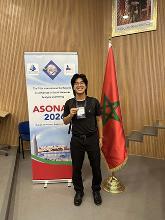
Image: Thai Nguyen presents research on self-harm risk detection in conversational AI systems at ASONAM 2026 in Morocco.
Tripp Strawbridge (Modern Languages and Literatures) recently co-authored an article in CALICO Journal. The article, titled "L2 interaction in service-provider virtual exchanges," analyses a series of conversations between university Spanish language learners and paid Spanish-speaking coaches on the virtual platform Boomalang. Such "virtual exchanges" are now commonplace in university language programs, but little is known about how much feedback students receive from their coaches, or whether they frequently engage in "negotiation" routines thought to benefit second language development. The results of the study show that speaking time between students and coaches is generally balanced on this platform, but that instances of corrective feedback and negotiation are rare. In other words, exchanges were found to often be quite "dry," with interacts infrequently building on each other's ideas to develop conversational topics. Instructors may wish to more deliberately structure activities assigned in such exchanges.
In June, Benjamin Gillespie (Theatre and Dance) was elected Governing Council Chair for the North American Network in Aging Studies (NANAS). NANAS facilitates sustainable, intersectional, and multidisciplinary collaboration among researchers interested in the study of cultural aging. Bringing together scholars in the humanities and interpretive social sciences, the organization promotes age studies across a range of disciplines and supports scholarship that challenges ageism and stereotypes about older age across the globe. As Chair, Benjamin will oversee the organization’s programming, governance, and collaborative initiatives while helping to expand its international network and advance the field of age studies.
Chan Thai (Communication) published “Grief and Mental Health Outcomes Among College Students” in the Journal of The First-Year Experience & Students in Transition with coauthors Giannina Ong '18 (English, Classical Studies, Women's & Gender Studies), Sofia Molina Perez '23 (Communication), Javier Ramirez '19 (Psychology), and Julia O’Bryan née Moore '18 (Psychology). The paper analyzes data from a SCU survey (N=1,617) and compares 3 groups of students across a range of social and emotional outcomes. The 3 groups were: (1) those who reported no loss of a loved one in the past 12 months, (2) those who reported a loss of a loved one in the past 12 months but self identified as currently not grieving; and (3) those who reported a loss of a loved one in the past 12 months and self identified as currently grieving. The students who reported a loss and grief showed statistically significant higher rates of hopelessness, overwhelm, sadness, and anger, as well as increased depression and anxiety. We recommend that universities implement one question on surveys: “Do you consider yourself to be currently grieving?” and follow up with students who answer ‘yes’ with support and resources. This study has informed Chan’s efforts across campus in support of grieving students, including a faculty development cafe, work with the Dean of Students Office to clarify support policies, and the syllabus statement for Grief Support included in the Teaching Expectations webpage from the Provost’s Office.
Tom Plante (Psychology) published Professional ethics, artificial intelligence (AI), and clinical practice in the Ethics Corner section of On Board with Professional Psychology.
Few topics have generated as much discussion, concern, media attention, and buzz in recent years as the development and implementation of Artificial Intelligence (AI) in our personal and professional lives. AI has upended so many aspects of life, presenting both opportunities and risks. The American Psychological Association Code of Ethics (2017), although published long before AI entered the global scene, offers helpful wisdom about how we should approach AI. There are several key principles that should keep in mind as navigate the shifting sands and new developments in this remarkable game-changing technology. Perhaps the most important ethical principles and guidelines from the Code of Ethics to consider and highlight in this brief article include (1) Section 4 (Privacy and Confidentiality), (2) Section 3 (Human Relations), and (3) Section 2 (Competence). Each are highlighted and commented on in this article.
On Septermber 25, Tom gave the opening keynote address to the annual Catholics in Recovery virtual national summit. The theme of the conference was, "Reclaiming Our Belovedness: A Catholic Response to Addiction" and the address focused on the Catholic Church's emphasis on human dignity and seven Jesuit inspired tools for dealing with addiction and related behavioral health challenges using a biopsychosocialspiritual and cura personalis model of care.
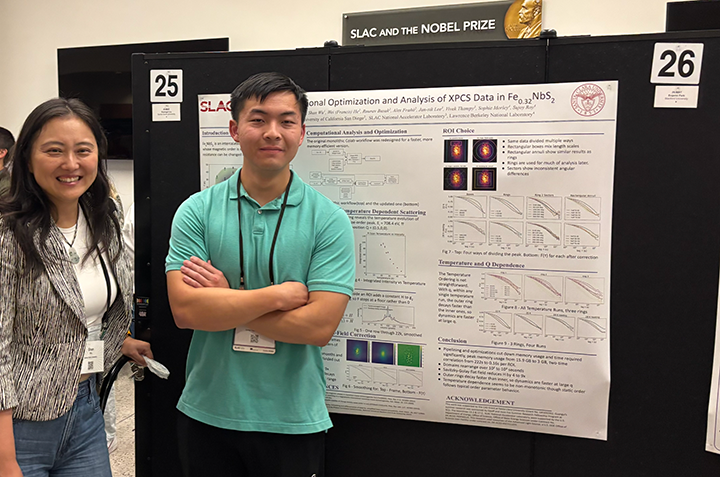 Shan Wu and Guangyi Liu.
Guangyi Liu '27 (Computer Science and Engineering, Engineering Physics) presented research he performed with Shan Wu (Physics and Engineering Physics). The goal of Guangyi's project is to investigate the temporal dynamics of a magnetic transition-metal dichalcogenide using X-ray photon correlation spectroscopy (XPCS) data collected by Shan's group. Guangyi improved the efficiency of a Python workflow for loading, visualizing, and analyzing the XPCS data. He also incorporated a flat-field correction method into the analysis pipeline to improve data visualization. His results show promising speckle patterns as well as time relaxation behavior in the autocorrelation analysis. Guangyi's work was supported by SCU's Geoff and Josie Fox fellowship.
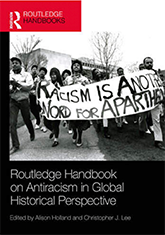
Tony Hazard (Ethnic Studies) published the book chapter "Reconsidering US Antiracism: 1945-1970" in the Routledge Handbook on Antiracism in Global Historical Perspective (2026) edited by Alison Holland (MacQuarie University, Sydney) and Christopher Lee. Tony's chapter explores antiracism in the United States in the period following World War II. The chapter approaches antiracism in the postwar period as an intensely contested political space in which various stakeholders engaged the tensions inherent in a democracy defined in its first century by enslavement and colonial expansion, and in its second century by legal segregation and ongoing racialized violence. Taking into account this history, the chapter closely examines monumental antiracist victories from the 1940s to 1960s to uncover the specific dimensions of the emergence of antiracist policies at the federal level. In charting the details of these victories, the chapter also highlights the multilayered resistance to such progress from private citizens to the halls of Congress. This collection is the first multidisciplinary anthology of research on antiracism in global historical perspective, and has been named an Outstanding Book by the Association for Ethnic Studies.
Birgit Koopmann-Holm (Psychology) was part of a team of 15 leading empathy scholars who published the article "What We Talk About When We Talk About Empathy: Toward a Common Lexicon of Empathy-Related Constructs" in the journal Perspectives on Psychological Science, a highly regarded, peer-reviewed journal published by the Association for Psychological Science that features influential research and integrative perspectives across psychology. This paper addresses longstanding disagreements about how “empathy” is defined and studied. The group developed a shared lexicon that distinguishes among specific forms of empathy-related processes, including perspective taking, emotional contagion, compassion, personal distress, accurate inference, mimicry, and synchrony. The publication encourages researchers and practitioners to use these more precise terms rather than relying on “empathy” as a broad umbrella term, helping improve clarity and communication across the field of empathy research.
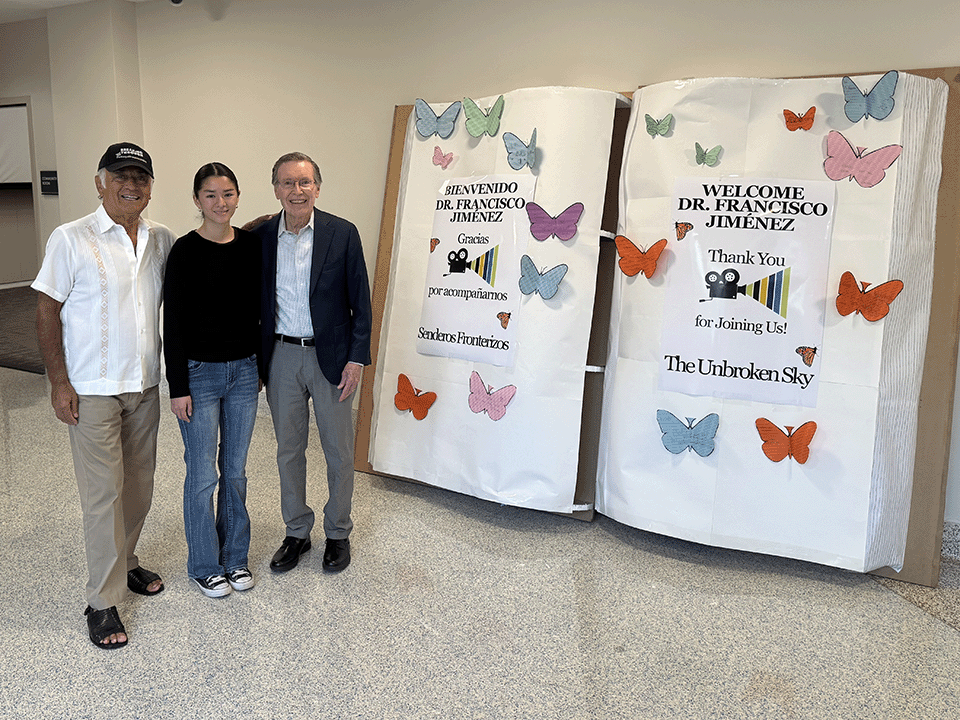 Gilroy Public Library event attendees and Francisco Jiménez.
Francisco Jiménez (Modern Languages and Literatures, Emeritus) was a keynote speaker at the tenth-anniversary celebration of the La Raza Historical Society of Santa Clara Valley, held at the Mexican Heritage Plaza. In his remarks, Francisco spoke about the experiences and contributions of Latino immigrant families and emphasized the importance of preserving their stories for future generations. He highlighted the many ways Latinos have contributed to the Santa Clara Valley and the nation and expressed his gratitude to the Society’s founders, volunteers, board members, donors, and supporters for their dedication to preserving and celebrating the Latino heritage of the Santa Clara Valley.
On September 26, Francisco spoke at the Gilroy Public Library as part of its Hispanic Heritage Month celebration. He emphasized the significance of recognizing Latino history and culture as an integral part of the American experience. He noted that Latino stories, traditions, languages, music, literature, and experiences are woven into the larger American story and enrich our understanding of who we are as a nation. His presentation was followed by a screening of The Unbroken Sky, a dramatic film based on his memoirs.
Renee Billingslea (Art and Art History) published a book chapter entitled "A Visual Artist’s Approach to Material Culture: Addressing Trauma and Terror" in Objects of Atrocity: Material Culture and the Challenges of Difficult Histories (pgs. 254-267) Purdue University Press, on June 6, 2026.
The vast majority of people throughout history have left few written traces. That is especially the case for those who were brutally forced from their homes, stripped of their possessions, and swiftly imprisoned, enslaved, or murdered. Objects of Atrocity: Material Culture and the Challenges of Difficult Histories addresses how we return humanity to these people in order to avoid their erasure from history. Academics and practitioners from a variety of disciplines and cross-disciplinary approaches grapple with the challenges and possibilities relating to the collection, conservation, storage, and display of objects in the aftermath of mass atrocities. This collection confronts a range of difficult histories including the Holocaust; the genocides in Cambodia, Rwanda, former Yugoslavia, Iraq, and Kurdistan; the incarceration of Japanese Americans; and a diverse range of crimes committed against Native Americans, African Americans, Roma, and Sinti people. The goal of this volume is to restore the dignity of these people and communities through the examination of the material culture left behind.
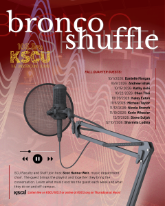
Scot Hanna-Weir (Music) is hosting a weekly radio show this year on KSCU 103.3 FM called Bronco Shuffle. The format is that each week, Scot is joined by a faculty or staff member from across the university. The guest brings a playlist of music and then they join in conversation about the music and what they do on campus. Tune in Thursdays at noon on the radio at 103.3 FM or online at KSCU.org. Playlists from the series can be found on Spotify.
Fall quarter guests:
| October |
November |
December |
| 10/1 Danielle Morgan |
11/5 Michael Taylor |
12/3 Steve Suljak |
| 10/8 Andrew Ishak |
11/12 Nicole Branch |
12/10 Sharmila Lodhia |
| 10/15 Kathy Aoki |
11/19 Korin Wheeler |
| 10/22 Chan Thai |
| 10/29 Kaley Eaton |
|
|
Parallel Visions
Thru Nov. 21 | Edward M. Dowd Art and Art History Building
Curated by Kelly Detweiler. SCU Artists: Ryan Carrington, Kathy Aoki, Takeshi Moro, Ryan Reynolds and Pancho Jimenez. Japanese Artists: Kineta Kunimatsu, Rie Kawakami, Mitsugu Aikawa, Hiroshi Takeda, and Hiroyasu Kosukagawa. |
|
|
Banned Books Week Spotlight: The Day The Books Disappeared
9:15 – 10:45 a.m. | St. Clare Room, Learning Commons 3rd Floor
Come listen to NYT Bestselling and award-winning co- authors of The Day The Books Disappeared Joanna Ho and Caroline Kusin Pritchard. A book signing follows the discussion.
Sponsored by the Center for the Arts & Humanities |
|
|
Technology Training Accessibility Classes
Ensure your Camino, Google docs (using Grackle), PowerPoint, and Word documents are accessible. |
|
|
Supporting Student Success: Lunch & Learn
11:45 a.m. – 12:45 p.m. | Varsi Hall, Room 222
Find out how you can partner with SCU’s tutoring services to support student success!
Linda Burks (Mathematics Learning Center), Garrison Dyer (Drahmann Tutoring), and Denise Krane (The Hub Writing Center) will share information about these essential campus tutoring services. You’ll learn how to encourage students to use these resources for their academic success and how you can frame these as alternatives to AI platforms while highlighting why the human-to-human partnerships can benefit students beyond the classroom. |
|
|
Grand Reunion Weekend
Oct. 8 – 11
Theatre and Dance All Years All Years, Majors, Minors, & Enthusiasts Reception
Friday, October 9
Fess Parker Studio Theatre 7 – 9 p.m.
College of Arts and Sciences Alumni Reception
Saturday, October 10
Vari Hall, 5:30 – 7 p.m. |
|
|
tUrn Week
Through October 18 | On Campus and on Zoom
15th biannual tUrn climate crisis awareness & action week.
Inviting everyone at SCU & everywhere else to step in! |
|
|
How to Lose Friends and Alienate Allies: Forging and Unraveling the Canada-U.S. Relationship
11:45 a.m. – 12:50 p.m. | Learning Commons 129
Since their founding era, Americans have periodically tried to convince their northern neighbors to join the Union, sometimes by force. This Brown Bag in the Humanities talk with Greg Wigmore (History) will offer a sweeping survey of the prospect (or threat) of the American annexation of Canada. |
|
|
Music@Noon: Maverick Granddaughter — Musical Strings and Stories
Noon | Music Recital Hall
Kaley Lane Eaton (Music) previews selections from her new chamber folk song cycle performed with The Plectrum Five and Strange Interlude. |
|
|
Third Thursdays Shut Up & Write
9 – 11 a.m. | Varsi Hall, Room 222
Writing Retreat – Quiet Time to Write & Recharge
Need a space to focus on that article, book chapter, or grant proposal? Our upcoming Shut Up & Write session offers structured time, a quiet environment, and a supportive atmosphere to make serious progress on your writing. |
|
|
Faculty Recital Series – Kaley Lane Eaton’s The Plectrum Five
7:30 p.m. | Music Recital Hall
Kaley Lane Eaton's Plectrum Five presents Maverick Granddaughter.
Part new music ensemble, part American roots string band, and part historical music excavators, the conservatory punks of Kaley Lane Eaton's Plectrum Five combine the improvisatory timbral explorations of their urban experimental orientation with the Rocky Mountain folk twang of their collective family trees. Joined by Los Angeles-based harp and cello duo Strange Interlude, this string supergroup presents Eaton's acoustic chamber folk song cycle, Maverick Granddaughter. An original epic poem intertwined with old frontier songs arranged for this unique ensemble tells the story of Eaton's maternal line: seven generations of only daughters from Boulder, Montana, and their profound relationship with the land. Tickets available at SCU Presents Performing Arts Center. |
|
|
CAFE: Mind/Body–Joy and Creativity in Teaching, Learning, and Scholarship
Noon – 1 p.m. | Varsi Hall, Room 222
What changes when we attend to our whole selves—mind, body, creativity, and lived experience—in our teaching, learning, and scholarly work? What does this look like in our increasingly digital world? This session invites faculty across disciplines to explore practices that foster joy, connection, curiosity, and intellectual thriving, and to consider what becomes possible when we center our shared humanity and make room for our whole being in our academic lives. |
|
|
Fall One Act Festival 2026
Sat 10/24 & Sun 10/25 2 p.m. | Fess Parker Studio Theatre
Join us for these captivating and creative one-act plays, directed by our exceptional students! Through imaginative stories, engaging characters and fascinating places, these theatrical gems will take you on a journey full of new possibilities and diverse perspectives. Reserve your tickets through SCU Presents Performing Arts Center. |
|
|
The Chaplain & The Doctor
3:45 – 6 p.m. | Music Recital Hall
Join us for a screening of the documentary The Chaplain & The Doctor with director Jessica Zitter. Filled with warmth and humor, this buddy film follows two unlikely allies working to bring curiosity, connection, and compassion to a broken healthcare system - one patient at a time. The Chaplain & The Doctor models a new kind of care, one that honors both spirit and body, the diverse backgrounds of patients, and the most human needs we all share.
Introduced by Jamie Wright (Religious Studies) and Thomas Plante (Psychology). |
|
|
Music@Noon: All That Jazz
Noon | Music Recital Hall
|
|
|
3rd Annual CAH Arts & Humanities Pop Up Event
11 a.m. – 3 p.m. | Benson Plaza and Alameda Lawn A
Don't miss the opportunity to immerse yourself in the arts and humanities at SCU's pop-up event!
October is National Arts and Humanities Month! Celebrate with Santa Clara University’s Center for Arts & Humanities and student groups by attending our pop-up arts and humanities event from 11:00 a.m. – 3:00 p.m. Enjoy performances and tabling from a variety of SCU student organizations and departments while taking part in hands-on crafts and activities. |
|
|
Rap or Rapta?: Music and Dissent in Urban India
4 – 7 p.m. | Learning Commons 129
Join CAH faculty fellow, Supurna Dasgupta (English) for a screening of the celebrated Bollywood film, Gully Boy. At this movie screening we will witness how joyful music-making forms communities of dissent and solidarity in India. As we watch the film, we will think about how new global forms of popular music can dissent against social inequality and injustice. |
|
|
Catholic Social Teaching in the Age of AI: Engaging “Magnifica Humanitas”
9 – 11:30 a.m. | St. Clare Parish Hall, 725 Washington St., Santa Clara
On May 15, 2026, Pope Leo XIV issued the newest document of Catholic Social Teaching (CST): Magnifica Humanitas. Subtitled “On Safeguarding the Human Person in the Time of Artificial Intelligence,” it brings CST to bear on some of the biggest moral, political, and technological questions facing humanity today–and, especially, Silicon Valley. This workshop, led by Nicholas Hayes-Mota (Religious Studies) will offer a comprehensive overview of the text and context of Magnifica Humanitas, and invite participants into more focused discernment about their own relationship to the technologies that are rapidly transforming our world. |
|
|