BCBR Alum Spotlight
Leadership, Governance, and Board Readiness
From the Field to the Boardroom: Leadership, Governance, and Readiness
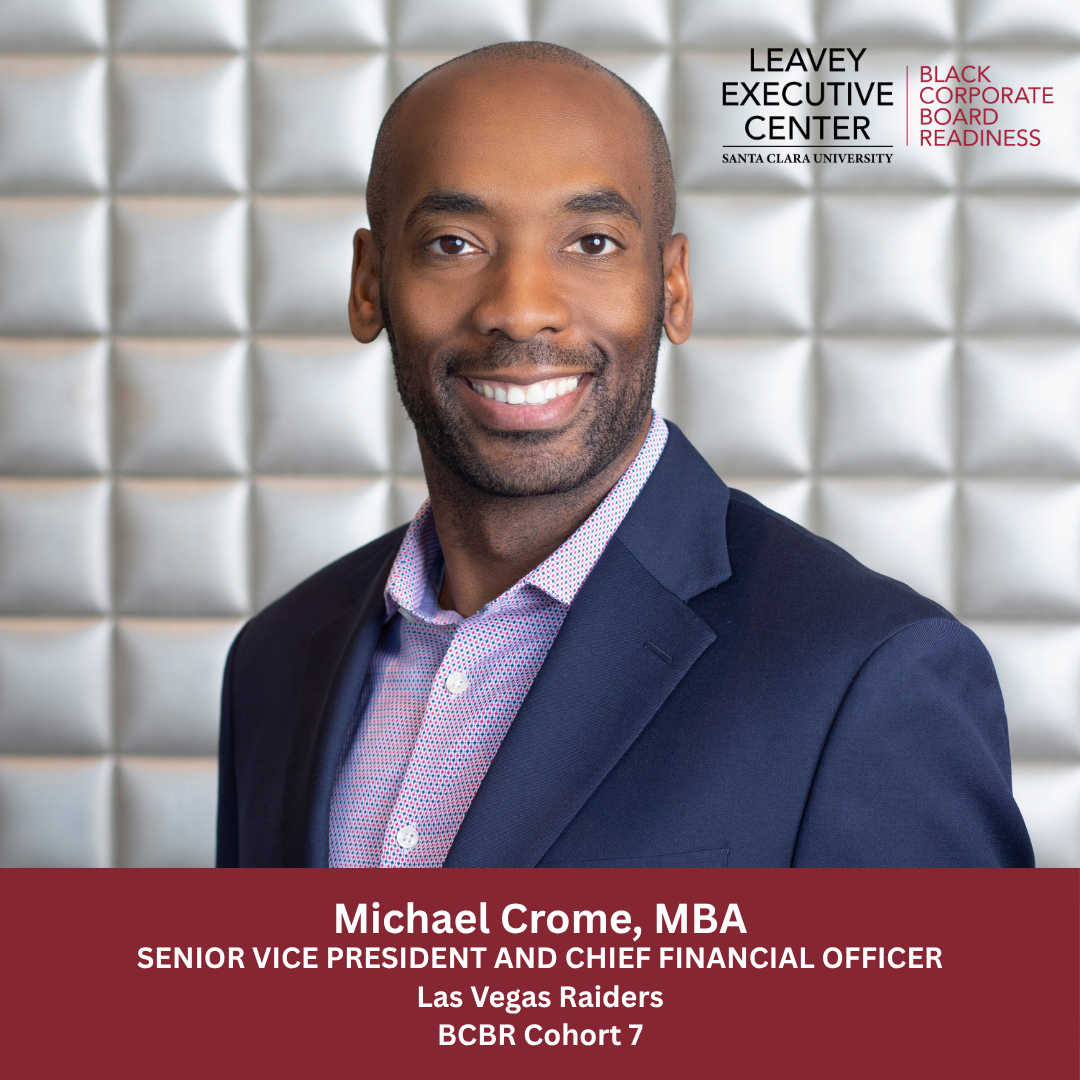
For Michael Crome, board leadership is not a pivot. It is the natural progression of a career built at the intersection of finance, operations, and economic impact.
As Senior Vice President and Chief Financial Officer of the Las Vegas Raiders and Allegiant Stadium, one of the highest-grossing stadiums in the country, Crome’s leadership extends far beyond finance. His scope includes analytics, information technology, retail, and full stadium operations, overseeing everything from NFL games to major concerts and private events.
This level of responsibility requires more than technical expertise. It demands enterprise thinking, operational fluency, and the ability to connect strategy to execution in real time.
Crome’s influence also extends beyond the stadium. As a member of the Board of Directors for the Federal Reserve Bank of San Francisco’s Los Angeles Branch, he brings real-time insight into economic activity across the tourism, hospitality, and entertainment sectors.
His role is not to act as an economist, but to provide grounded perspective on what is happening in the market. In fast-moving environments like Las Vegas, shifts in consumer behavior and event activity often signal broader economic trends. That real-world insight plays a critical role in informing economic understanding and decision-making.
His path to board service reflects a reality many executives overlook. Board opportunities are rarely posted. They are built through relationships, credibility, and a clear understanding of the perspective one brings.
Following a visit from Federal Reserve leadership, what began as a conversation about economic impact led to an invitation to serve on an advisory council. Within a year, that relationship evolved into a board appointment.
While Crome had prior nonprofit board experience, corporate governance introduced a new level of rigor and responsibility. Through deeper exposure and engagement with experienced directors, he gained a stronger understanding of the role boards play in guiding organizations.
One of the most critical distinctions in governance is the difference between management and oversight. Executives are responsible for running the business. Boards are responsible for holding leadership accountable, asking the right questions, and ensuring long-term sustainability.
For leaders accustomed to driving execution, this shift requires discipline and perspective.
Equally important is preparation. Effective board service requires understanding the organization, its leadership, and its strategic direction. Many of these conversations are informal, built through dialogue rather than presentation, and focused on alignment as much as qualification.
Crome emphasizes patience in the process. The right board opportunity is not just about selection. It is about fit, timing, and mutual value.
Perhaps the most defining outcome of his journey is confidence. Through experience and preparation, he developed a deeper understanding of fiduciary responsibility and the role directors play as stewards of organizations.
That responsibility often requires asking difficult questions and maintaining focus on the long-term health of the organization.
Today, his leadership spans executive operations, economic advisory, and board governance, demonstrating what it means to lead with range, discipline, and readiness.