blog posts
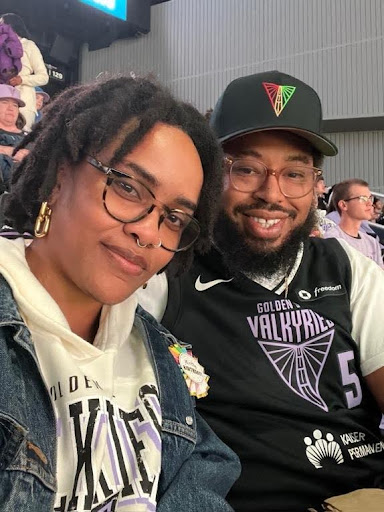
Juneteenth in Ballhalla
Surrounded by a sea of violet shirts, hats, and jerseys, with an occasional flash of glitter and bedazzled rhinestone accents, my partner and I stood patiently in Thrive City as the DJ played and handful of Black Classics from F.L.Y’s “Swag Surfin’” to 803Fresh’s “Boots on the Ground.” As we waited to be among the first 10,000 people to enter the majestic hall where the Chase Center used to be, the “Black Joy Choir” had folks in line catching the Holy Ghost in the midst of a summer breeze blowing in from the San Francisco Bay.
For me, Juneteenth traditionally carries a tone of reflection on delayed freedom, stolen time, and the unfinished work of Black liberation. But Ballhalla has slowly been making space for another Juneteenth tradition—one where there is no shame associated with the expression joy under conditions that do not always support it. In a socio-political climate where exhaustion can feel like the default, I was reminded that joy is a kind of rebellion and that this kind of rebellion is public, loud, and collective: a refusal of letting the world have the last word on what we are allowed to feel or when and how we are allowed to feel it.
This is Ballhalla.
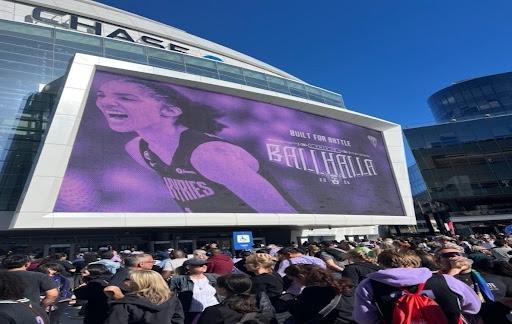
A photo of Gabby Williams on the jumbotron outside of Ballhalla–photo cred. Justin Clardy
Ballhalla is much more than the Chase Center adorned in Valkyries branding or a creative name for a fanbase and merchandising—although, it certainly includes these things. For me, Ballhalla begins before the opening tipoff and it endures the final buzzer signaling the end of a game. It’s painted across the diverse array of faces aboard the hour-long train ride to SF from Santa Clara Station on a weeknight. It’s in the atmosphere of what feels like a 10-hour train ride, with pauses for heart-breaking reflection at every stop along the South Bound train—from 22nd street to Diridon Station—after a loss. It’s in the temperament of fellow “Ballhalla Bullies” (...said with as much endearment that I can muster and is appropriate) who aren’t too cool to wear every single piece of Valkyries paraphernalia they own as often as they can and who “Defend Ballhalla” ⚔️ in every Reddit thread, tweet, group chat, or barbershop conversation they can find. It’s in every Veronica Burton or Gabby Williams steal, every Janelle Salaün three ball, Kaitlyn Chen layup, and every roar as Tip Hayes or Kaila Charles checks into a game.
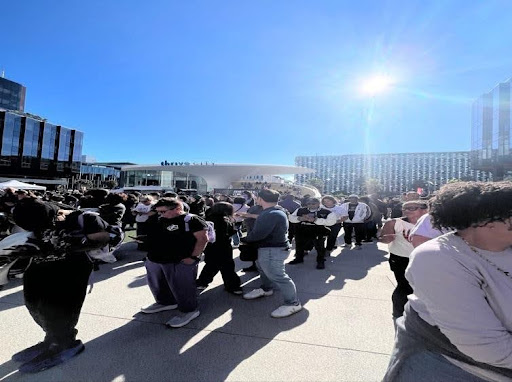
Fans lining up outside of Ballahalla on Juneteenth, Photo cred. Nannearl Brown
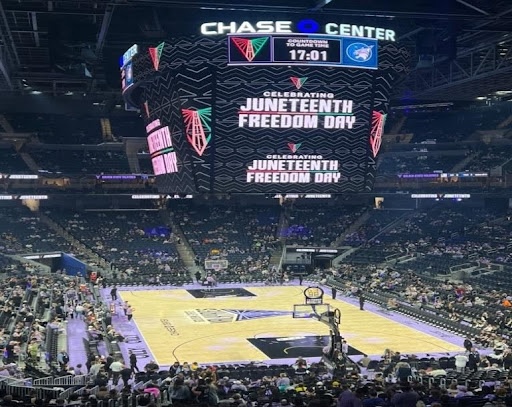
A pre-game photo of inside the Chase Center, Photo cred. Justin Clardy
On Juneteenth, nestled as it is within LGBTQ+ Pride month, we stood among a fanbase full of people who might be derided elsewhere—Black folks, queer folks, trans folx, polyamorous folks, women, young folks, elder folks, disabled folks, and others who are routinely asked to shrink into versions of themselves more palatable for “belonging.” But the joy in the atmosphere reminded me that a part of what animates Ballhalla is that the organization and its fanbase have, from the very beginning, been unapologetic about their commitment to rebelling against the phobias and isms that have become all too common a part of our social world—racism, misogyny, homophobia, transphobia, ableism, and all the rest. Defending Ballhalla doesn't just refer to defending our home court advantage on any given night, it’s also about protecting the kind of social spaces that make such rebellious joy possible in the first place.
A photo of Prof. Justin Clardy and their partner Nannearl Brown at the Juneteenth Game, Photo cred. Nannearl Brown