blog posts
Closer to Fine
I have type 1 insulin-dependent diabetes. I was diagnosed in graduate school, when my only understanding of the disease came from Steel Magnolias in which Julia Roberts suffers kidney failure after having a baby and dies, but Dolly Parton and Sally Field demonstrate that fierce friendship and Southern determination can triumph over any tragedy. When I asked to be tested, the doctor did not believe the story I told through my symptoms; when my A1C of 17 confirmed my suspicions, the nurse at the hospital lamented that I would never be able to wear sandals again. Needle-averse and prone to fainting, I learned to give myself insulin injections and prick my finger, then switched to an insulin pump and eventually added a continuous glucose monitor (CGM). A fabulous nurse called me three times a week through each of my pregnancies, and I gave birth to two babies under eight pounds, almost unheard of in a diabetic. Episodes of hypoglycemia (low blood sugar) leave me exhausted, my pump regularly wakes me in the night with alerts and alarms, and I worry about the rising cost of insulin, but I have excellent insurance, and savvy engineers keep enhancing the equipment that saves my life.
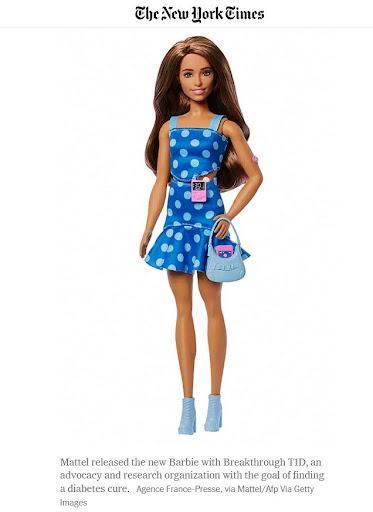
Then, in early July, Mattel announced the arrival of Type-1 Diabetes Barbie, complete with insulin pump, CGM, and purse full of snacks.
"A New Barbie Wears Blue Polka-Dots, and a Glucose Monitor," The New York Times, 9 July 2025
I played with Barbies as a child, and my sister had the coveted 1970s version of the Barbie Dreamhouse with a yellow elevator, but I have mixed emotions about this figure and did not let my kids have Barbies. I despise the unrealistic beauty standards and the sense that Barbie spends most of her time changing clothes and accessories. Sure, I trimmed a Barbie’s hair disastrously and might have decorated one with a green marker, but my daughter, now a studio art major at Santa Clara, designed houses and furniture out of cardboard and clay for her Littlest Pet Shop toys, with less pink and more possibility. I know all the lyrics to “Closer to Fine,” which was released when I was in high school and enjoyed a revival from the scene in the Barbie movie, and I laughed when Ken wanted to spend the night but wasn’t sure why.
Still, Barbie is and drips with plastic, and she embodies the commercialism we must relinquish if we want to save the planet. Could Diabetes Barbie be different? I developed diabetes in my twenties; who knows if I would have felt seen in the doll had I been diagnosed in my youth. My CGM is gray and round, not pink and heart-shaped, but our pump tubing pokes out in similar ways, and I always carry snacks. Our hair is a similar color, too, though parenting and Covid and perimenopause have left me with less to style. Apparently, the blue dots on her outfit symbolize diabetes awareness. My thighs are dotted with bruises, but they tend to be purple and yellow, not blue. How disheveled does she look in an episode of hypoglycemia? Anyway, many families seem delighted by this addition to the Barbie collection, and a New York Times article includes an image featuring a host of Barbies, some with disabilities. When Barbie's friend Becky joined the collection in 1997, though, her wheelchair did not fit through the door of the Dreamhouse, a rich irony.
On the first day of class each quarter, I tell my students that I have diabetes, in part to explain the CGM stuck to the back of my arm and the occasional beeps and dings they'll hear from my pump, but also to open space to explain what will happen if my blood sugar drops—and to ask for help. I'm terrible in emergencies and am always thrilled to have students with EMT or lifeguard training. Identifying my disease helps me be open about my concerns, and I've had a number of students who have diabetes and other conditions who appreciate the invitation to share their stories. I saw a student with a CGM in front of St. Joseph's and wanted to bump elbows and pronounce, "Wonder Twin Powers, Activate."
When I imagine the future, when I play pretend, do I see a world without diabetes? My sister practices medicine in a pediatric emergency room and reports that type 1 diabetes diagnoses have increased alarmingly since Covid. I suspect the technology will continue to improve, but federal funding for research through the Special Diabetes Program is set to expire in September. Will Congress renew it? When I see bold people protesting injustice in America, my mind races through a reel in which I am arrested and cannot get access to insulin, pump supplies, or glucose. I do not attend protests.
My CTW classes study stuff and sustainability, so I show clips from WALL-E, and we see in the film the future we are creating. I have a plastic LEGO WALL-E in my office who holds a tiny plastic green plant, commercial hypocrisy at its cutest. For now, I will resist the urge to collect Diabetes Barbie; she needs to be free to check her blood sugar and have a snack.
—
Missy Donegan is a Teaching Professor in the English Department. She relishes the slower pace of summer—teaching Advanced Writing online, staying up late reading, and watching for quails and coyotes on her hikes in South San Jose.