blog posts
Inheritance
When she died in 1991, my grandmother left me an oak desk, but I wouldn’t know this until decades later. Her demise came swiftly, and so did the unraveling of our family. I watched my mom and her sisters fall apart. Their wails frightened me, as did their fighting. Moments after she took her last breath, I heard one sister say, “What am I going to do without her?” as she collapsed into another’s arm. I was eleven and didn’t yet have the language to describe what I felt, but today I’d call it foreboding. Perhaps it was the upheaval that came after that that has shaped my memory. My mom and her four sisters bickered over everything. Soon after my grandmother passed, the oldest daughter, or maybe it was the fourth daughter, it depends on who you talk to, dashed to her apartment and took many of her belongings, including the oak desk my grandmother had saved for me.
Our family seemed to fall apart when my grandmother died. In some strange way, my work as a historian has tried to put it back together by making sense of our lives.
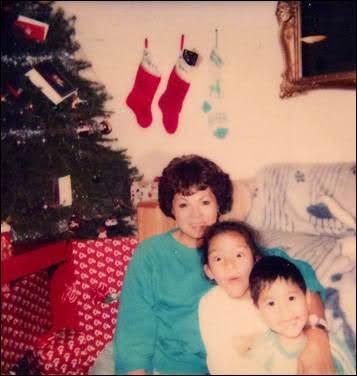
Image 1.1 Michiko Olivares, Author, Author’s cousin, Ca 1988
My maternal grandmother, Michiko Ikeda, was born in the fall of 1932 in Amagasaki City, Hyogo Prefecture, Japan– an industrial port city next to Osaka. In December 1941, when she was nine years old, the Japanese attacked Pearl Harbor, Hawai’i, then a U.S. territory, and shortly after, the U.S. entered World War II. Between February and August of 1945, the U.S. carried out an intense bombing campaign in Osaka, the second-largest city in Japan after Tokyo. Michiko was a few months shy of her 13th birthday during the airstrikes. My mother remembers her telling the story of how she had been walking home from school when the bombs began to fall. The kids, frightened, all scattered, running for safety. My grandmother didn’t describe what came next, or what she saw. Maybe she couldn’t, or didn’t remember, or maybe she didn’t want her children to carry the weight of it. Though the trauma would live on regardless of if it was spoken of or not. Michiko survived, while more than 100,000 Japanese civilians perished. Later that same year, the U.S. dropped atomic bombs on Hiroshima and Nagasaki, leading to Japan's surrender in September 1945.
With the war’s end came the Allied Occupation. Thousands of U.S. military troops and civilian personnel flooded Japan. In 1948, when she was 17 years old, Michiko left her parents’ home in Amagasaki City. Against her father’s wishes, she headed to the city of Nara to pursue her dream of becoming a singer. What else was she to do? If she stayed, she’d spend her days working in her parents' small Okonomiyaki stall, serving the same dish to the same locals daily. It was routine–likely welcomed by many after the chaos of the war. But Michiko didn’t want routine. She wanted to sing. As the eldest daughter, she had a duty to her parents and younger siblings, but she also felt the pull of Nara. She wanted to sing, and in Nara, there were plenty of opportunities for her to do just that. In Nara, there were American men with money to spend. They loved to dance, and she loved to sing.
In Nara, she sang in a club that catered to American GIs. She was fond of Futaba Akiko, a famous Japanese songstress of the war years. Although my grandmother’s raspy voice smoothed when she sang, she likely couldn't hit the high notes Akiko was known for. It was in Nara where she met my grandfather, Louis Olivares, a Mexican American GI from Texas. Louis was born the same year as Michiko, in San Angelo, Texas — a small town in West Texas. Shortly after they met, they married and had one daughter. In 1954, they left Japan for the United States, where Michiko gave birth to four more daughters -– my mother is the youngest. By 1963, they settled in the Highland Park neighborhood of Los Angeles, hoping to land on their feet after a rough patch in Texas. Los Angeles was “ the global meeting place located at the historical intersection of Asia, and Latin America,” as historian Yu Tokunaga explains, making it an ideal place to raise their Mexican and Japanese daughters.
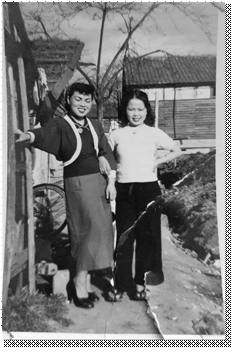
Image 1.2. Michiko Ikeda (Olivares) with friend, Ca. Late 1940s
But their hopes were dashed when my grandfather died in 1965 in a tragic workplace accident, making Michiko a thirty-two-year-old widow with five daughters. My grandmother worked two, sometimes three, jobs – mostly at Japanese restaurants in the San Fernando Valley. Her tribe of fatherless girls was left to fend for themselves and they were always getting into some kind of trouble. When my grandmother got sick, she was living in an apartment complex in Canoga Park located in the San Fernando Valley, which she also managed. The residents were mostly Latinos from Mexico and Central America, and though my grandmother was Japanese, she felt at home among them. As the wife of a Mexican American, she had spent much of her life in the U.S. living in Latino communities.
Michiko was one of thousands of Japanese war brides who married American GIs after WWII and immigrated to the U.S. These women began arriving in 1947, just two years after the war's end. At the time, Japanese nationals were barred from entering the U.S. under the 1924 National Origins Act, which excluded Asian immigrants. The 1945 GI Brides Act allowed foreign wives of U.S. servicemen to immigrate—but initially excluded Japanese women. Only later did Congress pass the Alien Brides Act, which allowed a limited number of Japanese women to enter.
By the time Michiko met Louis, immigration restrictions were slowly lifting. In 1952, Congress passed the McCarran-Walter Act, easing some barriers for Asian migrants. When Michiko and her oldest daughter arrived, their admission was remarkably easy compared to those who came a few years before. While U.S. officials claimed these changes stemmed from American liberalism, they were also driven by the demands of military empire. My grandmother and the thousands of women like her are the subject of my first book.
My grandmother was a fierce presence in my life. Her small frame–no more than five feet tall –and thick accent belied her fiery spirit, and as my mom likes to say, “she didn’t take sh*t from anyone.” She was also incredibly intuitive, a gift I like to think she passed down to me. This summer, as I began to work on my second book in earnest, I marvel at how far I’ve come. Growing up I never imagined that one day I would write a book (let alone a second), but it seems my grandmother did. She recognized my potential long before I did. Though I never received the oak desk she intended for me, she gave me something else: a reason to write.