Stories
Finding Stillness in the Midst of the Quarter
By the time week five arrives at Santa Clara University, the quarter can feel like a runaway train. Midterms, projects, practices, club meetings, and social commitments pile up quickly. With the constant buzz of campus life all around, many students find it difficult to hear God’s whisper in the midst of so much noise.
Again and again, students share how much they long for peace, rest, and a place to pray. They want a quiet space like the one Jesus sought in the Gospels, where they can slow down and reconnect with God. The Teach Me How to Pray retreat, offered this past month, met that longing with a simple invitation: step away for a moment, breathe, and rediscover the art of prayer.
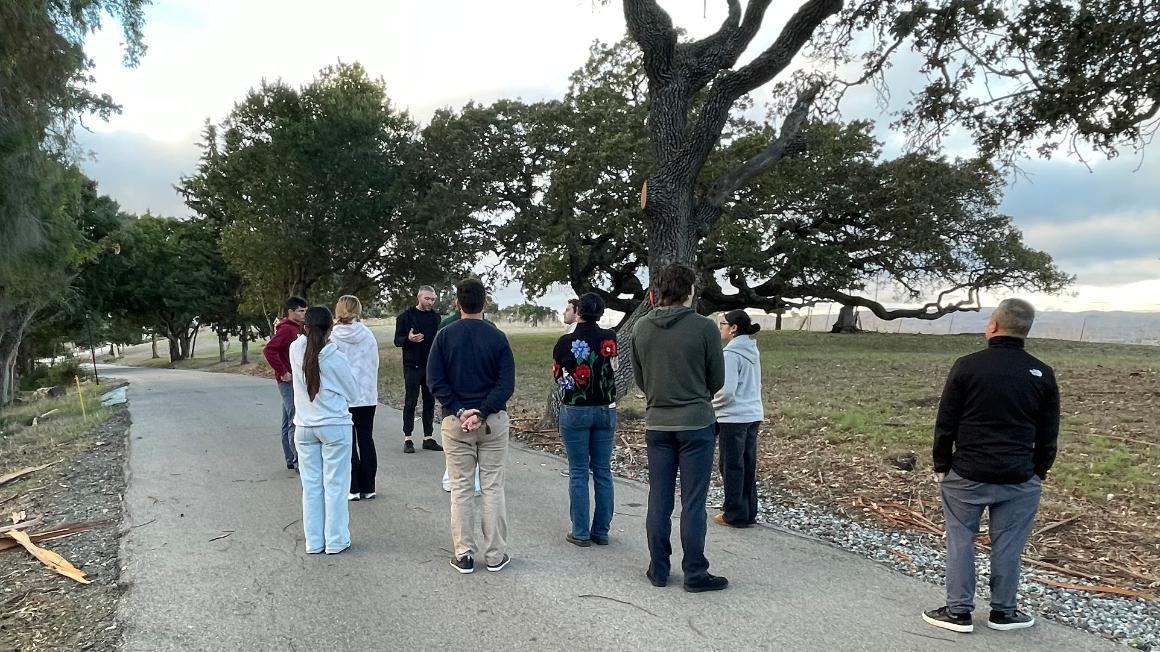
Our group traveled an hour south to the St. Francis Retreat Center in San Juan Bautista. The open fields, rolling hills, and quiet paths immediately offered a sense of welcome. One student put it beautifully, “from the moment I arrived, the surroundings made me feel like I was home, comfortably away from home. I grew up in a small town filled with open fields and animals, and the retreat’s setting felt beautifully familiar. I sensed that God had genuinely called me to be there.”
Throughout the weekend, students explored many forms of prayer, including daily prayer in community, a walking Examen, reflection on scripture, praying the Rosary, silent prayer during Adoration, and a beautiful Taizé service. Each practice offered a different doorway into God’s presence, and students were free to notice what nourished them most.
Some rediscovered prayers they had loved but set aside. As one student wrote, “We practiced prayers I was familiar with but had not practiced consistently lately, such as the rosary and the Chaplet of Divine Mercy. Their importance and beauty were taught to me once more and my passion for them was invigorated.”
Others found that their understanding of prayer widened. One student wrote the following reflection, “Going into the retreat I knew prayer was talking to God, but I had no idea it could also be being with God. We practiced being silent and doing nothing to allow God to come to us. This showed me that if we simply let God come to us, He will.”
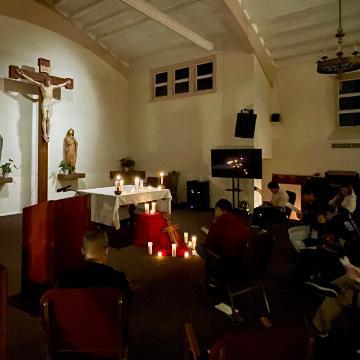
For some, the most meaningful moments came during the Taizé prayer service. This meditative form of Christian prayer originated with the Taizé Community in France, in an ecumenical monastic community dedicated to reconciliation and unity. Short, repetitive chants, periods of silence, and a gentle, candlelit atmosphere characterize Taizé prayer. The music, often just a line or two of Scripture or a prayer, is slowly repeated and creates a peaceful, reflective space where participants can rest in God’s presence. Rather than focusing on long readings or spoken reflections, Taizé emphasizes contemplative prayer, interior stillness, and communal singing. It is accessible, welcoming, and deeply peaceful, inviting people of all backgrounds to “pray with the heart” in a shared spirit of unity and quiet trust in God. As one student mentioned, “I hadn’t realized that chanting and music could be a form of prayer outside of Mass. Its meditative style, paired with a community of singers chanting together, was so beautiful. It was the highlight of the retreat.”
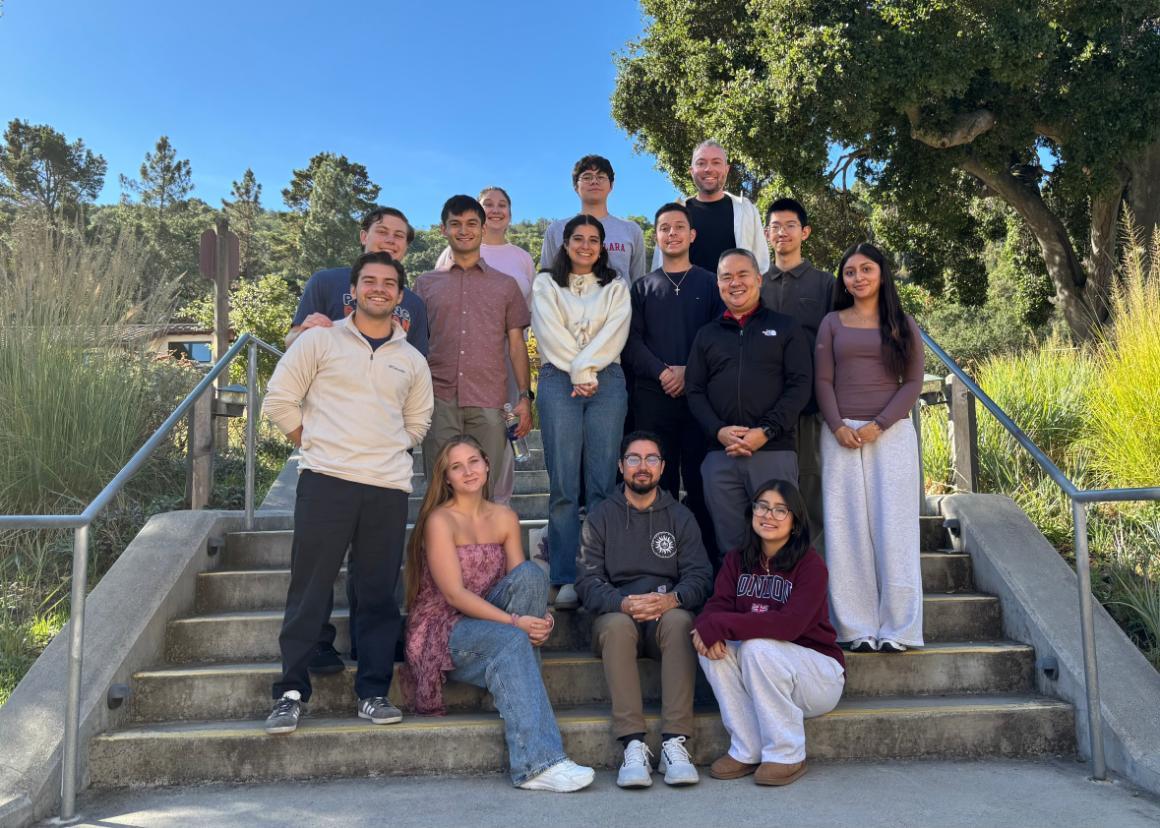
Being on retreat with our students was a true gift. What struck me most was how quickly everyone settled into a rhythm of presence. Phones faded into pockets. Academic routines loosened their grip. Students began to listen more deeply to themselves, to one another, and to God. There was a quiet attentiveness to the soul. Students tended to their inner lives while forming genuine relationships with those around them. These friendships were not just social connections but moments of shared prayer, vulnerability, and hope. Much of the beauty of this retreat came not just from practicing prayer, but as one student shared, “from bonding with friends over something we care about deeply—our relationship with God.”
Over the span of a weekend, the retreat became a place where prayer and community shaped one another. Students who arrived knowing few people found themselves welcomed into conversation and shared silence. Others strengthened friendships already growing beneath the surface. These relationships were rooted not in busyness but in grace.
At the heart of it all is something simple. We can prepare the schedule and offer the practices, but the real transformation happens in the quiet space between the student and God, and in the relationships God weaves among them. Our role is to make room. The rest is grace. For me, this retreat was just a complete gift. I witnessed hearts opening, prayer deepening, and community forming in gentle, profound ways. It reminded me that sometimes the holiest thing we can do is step back, be present, and let God do the work.
- Chris Casteñeda, SJ
Campus Minister, Ignatian Spirituality