Housing and Urban Heat: Assessing Risk Disparities
C. J. Gabbe, Environmental Studies and Sciences
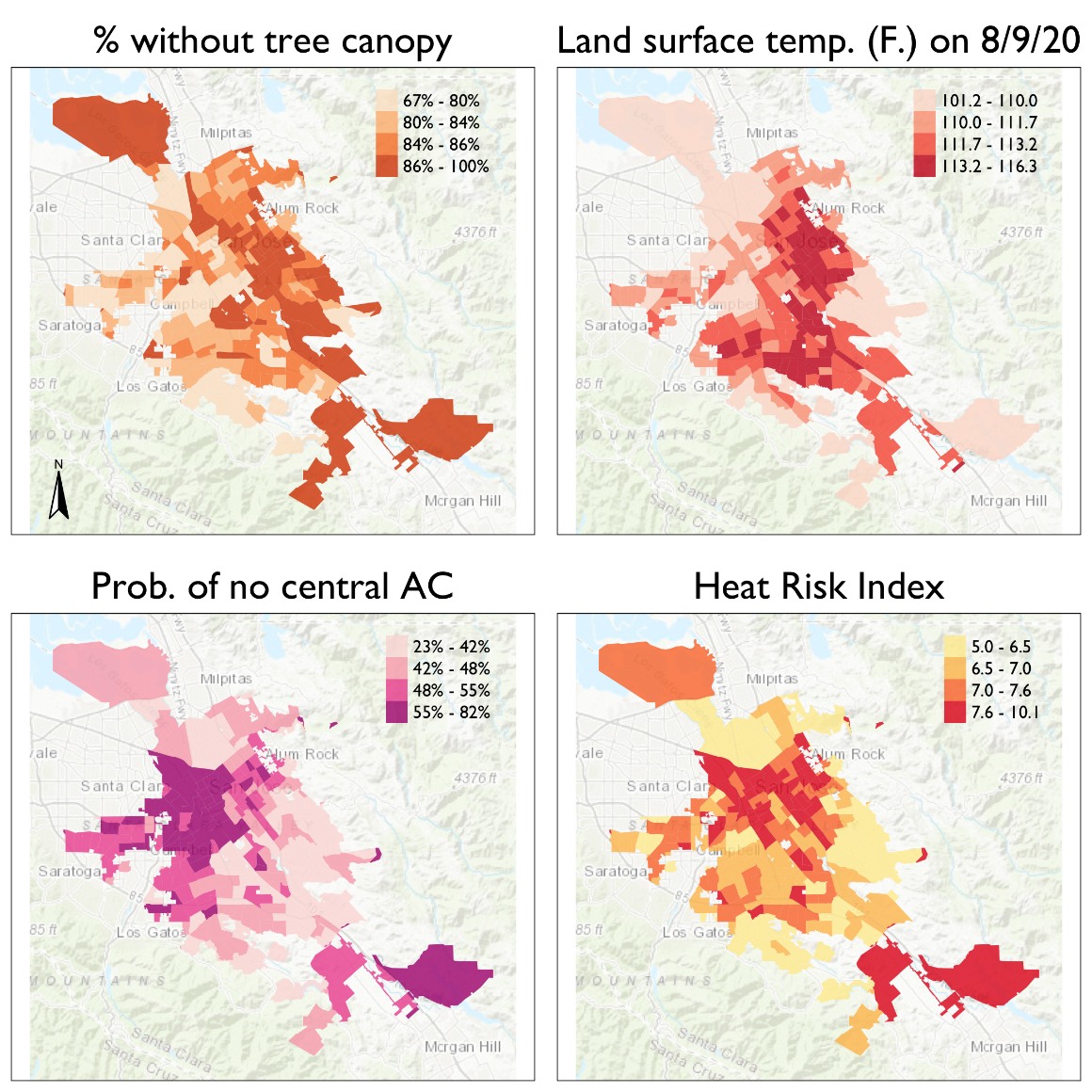
Heat is the leading weather-related cause of death in the United States, and housing characteristics affect heat-related mortality. Dr. C.J. Gabbe's research (in collaboration with Georgia Tech's Evan Mallen and SCU alumnus Alex Varni) answers two questions. First, how do heat risk measures vary by housing type and location in San José, California? Second, what housing and neighborhood factors are associated with greater heat risk? We answer these questions using a combination of descriptive statistics, exploratory mapping, and regression models. Our findings indicate that different housing types face varying degrees of heat risk and the largest disparities are between detached single-family (lowest heat risk) and multifamily rental (highest heat risk). Air conditioning availability is a major contributing factor, and there are also heat risk disparities for residents of neighborhoods with larger shares of Hispanic and Asian residents. This research demonstrates the need to understand heat risk at the parcel scale, and suggests to policymakers the importance of heat mitigation strategies that focus on multifamily rental housing and communities of color.