News Stories
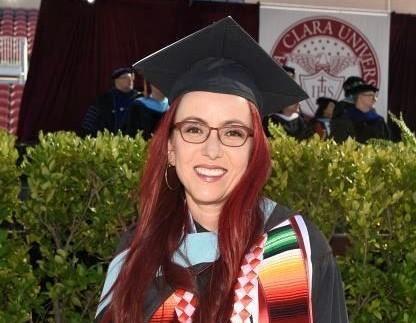
Resilience Is Bigger Than the Individual: SCU's Cristina Leal Shares Her Perspective
Resilience is often defined as personal toughness or independence, but Santa Clara University alumna and therapist Cristina Leal offers a different perspective: resilience is not something we build alone.
In a recent conversation, Cristina, a graduate of the Counseling Psychology program at the
School of Education and Counseling Psychology and the Latinx emphasis track - discussed her work with immigrant families, first-generation students, and historically marginalized communities. Throughout the conversation, one theme came up again and again: community is not separate from resilience. It is often the foundation of it.
“Resilience can be the opportunity to thrive,” she shared, “but it isn’t something you either have or don’t have… Resilience is really bigger than the individual.”
Cristina’s work has focused heavily on immigrant family systems and the ways migration can disrupt relationships, belonging, and support structures. She described studying unaccompanied minors and families separated through migration, often reconnecting years later after long periods apart. What she found was that healing rarely came from individual grit alone. Instead, resilience was often tied to rebuilding trust, family connection, cultural identity, and community support.
That understanding also shaped her own educational journey.
As a first-generation college student, Cristina initially embraced the idea that resilience and
success meant independence: moving away, figuring everything out alone, and proving she
could make it on her own. But once she arrived at college, the reality was far more isolating than she expected.
“It was really hard to be far away from my family for the first time, even as hyper-independent as I was,” she said.
Looking back, Cristina now challenges the cultural narrative that growth must come through
separation and isolation.
“We’re meant to be woven into a fabric, not really existing on our own,” she reflected.
For many students, particularly students from collectivist cultures, staying connected to family
and community is not a weakness or lack of independence. It can be a significant source of
strength, identity, and belonging.
That deeply shaped Cristina’s experience at ECP. She specifically chose Santa Clara University
because of the Counseling Psychology program’s Latinx emphasis and its recognition that
healing and mental health support must be culturally grounded. During her time in the program, she also experienced firsthand how community among students could drive meaningful change.
While navigating remote learning during the pandemic, Cristina and her peers leaned on each
other through difficult conversations and shared challenges within the classroom. Those
relationships not only helped students feel less alone, but they also empowered them to
advocate for improvements within the program itself.
Her message is a reminder, now more than ever, that resilience is not simply about enduring
hardship alone. It’s often built through connection and the communities that remind us that we
belong.