A graduate student’s passion project fosters community among Broncos
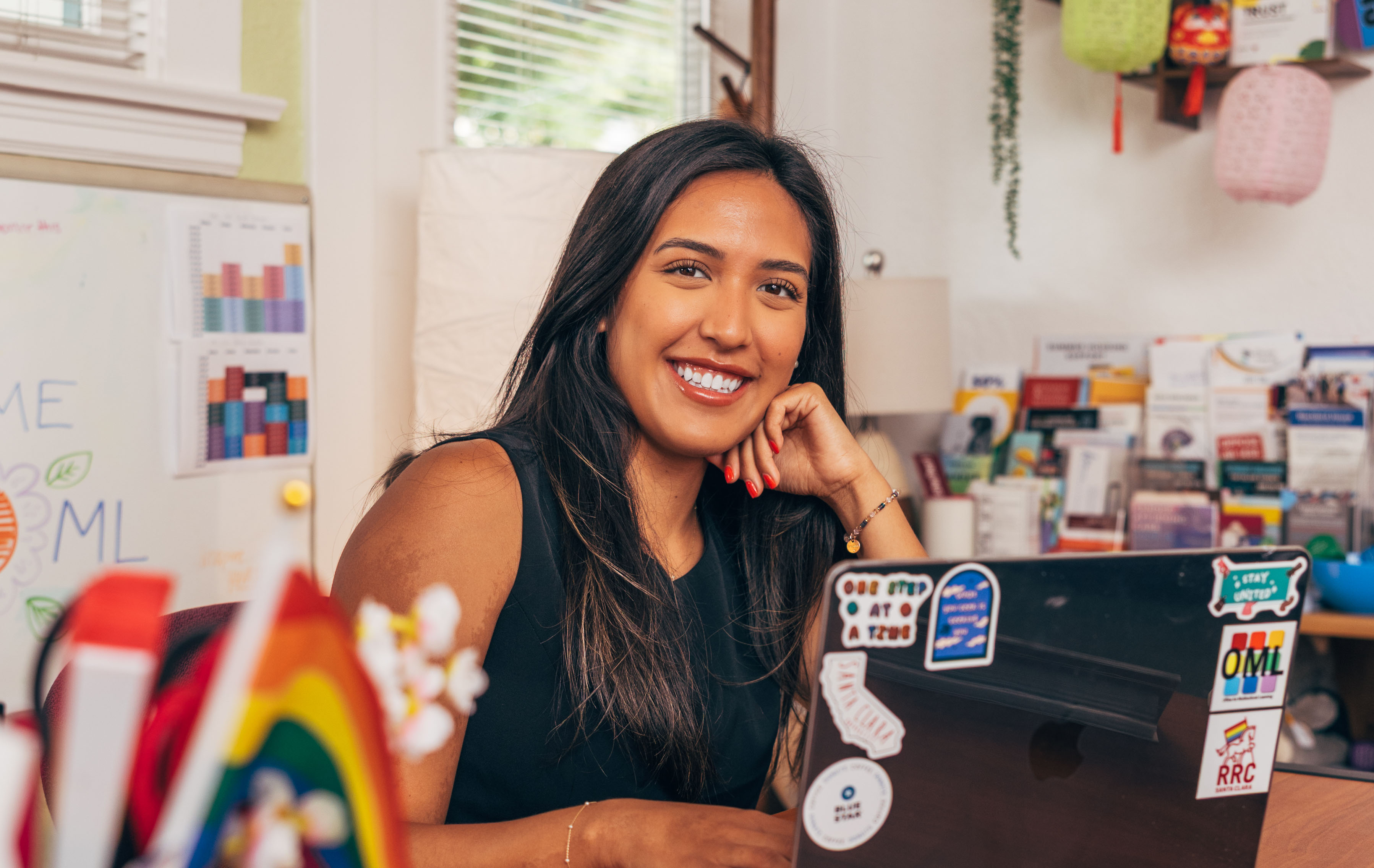
Every morning, Isabella Hernandez ’27 reads the same purple Post-it note on her vanity mirror: My identity is not my obstacle. My identity is my superpower. For her, these words are more than daily motivation. They are a reminder that she has the power to create change in spaces that weren’t always built for people who look like her.
“I’ve often counted myself out, but I’m learning that I don’t have to,” says Hernandez, a Mexican and Filipino graduate student studying counseling psychology at Santa Clara University.
From grade school through undergrad, Hernandez stayed on the sidelines, watching others participate in clubs or extracurriculars she never felt were meant for her. Graduate school at Santa Clara was her chance to change that. But when she noticed graduate students had few opportunities to connect outside the classroom, and limited bandwidth to organize communities of their own, she created the graduate student mixer series, quarterly events designed to reduce isolation and foster connection among graduate students across the university’s professional programs. Since spring 2025, these events have grown in popularity, drawing hundreds of students together to network and form lifelong friendships.
“I intentionally design each event to be welcoming to students across disciplines, cultures, identities, and stages of life, recognizing that graduate students often balance careers, internships, research, and family responsibilities alongside their education,” Hernandez says.
As the Student Inclusion Coordinator for the Office for Multicultural Learning (OML), she took on the mixer series as a passion project alongside her studies and work supporting students on campus. She pitched the idea to Chris Harris, director of OML, and they worked together to bring the event to life.
“At first, I wasn’t sure something this ambitious was possible, but as soon as I started planning I realized that I can ask for help. I can get the opportunities,” says Hernandez, who secured funding from the Wellness Center and Provost’s Office to put on the first event. She also coordinated volunteers, campus partners, and creative programming, all while balancing her own graduate coursework and leadership responsibilities. “It meant a lot to me to learn my own ability to ask for things and receive them without this imposter syndrome of feeling like I can’t do it.”
The response was more than she expected. Nearly 200 graduate student RSVPs and Hernandez had to cap registration. The first mixer, held at Ancora Vino, an Italian wine bar in downtown San Jose, drew guests who arrived dressed up for the occasion. They received a raffle ticket at the door and competed in a series of games, including a bingo challenge that encouraged them to get to know students from different programs for a chance to win prizes.
Hernandez also commissioned help from her sister’s company to build a photo booth for the event, letting new friends snap a picture together and take home a memento. By the end of the night, people were asking her when the next one would be.
“The onus is often placed on grad students to create their own sense of community, but the majority are working full-time jobs, they’re parents, they have a spouse—so it’s hard for people to show up. But I’ve learned that when events for our community do happen, everyone is so grateful,” says Hernandez.
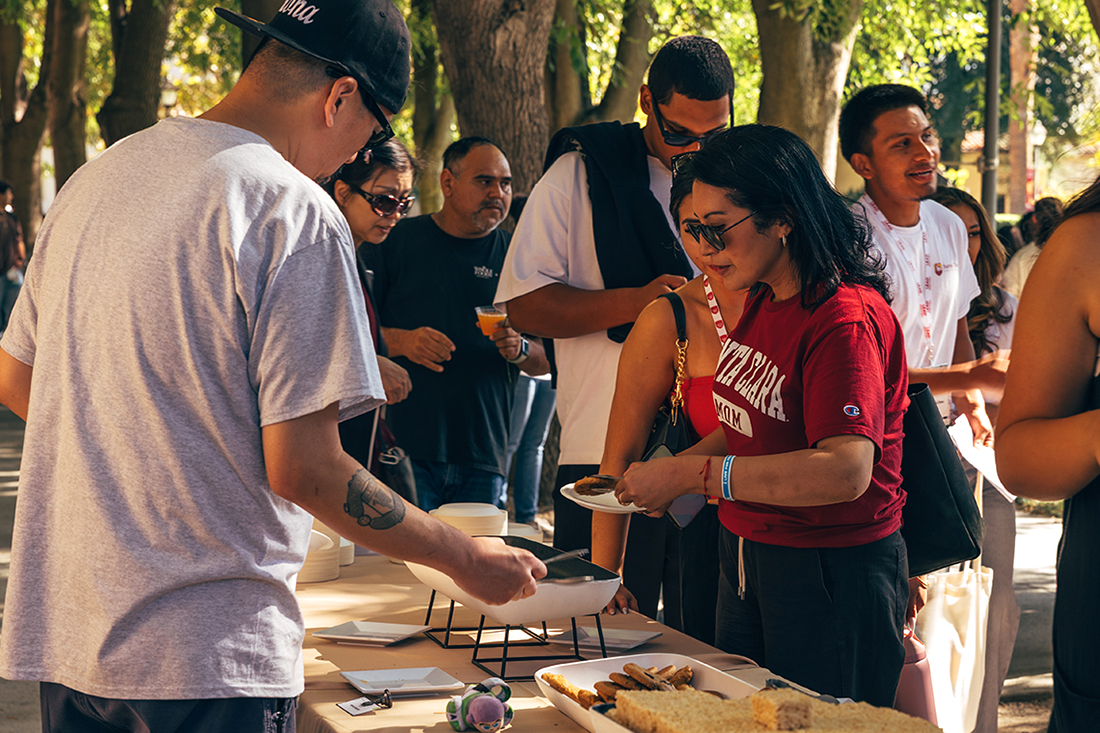
During winter quarter, Hernandez partnered with the Leavey School of Business for a speed networking mixer on campus at the Locatelli Student Center, and most recently hosted a spring picnic in the Mission Garden to give students a chance to unwind before the end of the quarter.
“One of my favorite parts of the evening was looking around and seeing students spread across picnic blankets, laughing, sharing stories, and continuing conversations long after the event had officially ended,” says Hernandez. “Some people even brought their families and dogs, which made the atmosphere feel even more warm and personal—like we didn’t have to be students worrying about deadlines or responsibilities, just people enjoying community and connection in the beautiful gardens.”
Though she’ll move on from her role at OML this fall and pass the series on to new leadership, she hopes these events will continue to bring graduate students together.
“Creating this series gave me the affirmation and evidence that I can make anything happen,” says Hernandez. “My hope is that grad students realize that we are a part of a community and that our college experience doesn’t have to stop at undergrad. Graduate school can be challenging, but community changes that experience. If this series helped even one student feel more connected, then it accomplished exactly what I hoped.”
To see the Graduate Student Mixer series in action, watch the video recap shared by the School of Education and Counseling Psychology.

As a part of the Inclusive Excellence Division, the Office for Multicultural Learning is committed to promoting social justice, building bridges between all communities, and celebrating the differences of students at SCU.