Bioengineering professor reimagines Alzheimer’s treatment with innovative gene-based therapy
Many families are faced with the painful reality of watching a loved one’s memory slowly fade with age. Today, more than 7 million Americans live with Alzheimer’s disease, the most common cause of dementia. While decades of research have led to treatments that can ease symptoms like confusion and memory loss, there is still no cure.
Part of the challenge lies in the brain’s natural defense—the blood-brain barrier. This thick layer of tightly-packed cells protects the brain from toxins and infections but also, ironically, prevents many Alzheimer’s drugs from reaching and removing the harmful amyloid-beta (Aβ) plaques that drive neurodegeneration.
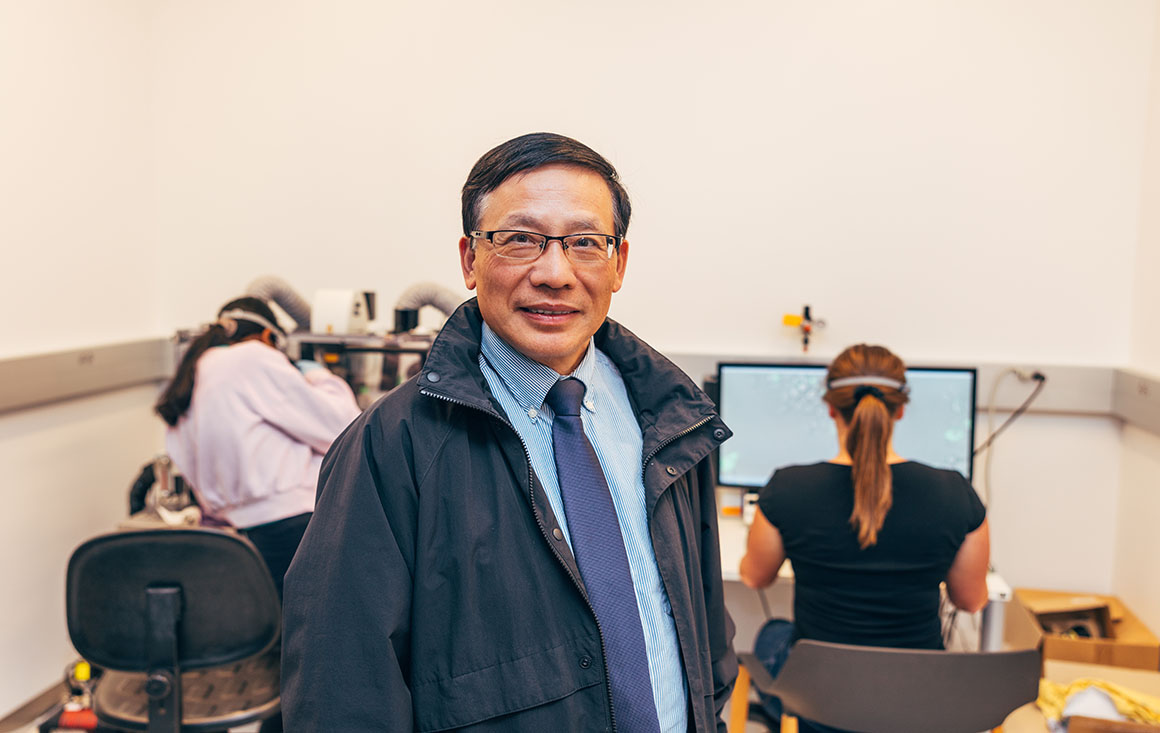
Bill Lu, professor of bioengineering at Santa Clara University, is working alongside a team of undergraduate students to solve this problem. He was recently awarded more than $500,000 from the National Institutes of Health to support the design, testing, and analysis of an innovative exosome-based treatment that could transform Alzheimer’s care and pave the way for more personalized, non-invasive therapies for other complex brain diseases.
Lu’s approach focuses on using another of the brain’s natural functions– exosomes– to help bypass the blood-brain barrier. Normally, these tiny particles facilitate healing and communication between cells as they travel through the bloodstream. Lu wondered if he could repurpose them to deliver Alzheimer’s medication to the brain.
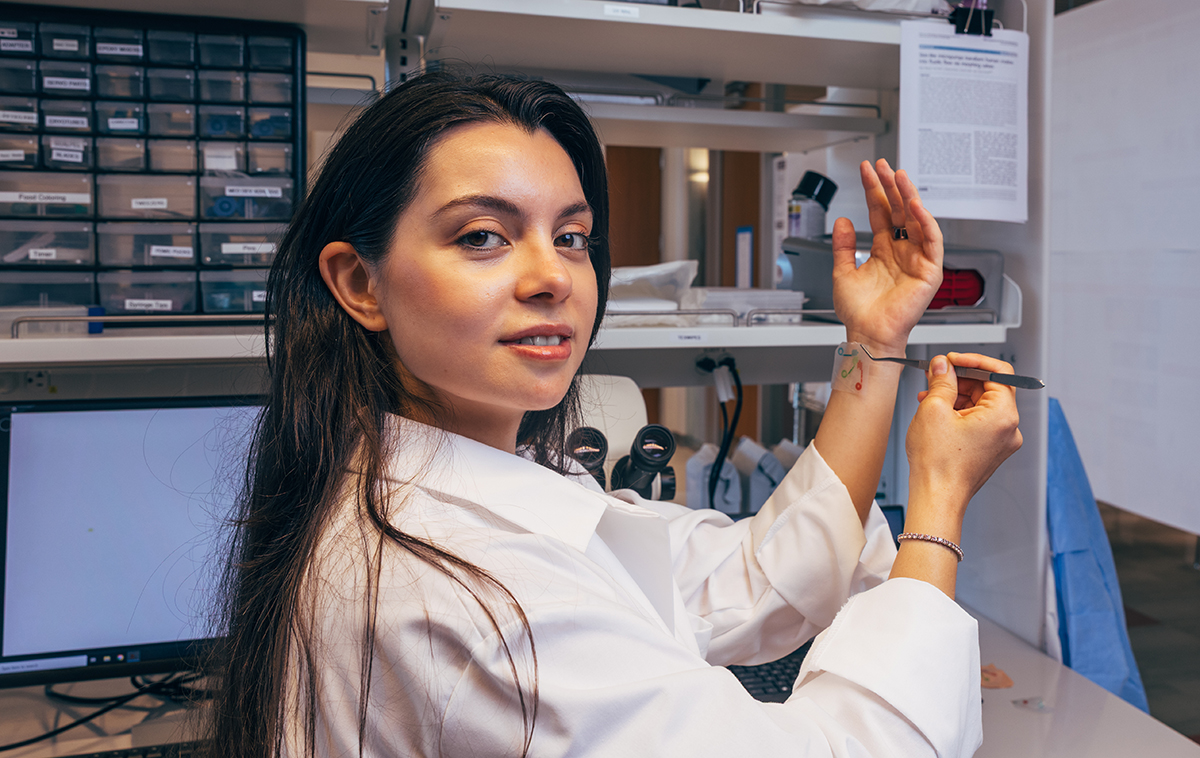
“Exosomes are natural communicators that the brain recognizes and allows through its protective barrier,” Lu explains. “We are engineering these exosomes to act like Ubers. They can pick up the medicine, drive it through the bloodstream to the brain, and clean up some of the damage that causes Alzheimer’s.” Amritha Balaji ’27 (L) and Cate Wessels ’28 (R) analyze cell patterns for Alzheimer's treatment.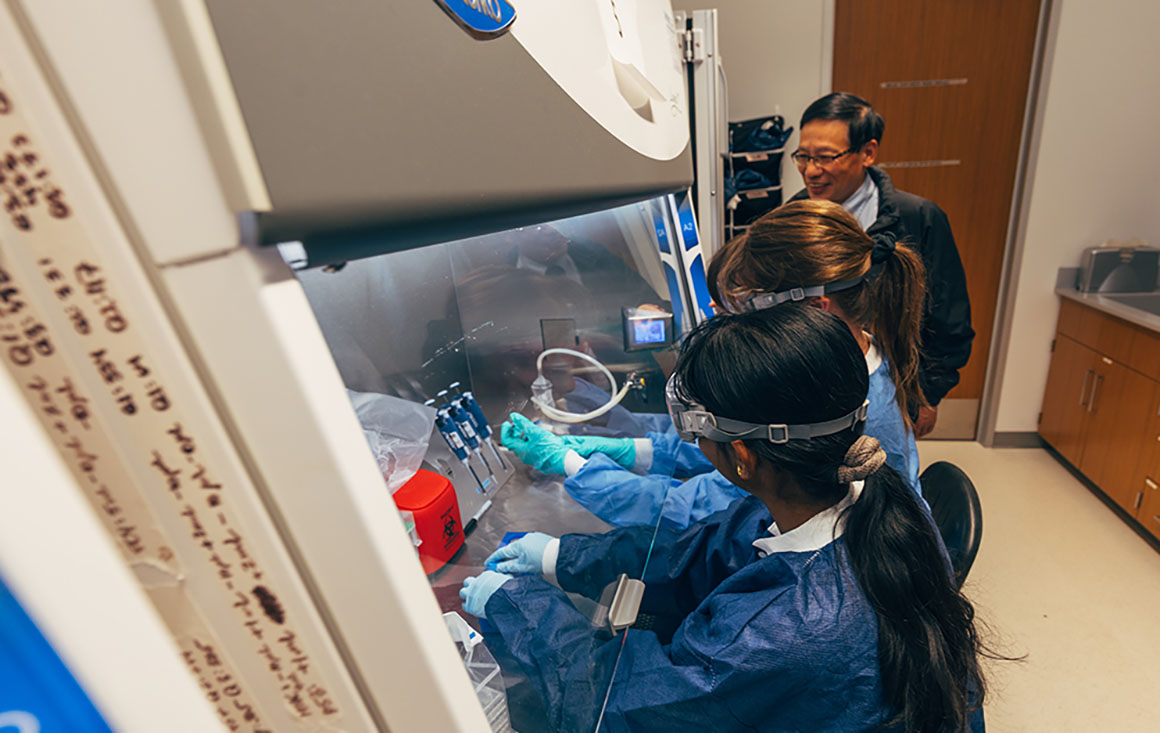
Their process starts with lab-made DNA, which acts as a set of instructions to tell the body to produce its own medicine. Hypothetically, doctors would inject a small amount of this DNA into a patient, and the body would follow its instructions to make enzymes, tiny therapeutic particles that serve as medicine. These enzymes naturally load themselves into the exosomes (much like passengers getting into a ride-share car), travel through the bloodstream past the brain’s protective barrier, and deliver the enzymes directly where they are needed. Once there, the enzymes break down and clear away the sticky plaques that interfere with memory, damage brain cells, and cause Alzheimer’s symptoms, attacking the disease at its source.
“Because exosomes target exactly what needs to be treated, we could see fewer side effects compared to other therapies that affect healthy parts of the body as well,” says Cate Wessels ’28, a biomedical engineering student working with Lu on the project.
This more direct method is not only more effective but also helps patients stay healthy. Traditionally, doctors give patients lab-made medicine through pills or injections. As a result, these drugs circulate throughout the whole body, leading to side effects and prolonged treatment. Lu’s method aims to deliver medicine directly to the brain with greater precision and fewer risks for patients.
“Our approach is different because we’re using our body’s own natural tools to fight disease,” says Amritha Balaji ’27, who is also part of the research team. “By using these exosomes with DNA-based therapies, the body will be less likely to resist treatment because it makes and delivers the medicine itself. The science is complex, but it’s also exciting to see the potential for patient use in the future.”
Lu and his team are still in the early stages of research. Currently, they are collaborating with UC Davis to test their exosomes on mice with Alzheimer’s. If these tests are successful, Lu says he hopes to move on to pre-clinical trials to test the medicine on humans within the next three to four years.
“We think our process is very promising, but we have to prove that it will work first. Our team is doing the most fundamental research to successfully find treatment strategies that can really make a difference,” Lu says.

Our faculty and staff are actively engaged in research at the interface of engineering, life sciences, and medicine. We prepare undergraduate and graduate students for exciting and meaningful careers in bioengineering through innovative approaches to teaching and research training.