How one business professor is reimagining what microfinance can do for the unhoused

Meet Jerry.
Jerry lives unhoused in Santa Clara County. Not long ago, he had managed to build a microbusiness as a powerwasher—a real one, with local clients. Despite public misconceptions, many unhoused people use microbusinesses to survive, whether it’s buying and reselling small things or cutting lawns. Jerry’s business was doing okay until a city sweep of his encampment took his equipment. Now he needs $400 for a new pressure washer to get back to work.
That’s where ZiM comes in.
Recently relaunched through Santa Clara University’s Leavey School of Business and partnering with the School of Law’s Katharine & George Alexander Community Law Center, the Zero Interest Microfinance program offers local, unhoused residents like Jerry small, zero-interest loans and financial coaching.
ZiM is designed not as a charity, but as a financial hub for the unhoused community. And it doesn’t just serve unhoused borrowers looking for a loan—it also actively empowers other unhoused people looking for opportunities to rebuild their finances.
For example, one of their clients, Ms. Bess, is a 45-year-old single mother of six living in her car in San Jose. After leaving an abusive marriage, she was left with no home and few assets. Her children live with their grandmother while she works to rebuild, taking cleaning jobs as they come. She’s determined to secure stable, safe housing for her family, and wants to put what little money she earns to work.
Through ZiM, Ms. Bess can become a micro-investor, contributing what she can—be it $20 or $2—in businesses like Jerry’s. ZiM underwrites the loan so Ms. Bess can earn a guaranteed return, learn more about microbusiness, and receive financial guidance along the way.
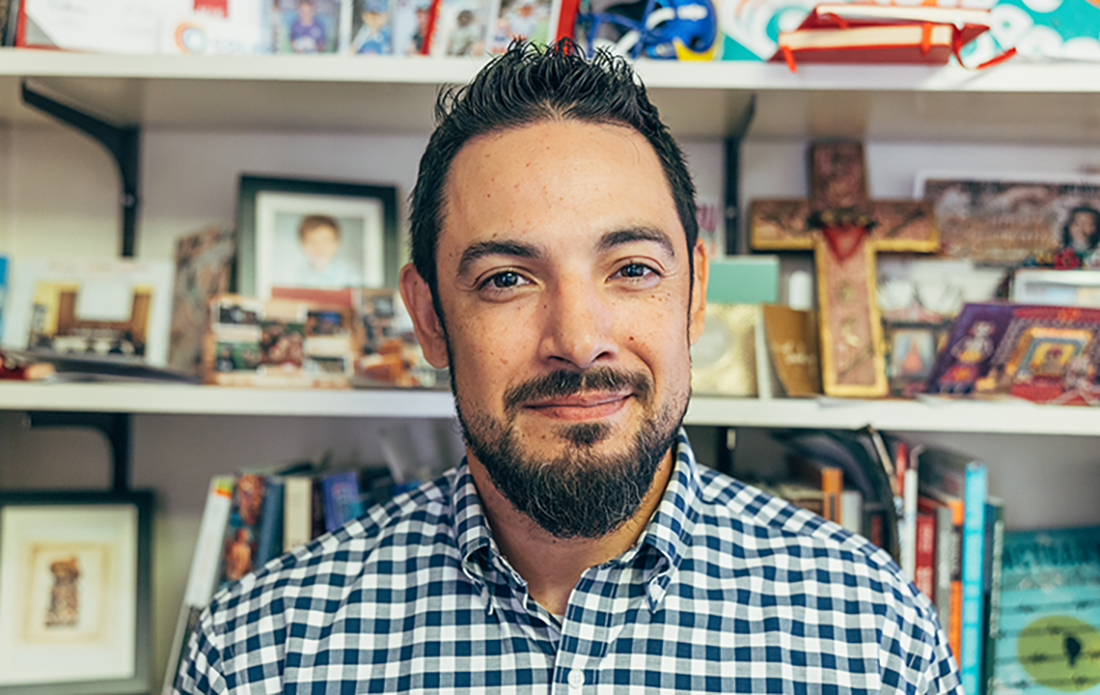
“This model empowers people in precarious circumstances to help each other move forward,” says Long Le, professor of management and ZiM’s founder. “The intention here is for the unhoused micro-investor to know that even as an unhoused person, they can still make an impact on others.”
The research behind the program is both simple and striking. Le explains that people on the edge of poverty in Santa Clara County often become unhoused because of a gap of just $350 to $500. A lost job, a medical emergency, a family crisis—and suddenly there’s nothing between a person and the street. Then, the longer someone remains unhoused, the harder and more expensive it becomes to get out, he continues.
ZiM is built on the idea that intervening early for recently unhoused people is far cheaper—and far more humane—than managing the long-term consequences of homelessness.
Global expertise, local impact
Le launched ZiM in 2018 as a nonprofit embedded in his international business course. Working through the Leavey School of Business’s Global Fellows Program, student loan officers arranged zero-interest capital to entrepreneurs from Latin America to East Africa—including men newly released from prison in Cameroon learning to run livestock farms, and women rebuilding their lives after surviving trafficking in India. Many borrowers went on to complete multiple loan cycles, repaying and securing larger and larger loans each time. The program boasted a 98% repayment rate, comparable to traditional bank loans.
But when COVID hit, the Global Fellows Program shut down, and international operations became untenable. Le began to consider closing ZiM altogether.
What saved it was a pivot.
Last summer, he joined the leadership of SCU’s Unhoused Initiative and connected with the law school’s new Unhoused Advocacy Clinic. He realized the tools he had built for entrepreneurs abroad were just as urgently needed a few miles from campus.
“I see business as a noble service—you can design products and services or initiatives to meet the needs of your end users,” Le explains. “This is just re-envisioning what our services are and who our end users are.”
The pilot is currently underway with five clients referred through the law clinic. Some, like Jerry, receive zero-interest loans of up to $500, with repayment structured flexibly on a case-by-case basis. There is no interest, ever. Le predicts repayment rates will also be high, above 90%.
Others, like Ms. Bess, are in a micro-investor phase—contributing small amounts to the loan pool and earning a guaranteed return. At the same time, ZiM helps connect them with employment opportunities that match their skills and offers financial coaching (a formal financial literacy module is currently being developed for Santa Clara’s MOBI platform).
Outreach happens on the ground, where people already are. Every Thursday, unhoused residents gather at Our Lady of Refuge in San Jose for food and mobile shower services; it’s one of several sites where the ZiM team connects with potential participants through referrals from the law clinic.
When asked, “Where’s the financial incentive to offer zero-interest lending? Isn’t that risky?” Le points out that people with credit cards already enjoy interest-free grace periods. That privilege, he argues, is unavailable to people without credit histories, who are instead funneled toward payday lenders charging rates of 300 percent or more. ZiM redistributes that privilege, so someone can stabilize and eventually access mainstream banking on their own terms.
It’s a matter of dignity, equity, and autonomy.
“In business, we’re always disrupting to make profits. We’re not disrupting to solve an issue that doesn’t directly affect us. But this program is very Santa Clara—disruption for the common good,” says Le.
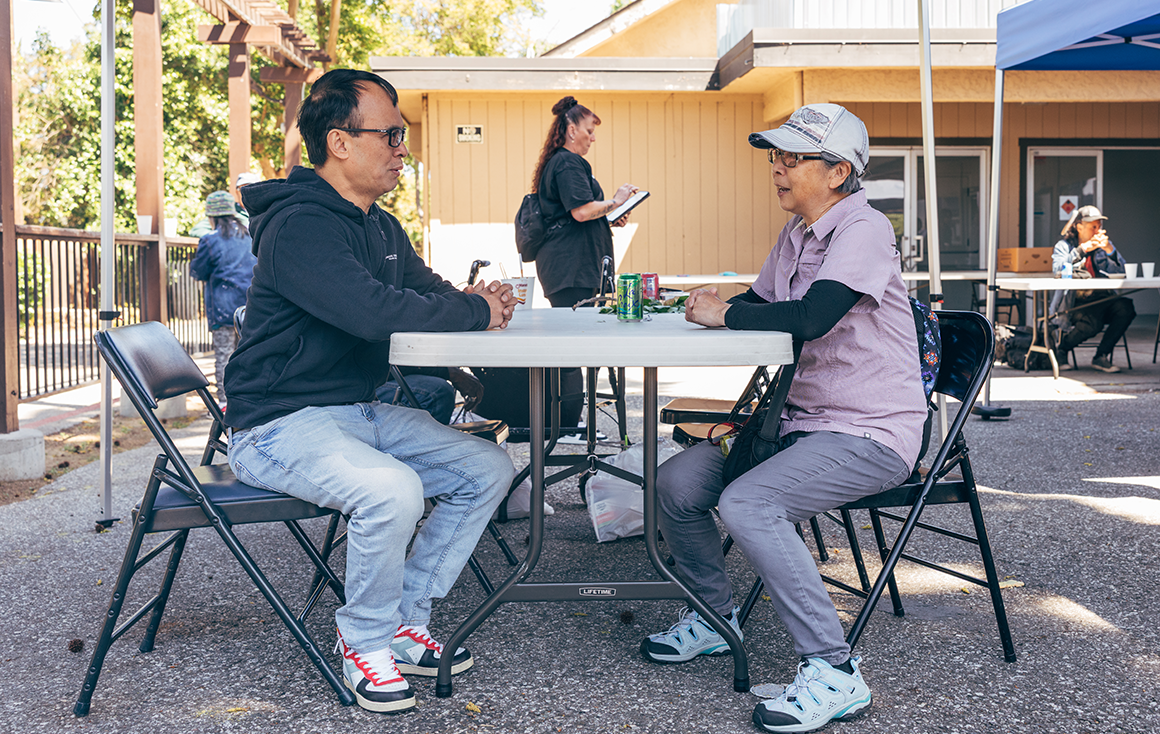
Le often gets referrals for the ZiM program from volunteer organizers at Our Lady of Refuge.
An ecosystem of empowerment
Le doesn’t run ZiM alone. It is, by design, a student-powered program through his MGMT 110 course. Business students serve as loan officers, financial coaches, and program administrators, learning by doing in a way that no case study can replicate. And the program’s social impact mission has inspired more than one Santa Clara student.
Gabriel Symkowick ’26, a double-major in communication and management, has been building the program’s client-facing documents and intake materials. Drawn to Santa Clara for its Jesuit values, he says working with Le felt like finding a kindred spirit in an unexpected place.
“You can just tell when someone really cares about what they do,” he says. “That’s what I found with Long.”
This coming summer, Marialisa Caruso ’20—who previously worked with ZiM during its international loan period—is rejoining the team as an intern, designing a short-term eviction prevention loan program of $350 to $650 per month in partnership with Santa Clara County. The goal: reach people before they lose their housing, not just after.
Funding comes from ZiM’s existing reserves and law clinic grants, but as federal support for underserved communities shrinks, Le believes universities like Santa Clara have both the resources and the responsibility to fill this gap, and this could go beyond loans.
For example, he envisions Santa Clara itself as a kind of ecosystem—one that could connect unhoused participants with opportunities on campus, whether shadowing groundskeeping staff to develop employable skills, or accessing aluminum cans from the university’s recycling stream to generate income. These ideas are still being explored, but they reflect ZiM’s broader ambition: not just to lend money, but to build pathways.
The pilot program is young, and much remains to be worked out. But loans are going out, micro-investors are getting started, and somewhere in Santa Clara County, Jerry will be getting a new pressure washer, and Ms. Bess, a little more hope.

The Unhoused Initiative seeks to center the dignity of people experiencing homelessness in the discussion of our community response to it through research, events, University-wide engagement, and community collaboration.