‘I'm afraid of the possibility of a world without journalists.’
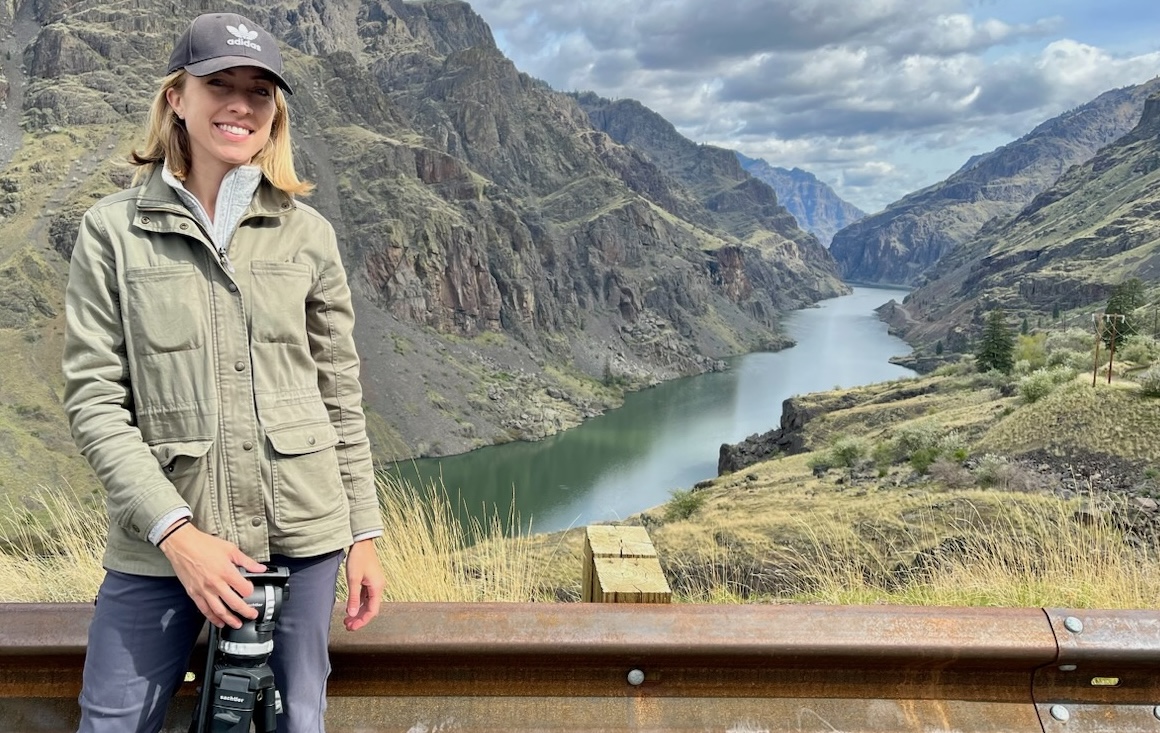
The San Francisco Chronicle newsroom knew the story was something special before it even published, says Maggie Beidelman ’09. “Being in California, we knew folks were struggling to rebuild after wildfires, but we didn’t really know why,” she says. “This was some of the first reporting done about flawed algorithms and systematically underinsured homeowners.” Turns out, the newsroom was onto something. The Chronicle won the 2026 Pulitzer Prize for Explanatory Reporting for the “Burned” investigative series—the paper’s seventh Pulitzer and Beidelman’s first as part of the reporting team.
As the Chronicle’s deputy director of visuals and video, Beidelman was a senior producer and videographer on “Burned.” She oversaw the script and shot footage for a short documentary by primary videographer Brontë Wittpenn that ran in conjunction with several written articles.
The film included interviews with several survivors of the 2021 Caldor Fire in Grizzly Flats, a former gold mining camp nestled in the woods between Sacramento and Lake Tahoe. It also included a homeowner who lost her house in the catastrophic fires that burned upwards of 57,000 acres in Los Angeles County in January 2025. The subjects had lost their homes but were struggling to rebuild because insurance companies had woefully underestimated what their clients would need to do so.
The crux of the investigation by reporters Megan Munce and Susie Neilson focused on a software tool called 360Value, which is used by many major insurers to set coverage limits for policyholders. Reporters found that 360Value routinely relies on outdated and incomplete data, so it often underestimates how much a homeowner will need to rebuild, sometimes by hundreds of thousands of dollars. “This was the first time someone had identified this particular issue—on the algorithms and how agents were using them and how they work in general. So we were excited about that,” Beidelman says.
But more importantly, she says, is that the reporting helped pave a path toward actual change. “Multiple states launched a probe to look into the issue after the story published, so clearly it’s had a far-reaching effect,” she says. “So, very proud of that.” Maggie Beidelman ’09 and a colleague film footage on the bank of the Snake River in Idaho. Photo courtesy Maggie Beidelman.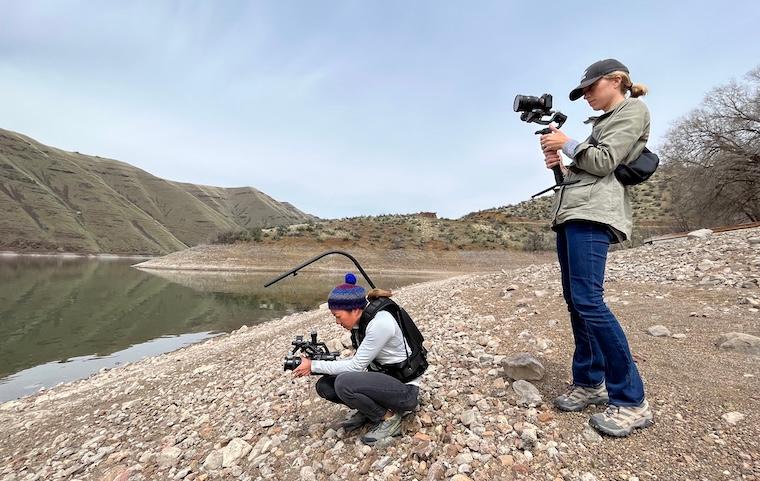
Beidelman acknowledges that journalism is a tough industry to break into these days but maintains that it’s a necessary pillar of our society. “ I'm afraid of the possibility of a world without journalists,” she says. “Because who else is going to be checking power and bringing to light big issues like this underinsurance problem? So much will be flying under the radar.”
Now working as a senior video producer for the Los Angeles bureau of the New York Times, Beidelman says journalists will need to adapt with the times, just like most industries. She likes video reporting for its ability to capture people’s attention quickly and reach different audiences. She enjoys putting reporters at traditional newspapers in front of the camera, as it builds another layer of trust. “It establishes a connection … not as a performance but just as, ‘I’m a normal person, this is what I found out, let me walk you through it,’” she says. “Seeing a person’s face helps with that.”
Beidelman encourages journalists-in-training to stick with the hustle. “If you go in eyes wide open that [a career in journalism] may not pan out for 40 years but in the meantime you’re young and hungry and you can afford to take a risk, you can learn a ton,” she says. “You’ll learn how to write better, how to communicate better, how to be empathetic, how to distill information in an efficient way—all things that will be useful in any industry.”

The Department of English affords students a rich undergraduate education in the liberal arts centered on literature, cultural studies, and writing. The English major prepares students to read and write critically, to bring intellectual flexibility to academic and professional problems, and to enter the workforce as individuals with trained skills in analysis and self-expression.
Learn more about the Department of English at Santa Clara University