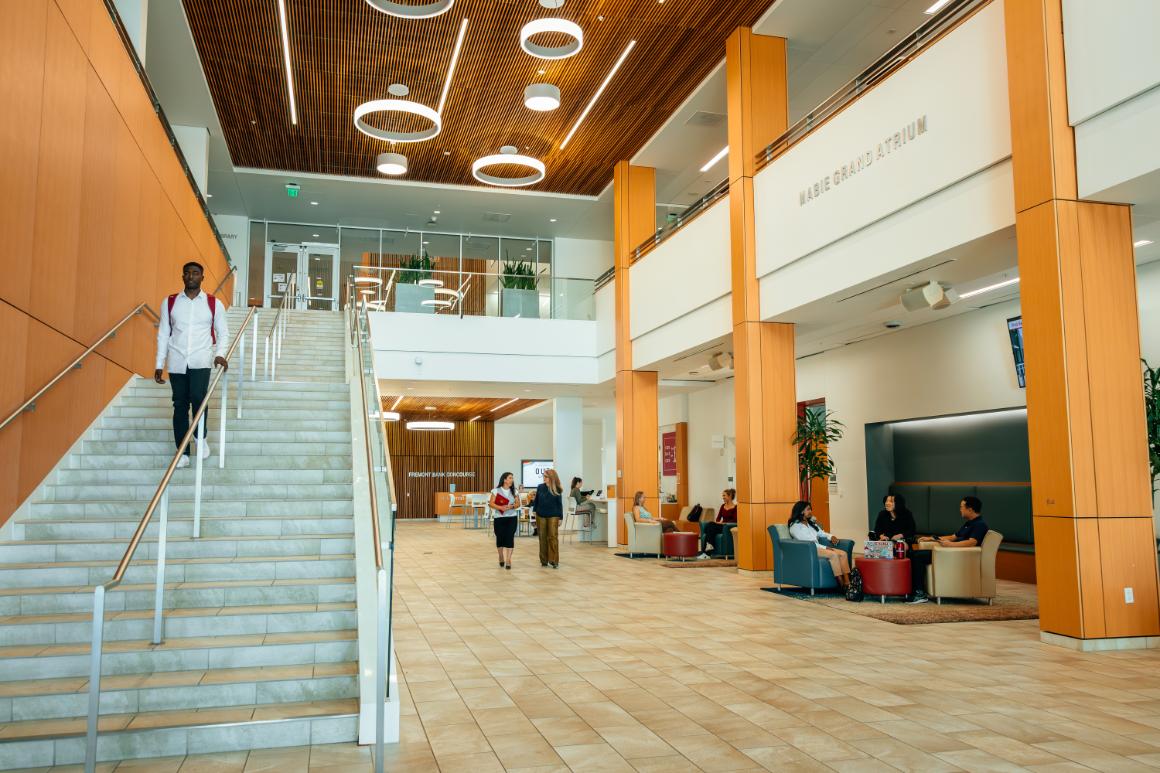
University faculty and Indigenous youth explore native plants and linocut art at fourth annual Ohlone Culture Camp
Last month, a group of Muwekma Ohlone youth spent an afternoon in Santa Clara University’s Forge Garden on hands and knees—not just identifying native plants, but gathering ingredients, like mugwort, elderberry, and white sage.
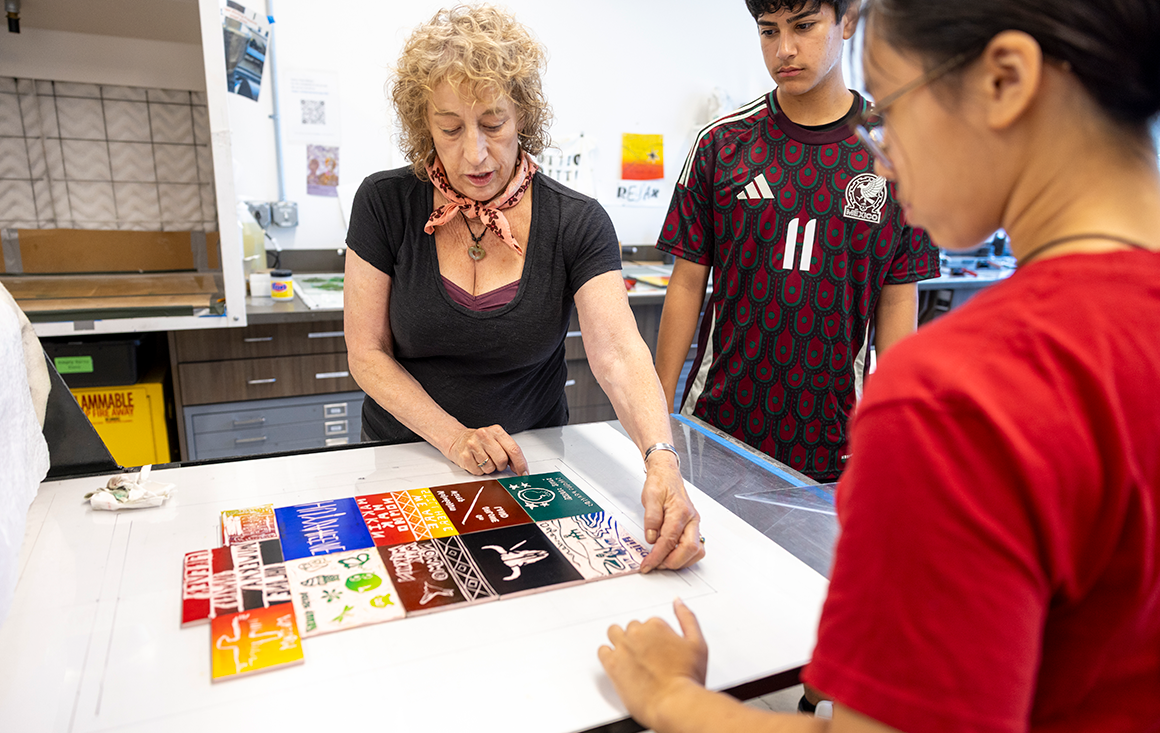
Ground up and mixed into ink, those leaves and flowers were transformed into prints of ancestral stories, symbolic animals and insects, and messages of resilience.
The Muwekma Ohlone trace their 10,000-year heritage in the Bay Area through several Spanish missions, including the Mission Santa Clara de Asís, around which the university itself was built in 1851.
In the last decade, that shared history has shaped a growing partnership between the University and the tribe, leading to several community-driven collaborations including a redesigned Ohlone history exhibit at the de Saisset Museum, an annual Powwow, and a campus-wide AR tour of indigenous sites.
This cultural camp, first hosted at Santa Clara University in 2023, added a new dimension to that effort being built with and for Muwekma Ohlone youth themselves. Previous camps have included culinary exploration of native plants and abalone carving—this year’s program focused on linocut and ink-making using native plants.
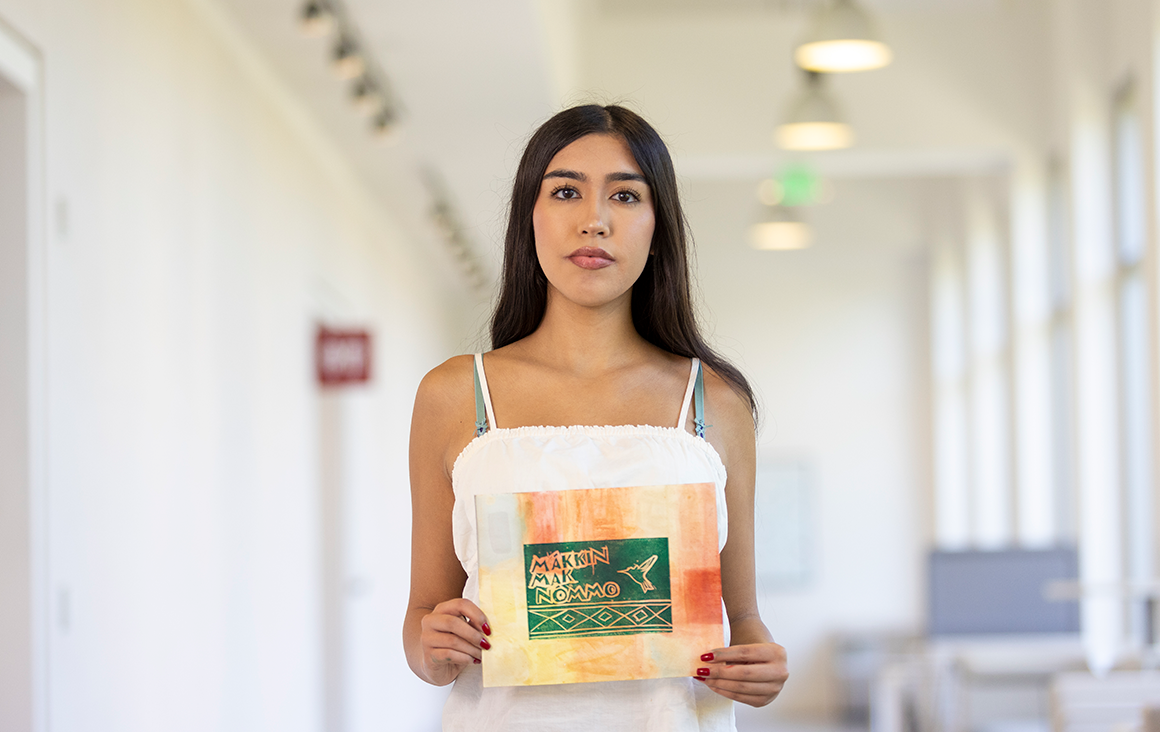
“This print honors the matriarchal lineage of our tribal community by featuring Hummingbird. She is one of the main figures in our creation story. I also drew from a petroglyph from the Vasco Caves in Livermore, using its diamond pattern.” — Isabella Gomez ’27
Once participants had their ink and hand-carved their designs, Kathryn Kain, a printmaking lecturer, guided them through operating the University’s linocut press as they pulled their first prints.
At a closing presentation, the young artists explained their work and gave thanks to two tribal elders who accompanied the youth in the activities, carrying forward cultural traditions from decades-past campouts.
“Throughout the campout, we did all sorts of preparation like smashing leaves, journaling, the AR history tour. It all led up to this art piece,” reflected Lucas Arellano, a 16-year-old camper. “This piece was especially meaningful because my aunt Rosemary helped me with it.”
Creating a space where Santa Clara University’s resources can help keep Ohlone traditions alive is central to the camp’s mission, says Amy Lueck, a professor in English who helped start the camp in 2023. With the 250th anniversary of the Mission approaching, the message of Muwekma Ohlone survival couldn’t be more apt.
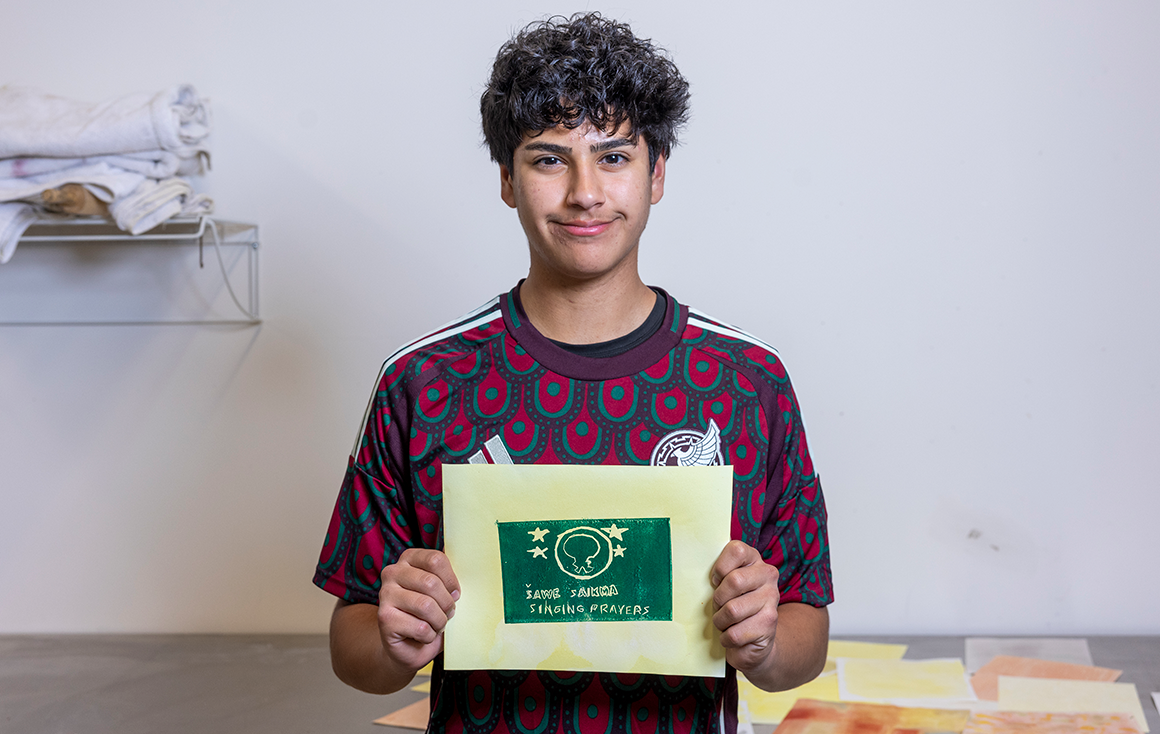
“My piece is of a Big Head dancer, singing prayers to the Great Spirit for the people. The stars represent the four directions—north, west, east, and south—and the moon represents the world.” — Lucas Arellano
Rosemary Cambra, a former Tribal Chairwoman, echoed that message of endurance during the camp’s final luncheon, inviting the next generation to keep moving their community forward.
“Continue calling out. Keep on calling. Keep on praying that our people will come together from all walks of life and join us to sing and share in the technology of today’s system.”

Explore resources for learning and teaching about Ohlone people—past and present—and the history of Thámien, the Ohlone village located at what is now the site of Santa Clara University.