News Stories
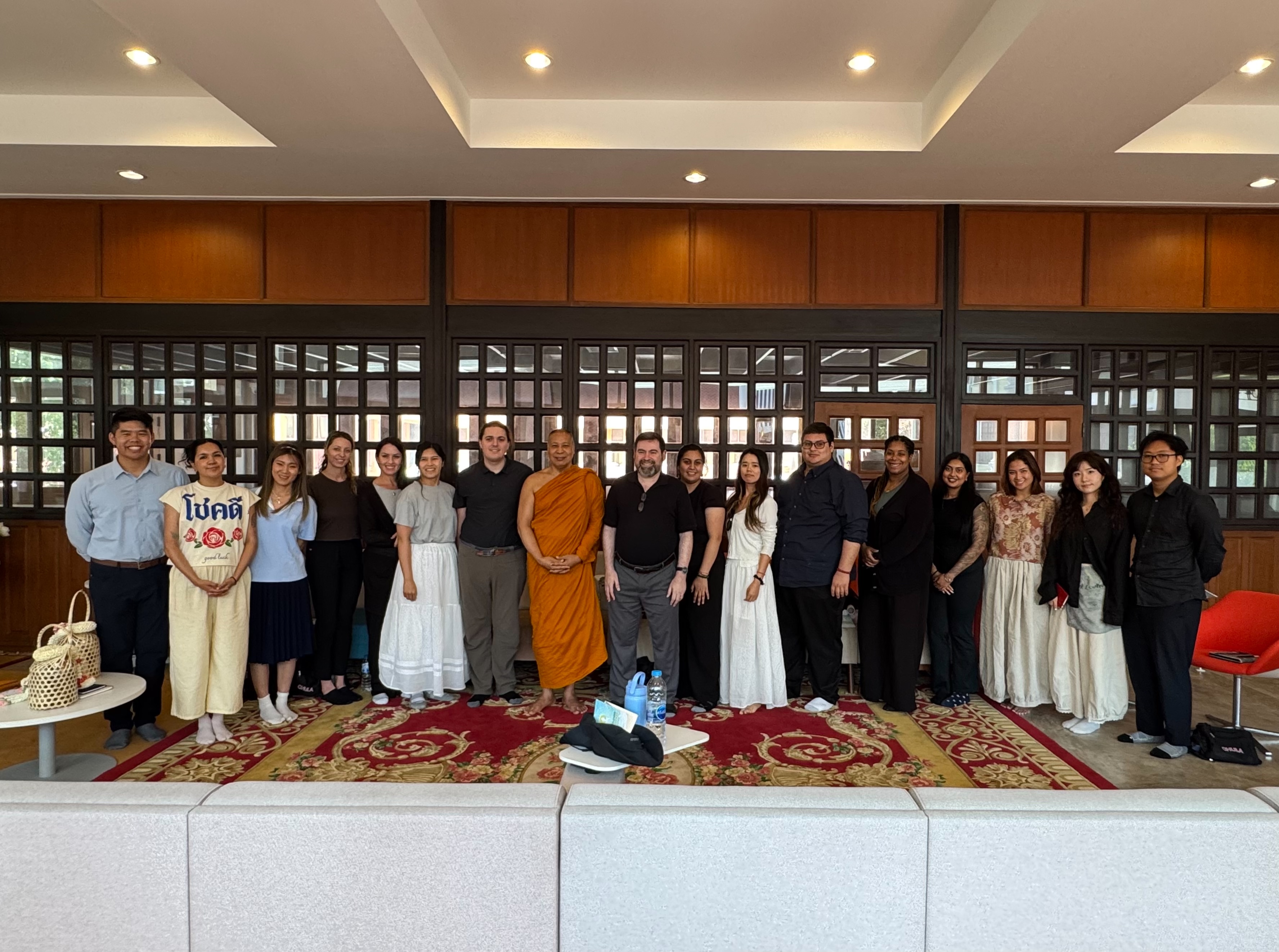
ECP Introduces New Global Course in Bangkok, Thailand
[This trip] was “probably one of the best things I’ve ever experienced,” one student said of ECP’s global learning course in Thailand.
For Counseling Psychology Professor Dave Feldman, creating that experience began with a question: How could future therapists understand different perspectives on well-being and mindfulness by learning in the cultures that shaped them?
The month-long course, informally titled Eastern Approaches to Well-Being, combined coursework with approximately two and a half weeks in Bangkok, Thailand. Students learned alongside Thai graduate students and from faculty at the nation’s #1 ranked Chulalongkorn University, exploring how culture influences ideas about mental health, relationships, and care.
Dave wanted students to question assumptions they might otherwise carry into their work. Western approaches often emphasize self-esteem, self-confidence, and individual achievement. In Thailand, students encountered perspectives rooted in Buddhist thought and an understanding of well-being that includes family, community, and interconnectedness.
“These are questions I didn’t give students answers to,” Dave said. “I don’t know that I have answers, but these are questions that I wanted students to wrestle with.”
Making those encounters possible took years of relationship building. Through research collaborations and a visiting professorship at Chulalongkorn, Dave developed partnerships that eventually inspired this exchange. His partner is from Bangkok, giving him longstanding personal ties to Thailand alongside his academic connections.
Those relationships shaped his approach to teaching the course.
“I don’t even really consider myself the teacher of this class,” he recalled telling students. “I’m the facilitator.”
His role was to connect students with Thai professors, practitioners, and Buddhist leaders whose perspectives they would not ordinarily encounter at Santa Clara University.
The experience began with cultural orientation, language instruction, and a cooking class exploring food’s place in family life. Students attended lectures on counseling, workplace wellness, cultural psychology, and mindfulness. They also visited a gender-affirming clinic and learned about LGBTQ+ experiences in Thailand.
At a Buddhist temple, students met Venerable Dr. Anil Sakya, who discussed his therapeutic work with incarcerated people. For one student, that conversation made the idea of interconnectedness deeply personal.
“He helped me see how … we can see the humanity in anybody,” the student reflected.
Learning also unfolded in unexpected places. When a torrential downpour drenched the group before a riverboat cruise, students practiced responding with mindfulness rather than focusing on disappointment. In their final presentations, several identified the storm as a favorite moment - an opportunity to apply what they had learned.
For Dave, those experiences matter because their influence can extend into students’ future relationships with clients. Encountering different ways of understanding mindfulness and well-being can help therapists recognize their assumptions and remain curious about the person before them.
The course also reflects an opportunity for ECP to deepen international partnerships that support learning, research, and meaningful impact. Dave hopes the relationships behind the Thailand experience will continue drawing the universities closer, creating opportunities for collaboration.
“When we’re doing this on a global scale, it has to start with lots of cultural humility,” he said. “Lots of humility, building relationships, listening deeply.”