News Stories
From Silicon Valley to Social Impact: A Second Career in Educational Leadership
After nearly four decades in the technology industry, one Santa Clara University student is turning his experience into an opportunity to make a difference in the lives of young learners.
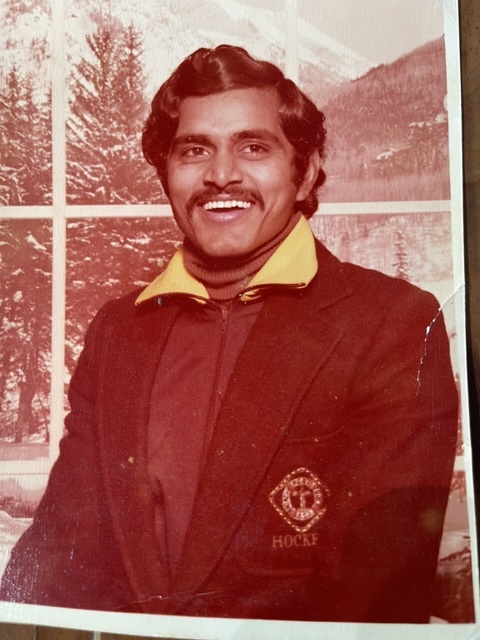
Oregon, 1978. Fun fact: Prior to his tech career, Terry was a world class field hockey and track athlete! He was a candidate for the 1984 U.S. Olympic Field Hockey Team and competed in numerous international field hockey tournaments.
Terry Andrade’s career began in electrical and computer engineering, where he was pursuing his doctorate, until an opportunity at AMD changed his trajectory. In 1979, he moved to Santa Clara to work on emerging microprocessor technology, launching a 29-year career with the company. Over nearly three decades, he contributed to eight generations of microprocessors and eventually managed worldwide operations, gaining invaluable experience working across cultures and leading complex teams. After leaving AMD in 2008, Andrade continued working in the technology sector until retiring in 2016.
But retirement opened the door to a different kind of ambition.
Supporting STEM Learners in Local Schools
In 2024, Andrade began considering how he might channel his professional experience toward a new purpose: strengthening STEM education in under-resourced middle schools.
“There’s historically been great work done to encourage STEM learning at the high school level,” says Andrade. “But there is still a real gap in educational opportunities for middle school students who, without a strong foundation in science, technology, engineering, and mathematics, may struggle to pursue these subjects in high school and beyond.”
With decades of industry experience and a network of technology professionals at his fingertips, he saw an opportunity to connect students with mentors and real-world STEM experiences. Yet he also understood that making a lasting difference required more than professional connections. He needed to understand the educational system, the challenges facing schools, and the needs of the communities they serve.
Building a New Foundation at SCU
That realization brought him to Santa Clara University's Master of Arts in Educational Leadership program.
“I attended a Jesuit high school in Karachi, where I grew up,” Andrade says. “So I’m familiar and strongly align with the Jesuit values and their reputation for excellence. This in addition to Santa Clara’s status as a top Catholic educational institution are what inspired me to choose SCU as my starting point for this next era of my life.”
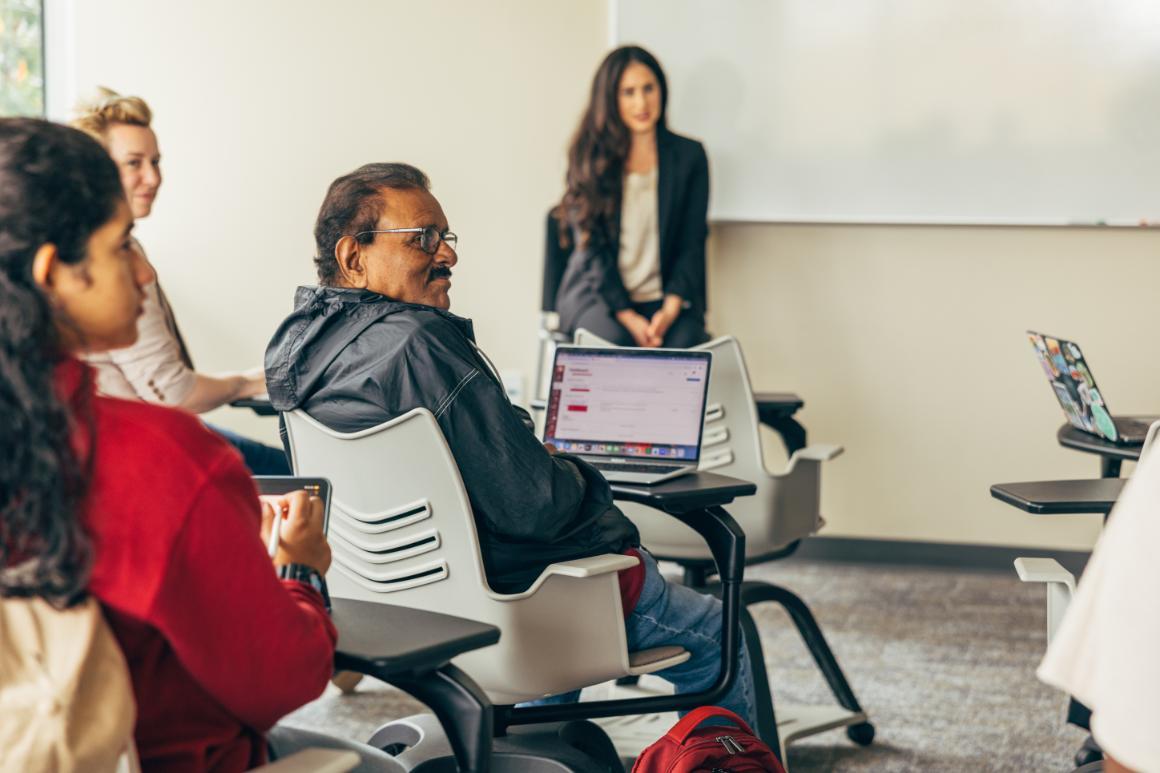
Through coursework focused on contemporary challenges in education, particularly those affecting marginalized communities, he has gained new perspectives on how effective leadership can drive meaningful change. A standout experience was a project in which he spoke with 35 middle school students about their concerns.
“Many shared that they were afraid to approach teachers or administrators because they worried about being labeled as troublemakers. In response, my group and I helped implement an automated, anonymous complaint system that the school district continues to use today.”
Beyond the classroom, faculty mentorship and a close-knit community of peers have helped him refine his vision. Learning alongside educators aspiring to administrative roles has exposed him to perspectives different from his own, while attending campus multicultural events have broadened his understanding of the communities he hopes to serve.
He will complete his master's degree in December and hopes to continue into SCU's Doctor of Education (EdD) program next year. With many of the same faculty members teaching both programs, he sees the transition as a natural next step in his development as an educational leader.
Amplifying His Impact
“Ultimately, I hope to establish a nonprofit organization that helps high-need schools expand access to quality STEM education, drawing on my industry relationships to connect students with opportunities that might otherwise remain out of reach,” Andrade notes. “In a region celebrated for its technology and innovation, I believe there is an equally important opportunity to help more young people access that future.”
His journey illustrates how educational leadership can open new doors for professionals seeking a second career. At Santa Clara, he is building the knowledge, relationships, and leadership skills to help make it possible.