News Stories
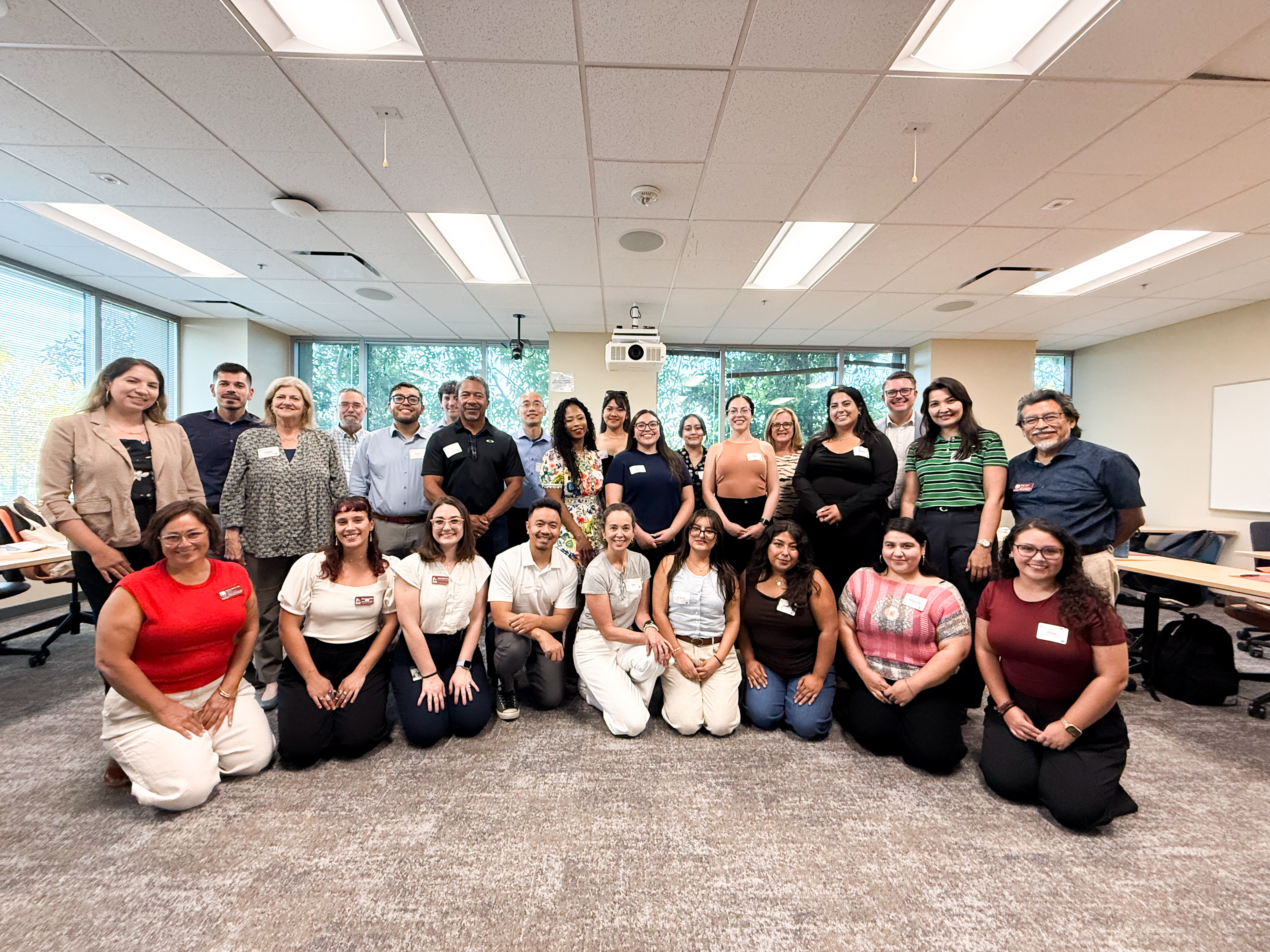
The Reviews Are In: Introducing Our First MA in Social Impact Leadership Cohort
The buzz of excitement in the room on orientation day was palpable. Years of consultation and preparation had led up to this historic moment. Our first cohort of 21 Master of Arts in Social Impact Leadership students was finally here!
With 67% identifying as first-generation graduate students, and areas of interest ranging from the public sector to nonprofit work, our inaugural group has been rich with diverse perspectives, backgrounds, and goals they hope to achieve with a degree in this program.
“The world is hurting in so many ways, and every single person in my cohort has a different community they want to work with and for in order to improve things. And it’s inspiring to converse with them and discuss different ways that our passions overlap and how we can collaborate,” says Social Impact student Annie Cameron ‘20.
While the “why” for each student varies, lecturer and social impact advisory board member Greg Kepferle believes the takeaways from the program should be widely applicable to the spectrum of career outcomes possible.
“Within the social sector, one of the things I observed is that often, rising stars and leaders with expertise in their discipline will get promoted, but without sufficient leadership development and business acumen. This program provides the full-rounded support to these individuals that they need to run successful organizations,” he says.
Drawing on over 30 years leading social change organizations, Kepferle also believes that historically, “social impact” has been narrowly defined to focus primarily on nonprofit and community-based organizations. The MA in Social Impact Leadership not only prepares students to lead these types of organizations, but also for-profit companies with social missions and organizations in the public sector, all of which require business and leadership skills like marketing, financial management and strategic planning.
“What makes the program truly unique is its interdisciplinary nature and its focus on creating social change that is rooted in an Ignatian vision and rooted in ethical values,” says Kepferle. It’s the first time the university has launched a program that brings together three units across the School, and is the reason why this program is able to provide such a holistic education for our social impact leaders.
Led by the School of Education and Counseling Psychology (ECP), Leavey School of Business, and Miller Center for Global Impact, the MA’s coursework has been designed to support learning in leadership, business, mentorship and experiential opportunities. Example courses include “Social Innovation for Social Impact Leaders,” “Using Data to Drive Organizational Change and Innovation,” and “Human Resources Development.” Students will also engage in a community-based internship organized by SCU’s Miller Center for Global Impact over the summer and final fall quarter.
“As I navigate my new role as dean of students for a TK-8 school while managing my family’s cattle farm business, the program is very much merging the two beautifully and helping me reflect on the type of leader I want to be,” says Social Impact student Yunuen Silva. “My classmates have also been incredible, and I’m learning so much from them. They bring so much experience in areas I’d like to grow in. Everyday I tell my parents that this program is exactly what I needed.”
Strong feedback from our first cohort has only infused excitement at the university about this program’s potential. A first-of-its-kind program designed to prepare social justice-oriented leaders rooted in Jesuit values is needed by our world now more than ever.
“Our first cohort fills us with optimism for the future of our communities. They are a true testament to how Santa Clara continues to attract students of competence, compassion, and consciousness with a deep care for the work they’re passionate about,” says ECP dean Dr. Sabrina Zirkel. “We look forward to supporting these students and future cohorts on their journeys to become agents of change in the organizations our world needs most.”