Stories
2026 First Year Immersion

A Community Worth Knowing
Most visitors to San Francisco come for the Golden Gate Bridge, Lombard Street, or the Painted Ladies. For a group of Santa Clara first-year students, though, the city’s most meaningful lessons came from a neighborhood many people are taught to avoid. Through SCU’s First Year Bay Area Immersion program, students spent time in the Tenderloin, where a street retreat asked them to put aside their assumptions and simply listen. For Tiffany Ishida, that meant sharing conversations with Wally, a man who cares for two dogs named Peanut and Kodak, and Alex, a film photographer she met over lunch at St. Anthony’s dining room. For Zachary Heller, returning to the neighborhood two years after his first visit, it meant seeing a community that, despite its portrayal in the news, keeps working to care for its own.
Tiffany Ishida | A New Perspective
Through SCU’s First Year Bay Area Immersion program, I gained valuable insights into houselessness and poverty in San Francisco’s Tenderloin community. Activities such as the street retreat encouraged me to actively engage with vulnerable individuals in order to understand their life stories. This newfound understanding of the people on the streets enabled me not only to better connect with them, but also to deeply reflect on my personal and academic development.
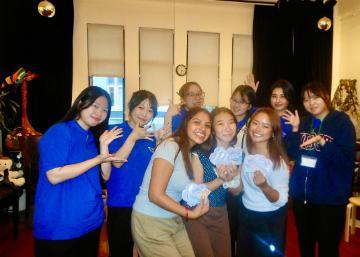
Additionally, my partner and I ate lunch at St. Anthony’s dining room, a community dining hall that serves free, hot meals daily to people experiencing poverty, homelessness, and food insecurity. There, we met Alex, a man passionate about film photography and traveling. He shared his life story, including his love for photography, his favorite cities in Japan, and more. I could tell by the way his eyes lit up that he enjoyed telling his story. Yet, he would frown when he mentioned that he can no longer pursue his passions due to poverty. That was when I realized that people who are struggling with poverty and homelessness are also people with memories, passions, and families–just like us. This realization prompted me to feel compassionate towards him while understanding that vulnerable individuals should not be defined by their current circumstances. Thus, conversing with Alex enabled me to understand that one cannot make assumptions about people on the streets without hearing their stories first.
Overall, participating in the First Year Bay Area Immersion program significantly shaped my perspective of the Tenderloin community as well as the houseless population in general. Through the street retreat, for the first time, I experienced a sense of common humanity, or the recognition that people are connected by fundamental experiences, including suffering, imperfection, and joy. Listening to inspiring stories of those in need deepened my compassion for them, therefore healing a part of me that has always wanted to help marginalized people. By observing poverty first-hand, I became more interested in learning about the “why” behind social injustices in my Sociology classes. I hope that I can use this knowledge to assist the victims in the future when I pursue a career striving to improve the lives of marginalized communities.
Zachary Heller | Finding Beauty in Unexpected Places
I find myself in the most beautiful part of San Francisco and it isn't even close. Most might assume I am thinking of the dazzling view of the Golden Gate, or the picturesque scene of Lombard Street, or the elegance of the Painted Ladies, but I’ve found the most belonging in a community most would choose to avoid. When walking through the Tenderloin after previously visiting 2 years earlier, it is obvious that the community has truly grown despite the constant media waves aiming to slander the reputation of the community and the people who call the Tenderloin their home. San Francisco was once known as the City of Love where people came with the hope of finding opportunity and meaning in a city which would provide them with everything they would ever need. Now as large tech companies swallow the city whole, many residents are forced to live in trailer homes, shelters, micro apartments, or find refuge on the streets. Some however, choose to work together and create a place for people to thrive and find a new community where they are loved and accepted for who they are.
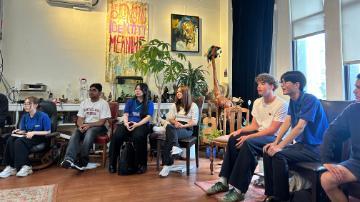
Most assume that everyone in the community is helpless,while when examining the facts, the community bands together to create more opportunities for kids to grow than anywhere else in San Francisco. Organizations such as Urban Alchemy help to keep school zones safe so that kids can focus on learning and are not exposed to any dangers that may be present. Despite the usage of drugs and alcohol within the Tenderloin, there is active engagement in ensuring that the future generations do not have the same experience and the community can continue to become a safer place for everyone. In the greater San Francisco area, people face dangers largely on their own and there is little support from public agencies in addressing the needs of the people.In the Tenderloin, the opposite is occurring as both community associations as well as government agencies appear to work together to provide safety to those who truly need it. Medical centers have opened up for residents to receive proper treatment and community kitchens allow for anyone to receive a hot meal when they need it.
Throughout the experience, I learned that it is easier to subscribe to a narrative that people are helpless and disordered rather than understand that there is much more nuance to the situation and that the definition of community can look different depending on your perspective. The prevailing attitude outside of the city is that everyone in the Tenderloin is homeless and everyone hangs out in the streets. In contrast, the options for housing in the Tenderloin simply don’t work for some of the families that reside there and people have to utilize alternative forms of shelter because of how restrictive housing laws are in the area. While the Tenderloin does have things to improve on, it is constantly adjusting and finding ways to improve the life of everyone in the community. Many of the community members are empowered to create a sanctuary where all are welcome in contrast with the rest of the city where powerful people continue to create division between the residents as the city of San Francisco struggles to find a collective identity that serves everyone. The Tenderloin belongs to everyone, it belongs to me, it belongs to the residents, and it belongs to anyone who can see the beauty of a community built for everyone.
Carrying the Tenderloin Forward
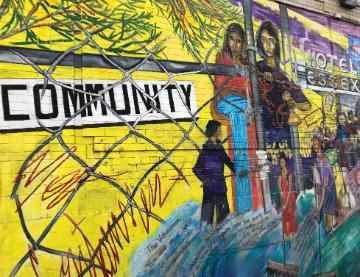
Though their experiences took different shapes, both students left the Tenderloin with the same realization: the stories told about a place, and about the people who live there, are rarely the whole story. Ishida found a sense of common humanity in conversations with people who, like anyone, carry memories, passions, and hopes, and she now plans to bring that understanding into her sociology studies and a future career serving marginalized communities. Heller found a community that defies its reputation, from a daycare that gives priorities to families who can’t afford care to organizations like Urban Alchemy that keep school zones safe for children. In a city still searching for a shared identity, the Tenderloin showed both students what community can look like when people choose to see one another clearly, and that is a lesson they will carry long after their first year.
by Camila Perez '27