At the intersection of innovation and humanity
Two of the most profound structural shifts in the world today are the acceleration of AI into our lives and the urgent need to reimagine our health care workforce. These changes also raise a critical question: How do we preserve our humanity amid extraordinary technological transformation?
As a Jesuit institution in the heart of Silicon Valley, Santa Clara is uniquely positioned to address this challenge. This spring, on the heels of the launch of its fourth Center of Distinction, the Cunningham Shoquist Center for Applied AI and Human Potential, the University debuted plans to partner with Sutter Health to launch the Mark & Mary Stevens School of Medicine. Earlier, the University announced that the Jesuit School of Theology (JST-SCU) will be relocating in 2027 from Berkeley to Santa Clara’s main campus, a move that will further integrate Jesuit values, education, and theological inquiry with the larger University.
We asked leaders from Santa Clara and Sutter to share their thoughts on what these advancements mean for the University community, for California, and the world.
“It is the nexus of these three initiatives that will have the most impact.” — Julie Sullivan, President
These three initiatives are major milestones in our vision of becoming the world’s leading Jesuit university in service to global society and the global church. Each of them individually will be transformative in their ability to expand the school’s global reach and provide new opportunities for faculty, students, staff, alumni, and the broader community. But it is the nexus of these three initiatives that will have the most impact.
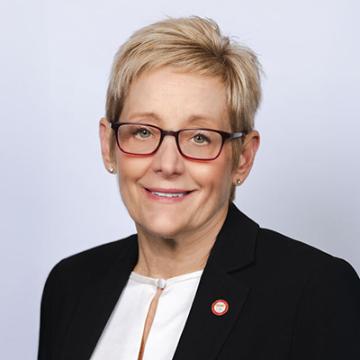
President Julie Sullivan
The Center for Applied AI and Human Potential puts us in a leadership position during one of the most dramatic revolutions in technology, and this revolution is being led by the companies in our own backyard. The center will catalyze applied AI projects, partnerships, and convenings between these industry leaders and our faculty and students. At the same time, as the Jesuit
School of Theology further integrates with our community, what’s explored there will help us further understand and protect what is unique about our humanity and cannot be replaced with technology.
The School of Medicine will pursue a new vision for health care that will use AI to improve the patient experience, outcomes, and the tools available to physicians—all while keeping the human at the forefront. It will use technology to facilitate and enable care that is centered in Jesuit values of compassion and community. Indeed, we are uniquely positioned to prepare physicians who can navigate rapidly advancing technologies while preserving for a diverse array of communities the trust, empathy, and connection that is so needed in medicine.
The Shoquist and Stevens families are undoubtedly paving the way for a new era at Santa Clara, but they are also laying the groundwork for future opportunities for the University community. Potential new partnerships and project collaborations across Silicon Valley and beyond both builds momentum for continued expansion and inspires faculty, staff, and students to think big, explore creative ideas, and broach new frontiers. This kind of fresh energy builds on itself. Our alumni may have left the classroom—but they continue to play critical roles in the education of current students and ensuring they are well-equipped to take on the central questions and challenges of our time and truly work in service to others.
“Enrich our intellectual and our spiritual life”
— James Glaser, Provost and Executive Vice President
For the students at JST-SCU, and for the faculty and staff, closer proximity to the rest of the university will open up all kinds of opportunities. They have a lovely community in Berkeley, but the ability to be part of the intellectual life here at Santa Clara and to take advantage of our resources is going to be a boon for them. For the University, having JST-SCU co-located with the rest of the University is going to further enrich our intellectual and spiritual life.
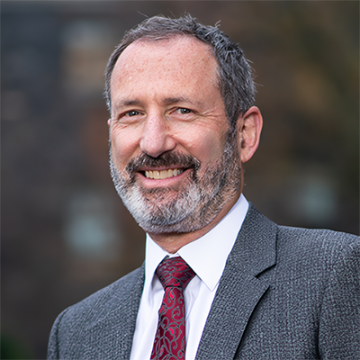
Jim Glaser
Here, like at many other places, AI has come roaring upon us, and there’s a lot of interest in it—among both students and faculty. There are a thousand flowers blooming around AI. But how do you bring them together into a bunch of bouquets? We’ll have a hub on campus where we can nurture interdisciplinary teams of people, who had been working independently but now will have a focal point and be able to share space and resources.
We are the Jesuit university of Silicon Valley, and that is completely unique. We are fully and authentically in the valley. That is our brand, but that is also our reality. And it’s up to us to further enhance that reality, to capitalize on the natural advantages that the University already has. We are the place where this AI center should be, not only because we’re geographically connected to the headquarters of technology in the world, but because we can offer our Jesuit perspective on it.
There’s great societal need for the training of physicians. Given the desire to serve a broad swath of society and to train physicians who both understand technology and how it’s going to shape care, the human touch will really matter. And that’s where our Jesuit influence can be really important.
“The synergy that this move will produce is monumental” — Agbonkhianmeghe E. Orobator, S.J., Dean, Jesuit School of Theology
JST-SCU’s move to Santa Clara University will enable the school to establish new structural collaborations and develop academic and programmatic partnerships. These efforts aim to serve a broader constituency of Santa Clara students and pastoral practitioners who seek to acquire the requisite skills, formation, and training to serve their respective congregations effectively.
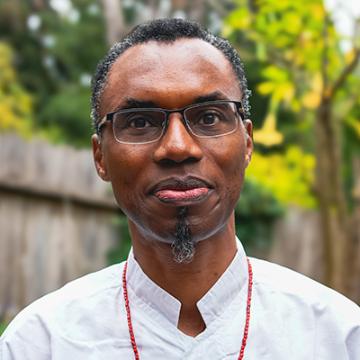
Agbonkhianmeghe E. Orobator, S.J.
The synergy that this move will produce is monumental. Combined, the faculties of JST-SCU, the Department of Religious Studies, and the Graduate Program in Pastoral Ministries include over 40 tenure-track professors. The impact of this pool of expertise would be monumental for Santa Clara and for the study of theology and religious studies west of the Mississippi. JST-SCU’s move will foster connections and collaboration in research, teaching, advising, and public events on campus. This includes, but is not limited to, joint programming in Spiritual Direction, training Hispanic leadership, expanding the reach of JST-SCU’s Instituto Hispano, and developing new graduate programs, ranging from a master’s to doctoral programs in theology and ministry.
In particular, our lay students who are domestic Latino/a/x will benefit from increased representation, the integration of social justice themes, and content that reflects their cultural and religious traditions. Additionally, this plan will strengthen connections with the broader Latino/a/x community and align with Santa Clara University’s goal of becoming a Hispanic-Serving Institution (HSI). This move will enable JST-SCU to extend its resources to these communities.
“A focal point in Silicon Valley”— Kendra Sharp, Dean, School of Engineering
With AI, we now have the capacity to collect and process incredible amounts of data and information, to synthesize knowledge, and to model complex systems in ways never before possible. Our center is focused on how we leverage these capabilities to accelerate the discovery of new knowledge, to translate innovations to practice, and to enhance creativity and collaboration for societal good.
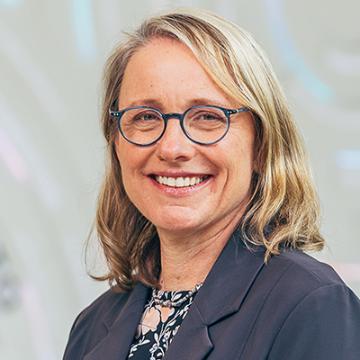
Kendra Sharp
We see this center as a way to build new interdisciplinary opportunities across campus and to strengthen existing ones. It will also be a focal point in Silicon Valley for connecting university and industry. Our students will have a direct connection to what’s going on right now across various fields utilizing AI. As part of the center, we’ll have an AI-industry hub, which I see as a go-to for academic and industry collaboration in AI in Silicon Valley. This hub will be a vital convener for people in organizations who are interested in enhancing human capability and leveraging AI for real-world challenges.
Our work is grounded in Jesuit tradition and values, meaning that responsible AI is at the heart of all of our research and education efforts. What’s unique in this center is the focus on applied AI and human potential. We aim to teach and conduct research in AI in service of enabling all individuals, including the end users of AI technology, to reach their full human potential.
“If it wasn’t for Santa Clara, I wouldn’t be here today!” — Lindsay Mazotti, Chief Medical Officer of Medical Education & Science, Sutter Health
I’m really excited about what Sutter Health and Santa Clara will be able to accomplish together. Personally, Santa Clara means so much to me because my parents met there in college. My mom hit a home run at a pickup softball game, and my dad asked her out on the spot. If it wasn’t for Santa Clara, I wouldn’t be here today! This partnership also represents a rare opportunity to build something truly distinctive at the intersection of health care, education, and Silicon Valley innovation, preparing physicians who can lead in a rapidly changing world while staying rooted in purpose and community.
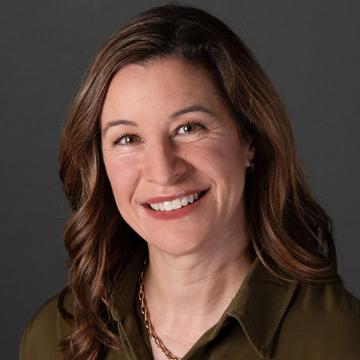
Lindsay Mazotti
Health care is rapidly evolving. We need to approach medical school education by designing it so physicians will be prepared for the future of care they will lead. By building a new School of Medicine from the ground up, we can create a curriculum that is designed to meet the future needs of health care. For example, graduates will be prepared to lead in a health care system that is increasingly integrated, data-driven, and community-focused—improving care coordination, patient outcomes, and access to care.
By training within a working health system, we will be immersing learners in real-world care from day one, which means they will enter practice better prepared to deliver coordinated, technology-enabled, whole-person care to patients across communities.