Can AI make healthcare more personalized and accessible?

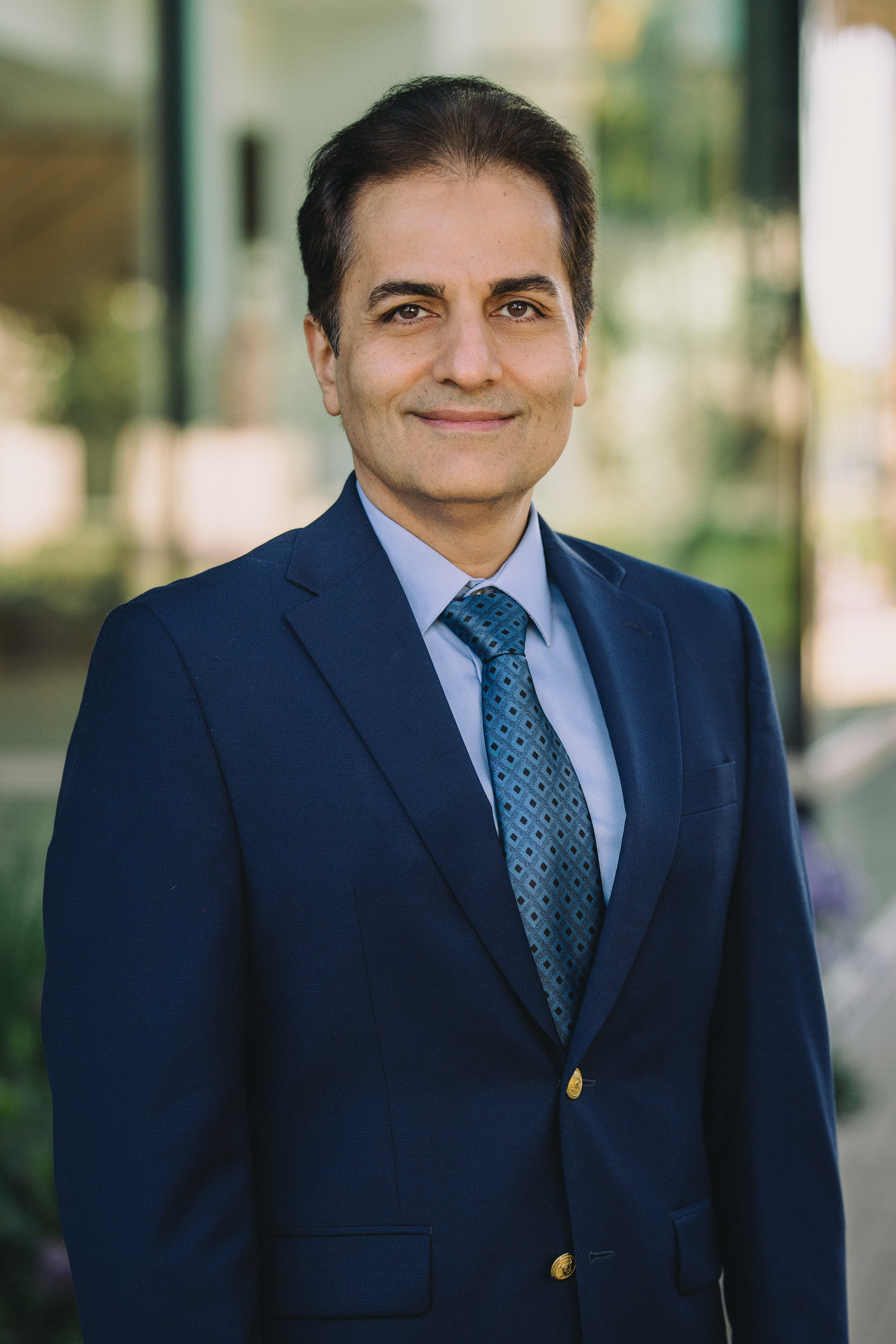
Hamed Akbari is an associate professor of bioengineering at Santa Clara University. His interdisciplinary research combines AI, personalized medicine, and medical image processing to improve treatment plans for patients dealing with a variety of medical conditions. He envisions a future where AI makes healthcare more personalized and accessible, enabling patients to get the care they need when they need it.
What questions or challenges are at the heart of your current work?
People react differently to medicine, so AI has the potential to help us create personalized diagnoses that minimize negative side effects and increase survival outcomes. I use machine learning to analyze different types of medical data so I can develop personalized treatment plans for patients dealing with conditions, including brain tumors, epilepsy, stroke, seizures, skin cancer, and heart disease. The main challenge I currently face is gaining access to patient data that will allow me to develop treatment. Most patient data is protected by privacy regulations like HIPAA which is important, but AI models need diverse data to learn patterns and provide reliable, personalized insights.
Why is this issue important for the world to address at this time?
Timely access to healthcare is a global problem. AI and computational data analysis can provide advanced services to people in underserved areas where access to specialized doctors is limited. If we use AI as a complementary tool for medical doctors, then they can give patients the immediate attention they may require and choose the right treatments without wasting additional resources or time. AI tools could also enable physicians to spend less time on documentation and more time on evaluation and diagnosis, making healthcare more efficient and accessible for patients.
Why have you chosen to dedicate your career to this research?
This field allows me to combine my medical background with engineering and AI to solve problems that can make a difference for patients and doctors. I am particularly motivated by applying AI to real patient challenges—for example, predicting seizure types from MRI scans, analyzing EEG signals to support the diagnosis of disorders like schizophrenia or alcoholism, and creating three-dimensional maps of ischemia in the heart using electrocardiogram (ECG) data. Finding new treatments for diseases and helping patients is the main driving force of my career.
How have your students impacted your research?
My students bring creativity, energy, and new ideas to the lab. Research is teamwork, so they play a major role in advancing our projects by developing AI models for seizure prediction and building tools to predict COVID-19 severity, to name a few. They also assist with data preparation, model experimentation, and often propose ideas that lead to new research directions. I really believe in cura personalis, or “care for the whole person.” It’s one of the core values in Santa Clara’s curriculum, and one that I bring into my lab everyday. I mentor my students not only through research or teaching, but beyond that. I try to support them in all aspects of their lives and encourage them to be the best they can be in the future.
What's a book in your field that you think everyone should read?
I would recommend Deep Learning by Ian Goodfellow, Yoshua Bengio, and Aaron Courville. It is one of the most widely recognized books in AI and provides a strong foundation in both the theory and the practice of deep learning. For researchers working in biomedical AI, the book offers valuable insight into how models operate and how they can be applied to complex clinical data such as medical images, EEG, and ECG signals.

Research in bioengineering is focused on creating new technologies in traditional and regenerative medicine, prosthetics, biomaterials and molecular biotechnology that result in cheaper, smarter and faster approaches to detect, diagnose and treat human disease.