Not sure where you fit into a future driven by AI? This ‘kitchen’ will give you a first taste
In Season 2 of “The Bear,” a digital clock hangs on the wall of a Copenhagen kitchen with a plaque beneath it reading: Every Second Counts. On the surface, it’s a kitchen axiom about urgency—every order, every movement matters. But the show reveals it’s not a warning to move faster. It’s an invitation to be intentional.
It’s also an apt metaphor to explain why Kai Lukoff, a computer science professor at Santa Clara University, decided to open a “kitchen” of his own.
The AI Kitchen, a new initiative launched this spring, was created amid the rapidly changing technological landscape to intentionally slow things down—giving students, faculty, and community members a chance to gain hands-on experience with the AI tools reshaping every field, not just computer science.
Lukoff and his co-faculty advisors, Professors Yi Fang and Sanjiv Das, wanted to create a space that, like a kitchen, would be communal, creative, and welcoming. Everyone has a relationship with a kitchen, regardless of major or background. The same, he believes, should be true of AI.
“I really wanted to emphasize having it be something beyond a tech bro space,” Lukoff says, explaining that the program draws cultural inspiration from Design Buddies, a 150,000-member online community built by alumna Grace Ling ’19, MS ’21. After graduation, Ling created this professional networking platform with a warm, approachable aesthetic and adorable bunny branding that helped draw a far more diverse audience into the tech design world.
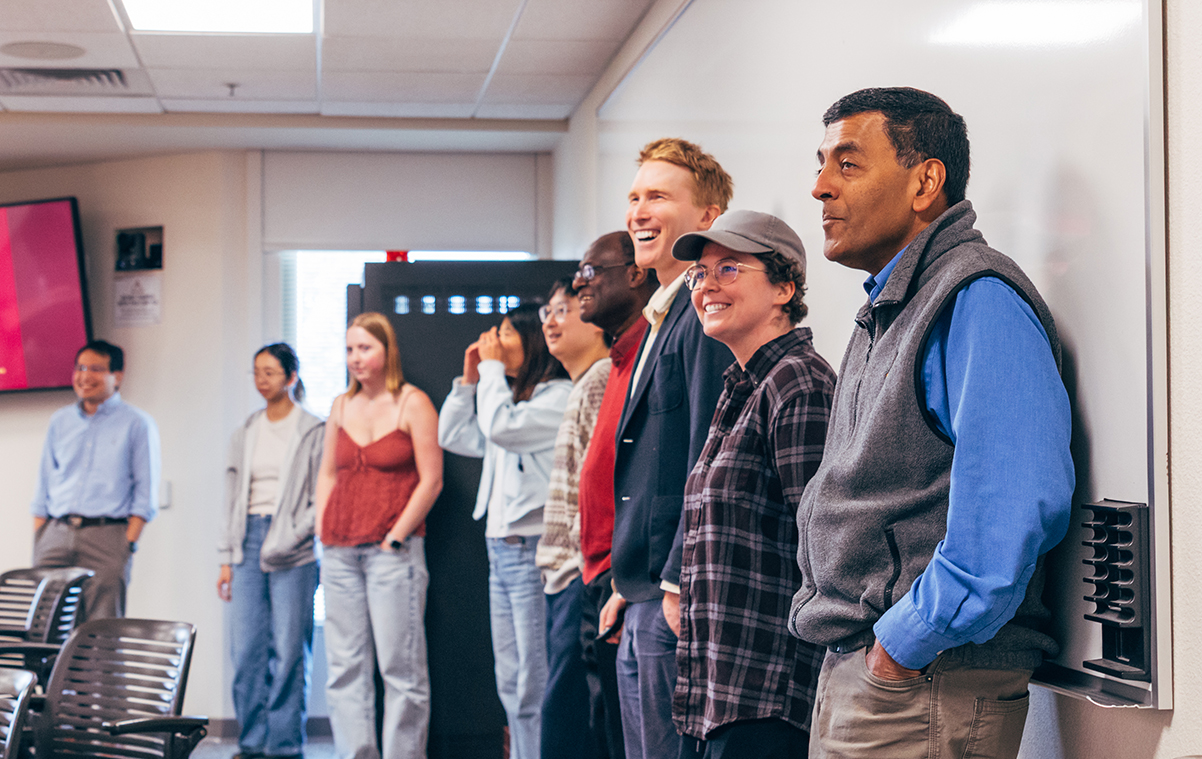
So far, the approach has worked. After Studio Lead Tiffany Le ’28 and her team personally invited peers from over 140 classes, more than 100 people joined the first “Taste Test” session in April, including faculty from the English department, students from anthropology, and a wide range of other disciplines.
Held every Friday from 1-5:30 p.m. in Lucas 306, these drop-in sessions open with a live tutorial from an industry professional, faculty member, or fellow student, and then give way to open, exploratory time.
No grades. No application. “No code required to cook,” as the website boasts.
The AI Kitchen also runs a longer, parallel program called “Slow Roasts,” where participants pitch quarter-long AI projects, form cross-disciplinary teams, and work toward the end-of-year Potluck Showcase. Eventually, Lukoff hopes that some of these projects could be developed into start-ups or research projects across Santa Clara’s many labs, like his own.
AI Kitchen opens just weeks after the announcement of Santa Clara’s Cunningham Shoquist Center for Applied AI and Human Potential, and is just one of many exciting AI initiatives brewing on campus, from the Responsible AI initiative to student club, AI Collaborate.
Taking advantage of Santa Clara’s Silicon Valley location, the industry response to the AI Kitchen has been striking. So far, every professional Lukoff invited to be a “guest chef” has RSVP’d yes. The program also secured $15,000 in funding from the University’s Regents, some of whom want to lead their own Taste Tests later in the year.
“There are just so many folks in our community that are interested and engaged on this, particularly on the industry side, where they’re adopting these tools at lightning speed,” Lukoff says. “I think they’re just excited to give back and mentor the next generation in engaging with these tools, too.”
The industry-driven urgency isn’t lost on Lukoff, who, over the winter quarter, realized most of the slide decks from his past software engineering classes were out of date due to advancements in AI, forcing him to toss them and start from scratch.
That’s why waiting for things to stabilize before engaging isn’t really an option, Lukoff says. AI Kitchen is not just about keeping pace with a new job market and technology. It’s about shaking up who’s in the room as this technology gets normalized.
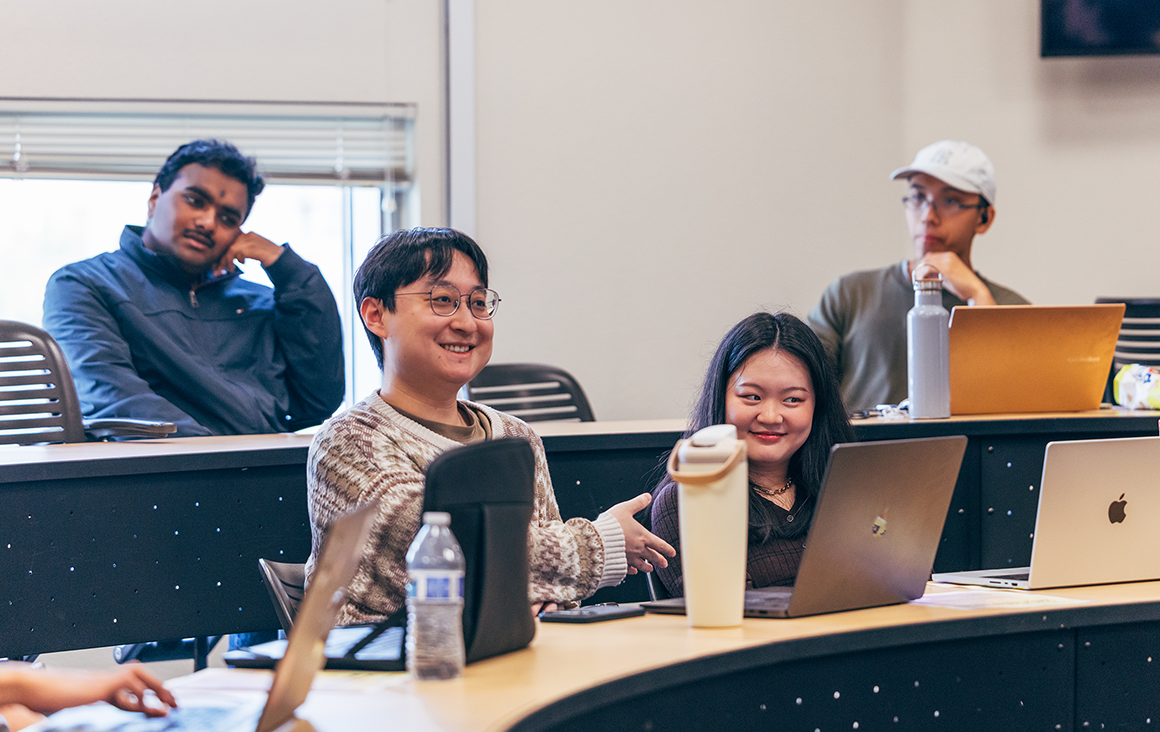
“People need to be hands-on with this so they don’t just accept it as it comes, but rather can help shape it and figure out what is the right, responsible, and useful way to engage with it,” Lukoff explains. “Even if you’re AI-skeptical, a fundamental understanding of what’s out there and what’s possible is very helpful.”
Lukoff says the cross-expertise flavor to the AI kitchen is important. For example, a psychology student thinks differently about AI-assisted interventions than an engineer does. A business major spots workflow problems that a computer scientist might never encounter. Put them in a kitchen together, and you get “fusion cuisine”—something that none of them could have cooked up alone. The mix isn’t just good for learning. It’s good for the technology. It’s good for the world.
“It’s about more than just AI,” Le agrees. “It’s about creating a community where we can all learn, fail, and grow alongside one another.”
Back in “The Bear,” the clock doesn’t hang in the kitchen to create pressure. It hangs there as a reminder: the moments don’t wait. The question is whether you’re present for them. At Santa Clara University, the kitchen is open. Order up.

AI Kitchen is a new initiative at Santa Clara University giving students, faculty, and community members hands-on experience with the AI tools reshaping their fields. Open to the public (age 18+).