Empowering students to find their distinct voice as generative AI reshapes the way we learn
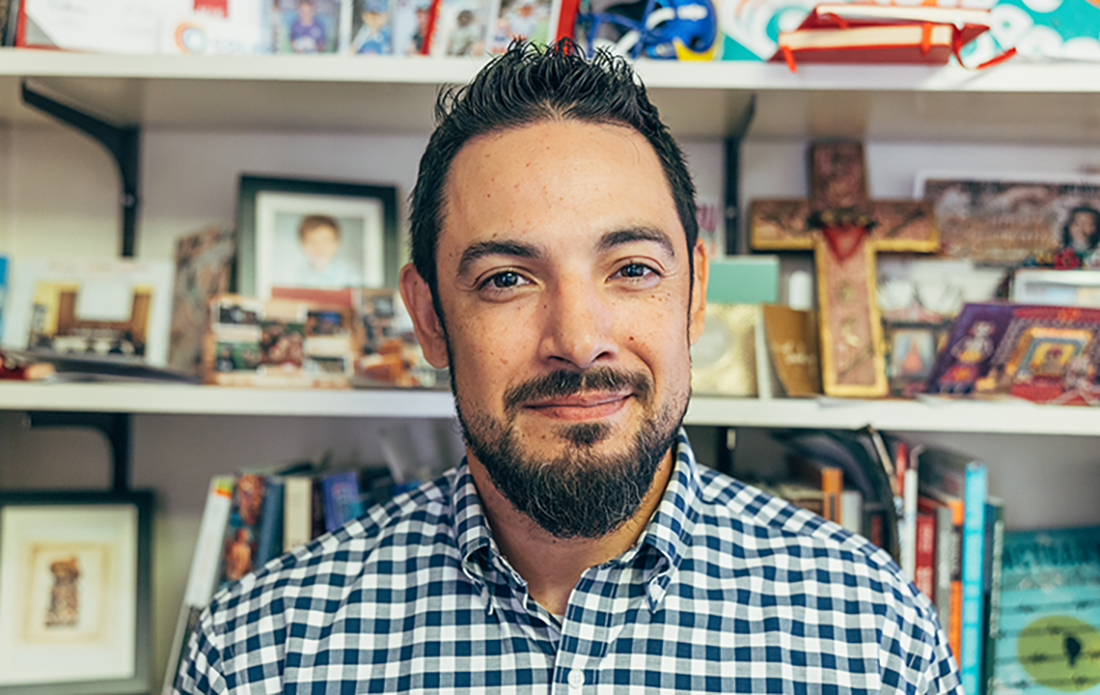
As professor of rhetoric and composition at Santa Clara University, Cruz Medina studies the way digital writing and technology impact marginalized communities. Through his teaching and research, he challenges his students to develop their own style and rethink the role generative AI plays in their writing process. The author of “Reclaiming Poch@ Pop: Examining the Rhetoric of Cultural Deficiency” and “Sanctuary: Exclusion, Violence, and Indigenous Migrants in the East Bay,” Medina also seeks to place education and literacy at the center of conversations about culture and social justice.
What questions or challenges are at the heart of your current work?
I research the benefits and potential drawbacks of writing and technology. When teaching critical thinking and writing studies classes, I ask my students to write in genres with more cultural relevance than what is traditionally taught in these types of courses—social media, for example—while still incorporating digital storytelling and video for argumentation. In the past, I looked at how Latinx students used X (formerly Twitter) to develop identity through code-switching. Through this work, students realized that writing is involved in everything from the text messages they send to the videos they consume online. They can see how the writing they do at the university is relevant to the writing they want to do in the world.
My interest in writing and technology has really come up against the generative AI question. I challenge my students to think about where information comes from when using large language models. It is important for them to bring their own voice and style into their writing and challenge these models when doing research online.
Why is this issue important to the world for the world to address at this time?
Generative AI is becoming more and more integrated into our daily lives. I want my students to think about who benefits from using this technology, including the impact on the environment and the learning losses that come with cognitive offloading. If we’re not doing the hard work of struggling through the learning process, what is the benefit of AI and how can we feel any ownership over what comes out of it? Critical thinking is at the heart of the writing that we do, and real learning happens during moments of struggle. When we offload these experiences to different AI agents like ChatGPT or Claude, we miss out on real learning opportunities.
Why have you chosen to dedicate your career to this research?
I’ve dedicated myself to this research because I understand how impactful writing has been for me. I’ve been excited to talk about words ever since I was in high school. I’ve always loved language and what language could do. While earning my master of fine arts in creative writing, I spent a lot of time working in writing centers, helping people find their distinct voices and edit their own drafts. It was there that I really started to see a future career in the kind of work that I do now.
I was really fortunate to grow up during a time when computers were becoming so widespread that word processing was replacing typewriters. I was always interested in how folks in certain communities were using technology, especially when there was this idea that they had no access to it or weren’t using it. In particular, I was really motivated to see how people in Latinx and other communities took these technologies and used their own cultural understandings to make them their own. I’ve always wanted to do research that helps amplify these stories and helps folks understand that some of these stereotypes are incorrect.
Back in 2018, I co-edited a digital book called "Racial Shorthand: Coded Discrimination Contested in Social Media" that looked at the way different communities used technologies that had been overlooked. My own chapter discussed digital testimonio, a genre of digital storytelling that speaks from an individual perspective about community experiences that incorporate social justice and the purpose of speaking truth to power.
How have your students impacted your research?
As a professor, it’s really rewarding to work with students both inside and outside the classroom. In all of my writing classes, I require that students come and meet with me individually to talk about their writing. I really want them to have ownership over the writing that they do because that’s really important for finding their own voices.
Students have been really impactful to my research because I am often reading what they’re writing and learning about the issues they experience, whether that has to do with language, identity, or feelings of belonging. For example, one of my students wrote about the experience of not speaking English and moving to the United States. She wrote this really moving piece about how she went to this museum and saw all this writing in English. She didn’t understand what she was seeing or hearing, and described feeling like she was in a tank with sharks circling around her. This contributed to her feeling of not belonging, but it also sparked a huge desire for her to learn English.
Through examining student writing like this example, I’ve really been able to point out how issues of language can contribute to issues of isolation and fear, especially for students speaking English as a second language. I hope my research prompts educators to rethink how they’re engaging with these students and clear up misconceptions they might have when these students enter the classroom.
What is a book in your field that you think everyone should read?
A book in my field that I think everyone should read is called “Race, Rhetoric, and Technology” by Adam Banks. It looks at the issue of the digital divide and who has access to certain technologies, like Wi-Fi, for example. Banks raises the question of whether or not there is this critical infrastructure in the classroom. Our students might have access to Chromebooks in their classrooms, but are they being taught the literacy that they need so that they’re engaging with this technology in really useful ways? The book continues a conversation that is really relevant right now, especially as questions about generative AI and the potential benefits and biases of technology arise.

The Department of English affords students a rich undergraduate education in the liberal arts centered on literature, cultural studies, and writing. The English major prepares students to read and write critically, to bring intellectual flexibility to academic and professional problems, and to enter the workforce as individuals with trained skills in analysis and self-expression.