For Miller Center fellows, the work starts before they arrive in their host country
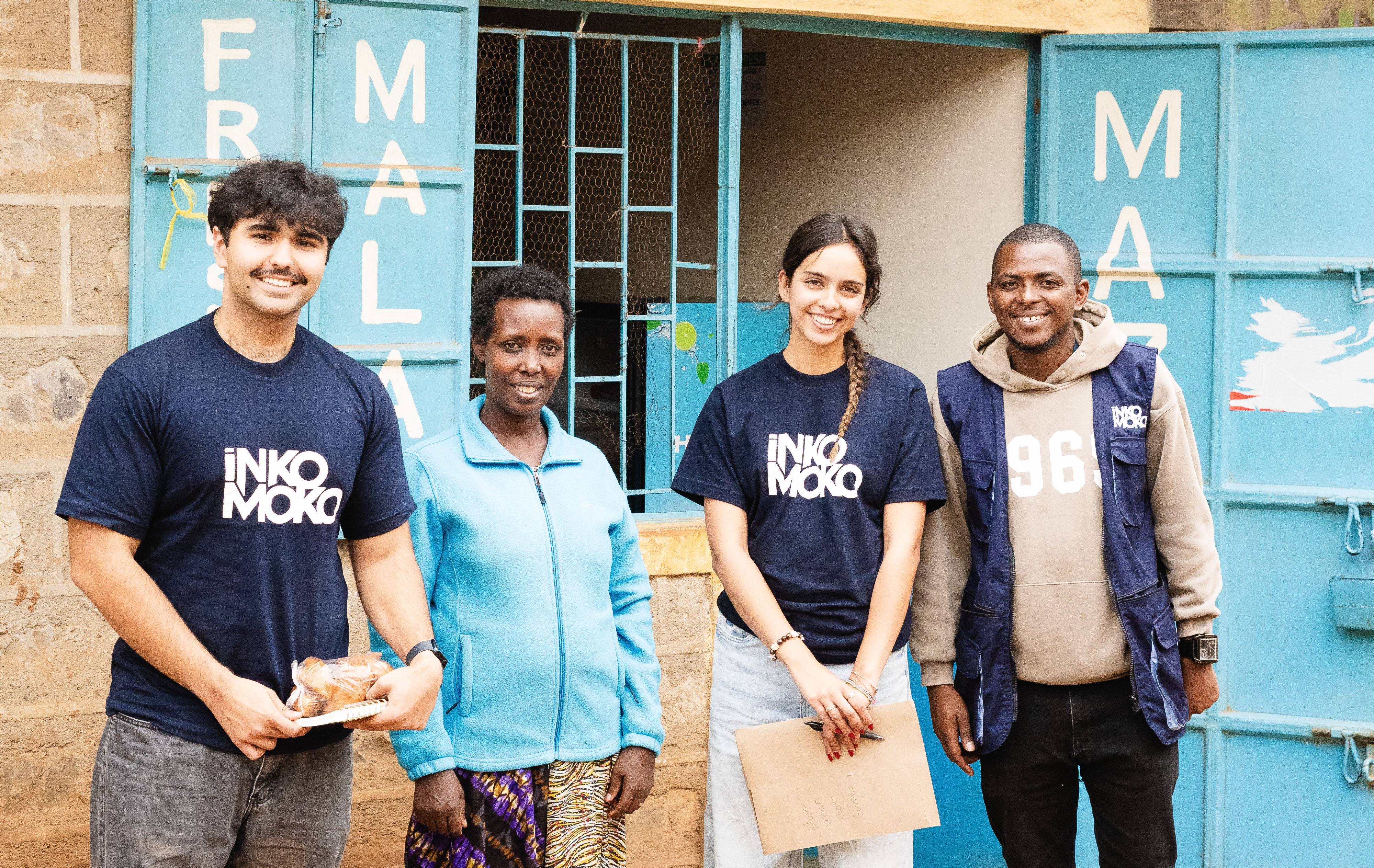
Shreya Murti ’27 wanted to spend her summer doing something that mattered. The political science major—who minors in math and economics—was looking for an opportunity to study abroad and do work that could make a real difference.
Sitting in a crowd of 100 Santa Clara University students, faculty, staff, and community members at Miller Center’s annual Action Research with a Mission showcase, she listened as Emil Chaia ’25 shared what six weeks working alongside local entrepreneurs in East Africa had taught him about service rooted in humility. Chaia completed the experience as part of the Miller Center Lewis Family Fellowship, a fully funded program that sends Santa Clara juniors abroad to support social enterprises in communities around the world. By the end of the showcase, she decided to apply.
“I’ve always been passionate about social justice and interested in cultural exchange,” says Murti, who was accepted to the program early decision. “This fellowship is special because you get the opportunity to go in person and work in another country. That’s exactly what I want to do.”
The fellowship pairs two quarters of coursework and academic research with hands-on work alongside mission-driven social enterprises addressing challenges like poverty, women’s economic power, and climate resilience in different countries. At its core, the program is grounded in the idea that showing up ready to listen is just as important as the work itself.
But the work for these fellows starts long before they ever land in country. Students spend spring quarter studying their host country’s history, learning cultural sensitivity, and grounding themselves in the principles of social entrepreneurship—a process that is, in itself, an act of humility.
With guidance from Santa Clara faculty and Miller Center mentors, fellows also develop research proposals and complete logistics and safety training. By the time they arrive abroad, they are prepared to engage with their host organizations as informed partners.
“We place a strong emphasis on cultural humility and preparing students to be thoughtful, respectful research partners with community stakeholders,” says Leslie Gray, senior director of academics and research at Miller Center and professor of environmental studies & sciences at Santa Clara. “Students learn to listen first, build relationships grounded in mutual respect, and contribute their knowledge in ways that are culturally appropriate and responsive to local contexts.”
That preparation has also helped position Miller Center fellows for future opportunities, including Fulbright grants. Seventeen former fellows have received Fulbrights, with many citing their Miller Center fellowship experience as instrumental to their applications.
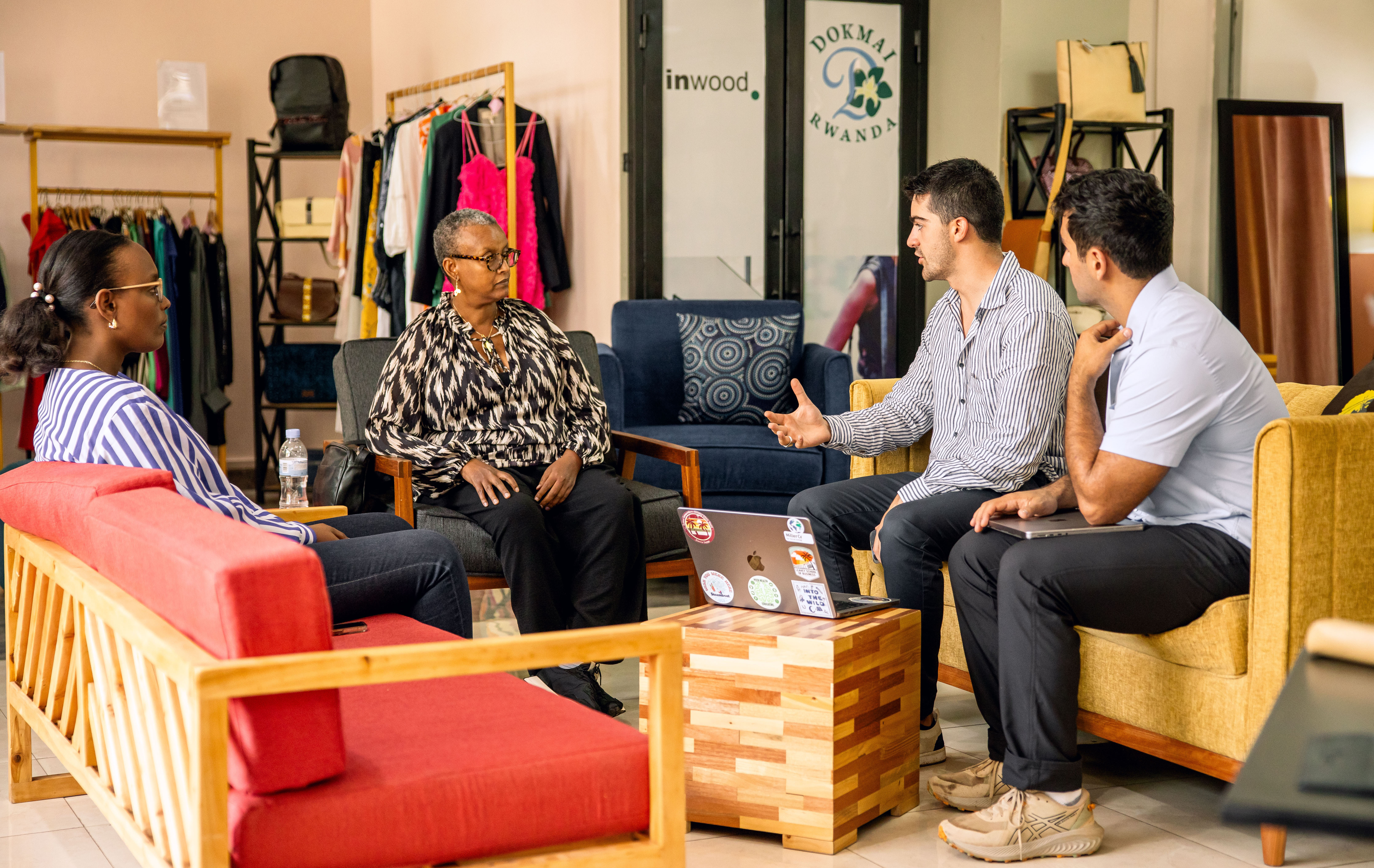
Emil Chaia ’25 (second from right) meets with with Bernadette Umunyana (second from left), founder of Dokmai, a Rwanda-based furniture-making business that Inkomoko helped grow through its business acceleration program.
For Chaia, the emphasis on thoughtful preparation and partnership made all the difference in his fellowship experience. Through his work with Inkomoko, a Rwanda-based social enterprise dedicated to helping local entrepreneurs grow by offering finance advisory services, Chaia learned what it actually takes to get capital to the businesses that traditional lenders often overlook.
“There was real humility in figuring out where we were going to contribute versus where we needed to listen and learn,” says Chaia, reflecting on field visits in Kigali, Rwanda that gave him a clearer picture of the day-to-day challenges entrepreneurs face in accessing funding. “I went in thinking the financial product would be the centerpiece, and came back realizing it’s more about the solutions already being built by people on the ground. Our job was to listen carefully enough to support that.”
It is a lesson that has shaped everything since. Following the fellowship, he interned with Miller Center’s impact investing team, evaluating opportunities to support entrepreneurs through catalytic debt deployment and social enterprise tracking. He graduated from Santa Clara in 2025 and joined a venture capital firm in Miami as an analyst, supporting underrepresented founders at the seed and Series A stages.
“My work now is directly linked to what I did with Miller Center,” Chaia says. “I was able to find a fund that values impact and underrepresented perspectives in market shifts, positioning bets on founders with unique life experiences.”
While Chaia’s fellowship has already shaped his career in impact investing, Murti is now in Nairobi, Kenya where she is beginning to see how a similar experience may shape her path in law. She is working with Inkomoko, which also operates in Kenya, to better understand the experiences of refugee entrepreneurs in Nairobi and Kakuma. Through interviews with these business owners, she is comparing how they navigate challenges related to business development and loan repayment.
Murti credits Miller Center’s culture of mentorship and preparation with shaping how she approaches her work abroad. She came into the fellowship focused on public defense, but her time working directly with refugee entrepreneurs is drawing her toward immigration and international law as well.
“Miller Center does such incredible work promoting social enterprises and this fellowship has really opened my eyes to all the possibilities out there,” Murti says. “I’m really excited to see what the summer brings. I definitely think it will shape where I take my career in the future.”

The Miller Center Fellowship is a fully funded summer social enterprise field research-based experience for Santa Clara University junior-level students, along with two quarters of classwork and academic research. Our social enterprise research projects are based on the social entrepreneurs’ needs, often social science research.