How technology is changing the way we engage with religion
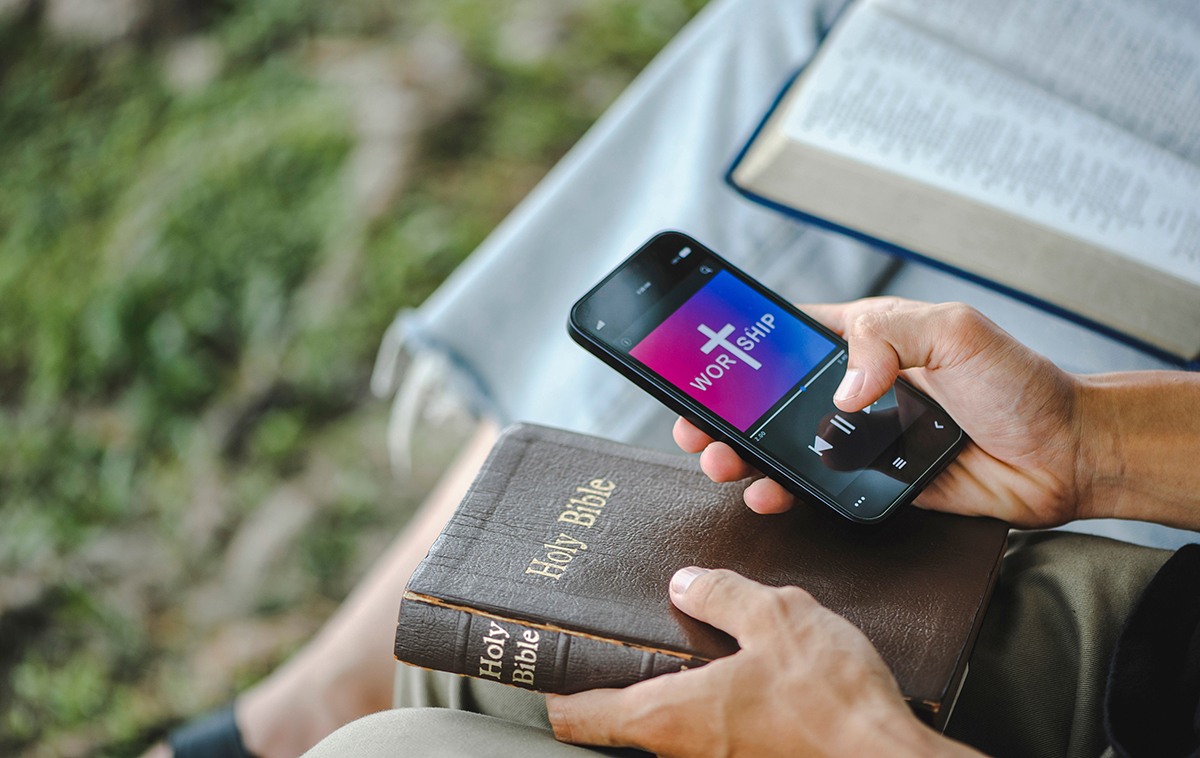
Di Di, Ph.D. is an associate professor of sociology at Santa Clara University. Her research explores the social impact that religion, spirituality, science, and technology has on how we work and live. She is the author of the recently published book Divine Meets Digital: Tech Workers and Religion in the U.S. and China, which explores how faith influences professionals’ views on tech ethics. She is also working on new research that examines how religious and spiritual influencers navigate the tension between authenticity and monetization on YouTube and TikTok.
What questions or challenges are at the heart of your current work?
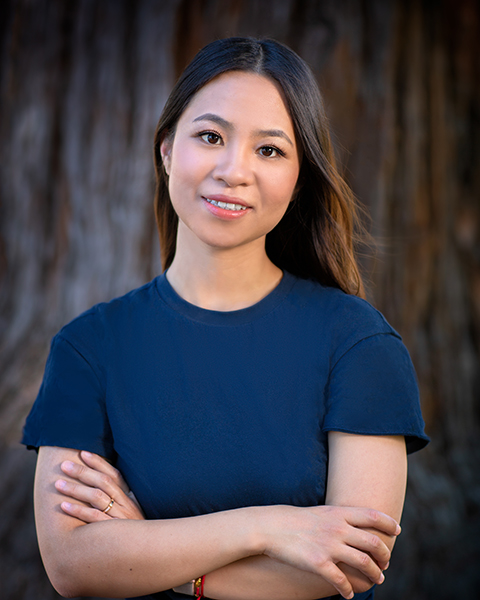
In my work as a sociologist, I primarily study religion. I want to understand how people find meaning in their lives, what they believe, and generally, how people relate to each other. More specifically, I’m interested in understanding how people approach their faith and spirituality in a fast-changing technological and social environment, especially with the rise of emerging technologies like artificial intelligence and social media. Research shows that the way people approach spirituality in faith communities, like Christian churches or Buddhist temples, is, by and large, influenced by the authoritative discourse of their leaders. I’ve noticed that many young people do not necessarily rely solely on this authoritative discourse; they also seek spiritual support through social media platforms, such as Instagram, YouTube, or TikTok. The question is whether that sort of reliance on social media for spiritual guidance is a good thing or a bad thing. I’m curious about how social media discourse might change the spiritual experiences of the younger generation, and how those who shape this emerging discourse (i.e. atheist, religious, and spiritual influencers) craft the message they want to send.
Why is this issue important for the world to address at this time?
I would advocate that religion and spirituality really matter because they are meaning-making frameworks, so they provide answers to the very big questions of our lives, such as where we’re from, where we’re going, and how we should live. It can be difficult for people to formulate cohesive answers to these questions so many rely on existing ways of thinking, as articulated through sacred books and alternative spirituality practices, or even purely non-religious worldviews. Our discussions about morality, politics, and new technologies are rooted in these frameworks, so it is important to understand how people formulate them. For example, if AI chatbots are playing an important role in shaping how people make meaning in their lives, then we need to understand how people interact with these tools and the extent to which they embody biases. These biases may, in turn, shape their meaning-making frameworks and subsequently influence their approach to other important issues in society. Traditionally, these frameworks are provided by leadership in faith communities. Nowadays, they are provided by social media influencers, and more recently by answers generated by AI chatbots.
Why have you chosen to dedicate your career to this research?
I grew up in a Buddhist family in Shanghai, China. Many of my relatives identified as Buddhist, but they practiced the religion in different ways. My grandparents followed popular Buddhism, going to temples and praying to the Buddha, while my parents relied on reading Buddhist scriptures for spiritual guidance. When people asked me about my religious identity, I found it difficult to give a clear answer. I would tell them I was born and raised in a Buddhist family, and leave it at that. I was neither the type of Buddhist my grandparents nor my parents were.
As a child, I was curious about how my parents and grandparents could practice the same religions so differently. This was the initial motivation that drove me into this work. For me, the beauty of research is finding out what is hidden beneath the surface of society. Through interviews, conversations, and survey data in my graduate school years, I started to understand how the same religions can shape people’s lives in different ways, and that realization drew me into the field of sociology, religion, and spirituality.
How have your students impacted your research?
My students play a very critical role in my research process. To some extent, they are my thinking partners. If I am stuck on a question or unsure how others may interpret data, I ask my students to offer their perspectives. I have worked with several excellent research assistants across different projects, and they have helped me kick off the research process by recruiting study participants and reviewing paper drafts.
I’ve taught quite a few classes in the core curriculum and work with many students who are not sociology majors but are studying engineering, computer science, or business. In class discussions, we debate topics like whether the rise of AI may replace religion, and students raise a wide range of opinions that push me to think more carefully about my research. At Santa Clara, when we talk about educating the whole person, I hope that my classes and the research I share play a small role in preparing students to be great professionals in their fields who consider how their work may have a broader impact on society.
What’s a book in your field that you think everyone should read?
“Divided by Faith: Evangelical Religion and the Problem of Race in America” by Michael Emerson and Christian Smith is one of my favorite books because it discusses how religion can profoundly shape our lives. Before reading this book, I did not think carefully about how religion may influence people’s approach to seemingly unrelated issues, such as race.
One of the central arguments is that evangelical Christianity provides people with a framework that is more individualistic than structural. The authors explain that people who follow this religion may be more likely to interpret differences as rooted in individuals’ efforts, rather than in the inequalities embedded in society. In other words, the way our lives turn out has more to do with the choices we make and actions we take than with broader social structures. This book helped me see that religion and race are more closely connected than I had thought. It provides us with one mechanism to understand how religious frameworks can reinforce the racial inequalities that we observe in society every day.

The Department of Sociology equips students to engage in positive social change to transform the world around them. Sociology at Santa Clara University awakens the “sociological imagination” in each of us, spotlighting our collective ability to play a role in shaping both our own lives and the society we share.