‘I choose to work on problems that can help humanity’
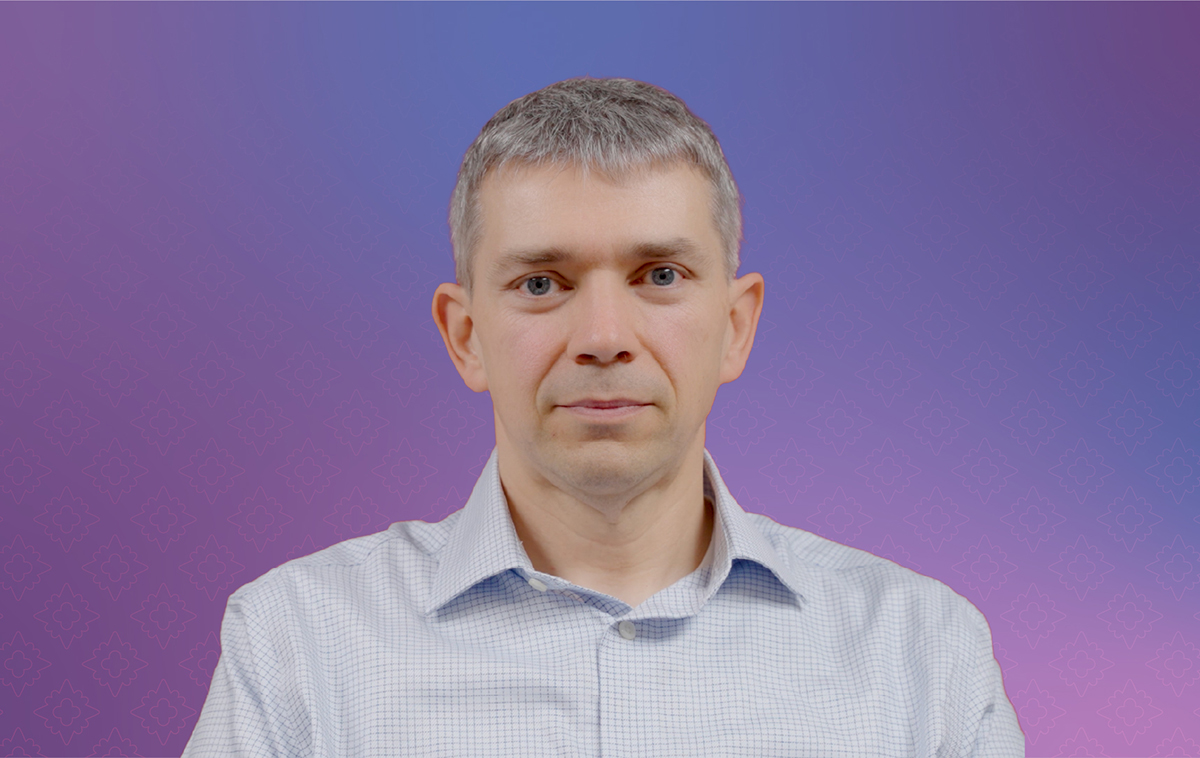
David Anastasiu is an associate professor of computer science and engineering at Santa Clara University. His research spans machine learning, data mining, computational genomics, and high-performance computing. Recently, he received the CAREER award from the National Science Foundation. Anastasiu aims to develop AI systems that can watch the world and communicate with machines to help prevent accidents and protect human lives.
What questions or challenges are at the heart of your current work?
The challenge at the heart of my work is detecting and preventing accidents before they happen—a fundamental shift from being reactive to being proactive. When it comes to catastrophes like car accidents or warehouse mishaps that threaten human lives, can we use AI to identify what might happen and stop it before it happens?
I develop video anomaly anticipation systems that use real-time signals to do just that, ultimately saving lives and reducing property loss. Traditionally, systems are designed for Video Anomaly Detection (VAD)—identifying a problem, such as a traffic collision or a safety breach, only after it has already occurred. My models work by predicting the trajectories of objects in motion, like robots or self-driving cars. When we see that an object might collide, our system can issue a warning and tell it to slow down to prevent an accident.
Why is this issue important for the world to address at this time?
We are at a unique technological inflection point where the “ideal” of real-time prevention is finally within reach. For years, the computational requirements for processing complex video data in real-time were prohibitive, often requiring offline batch processing that was too slow for safety-critical applications. However, recent breakthroughs in AI hardware, edge computing, and large Vision-Language Models (VLMs) have changed the landscape. We now have the algorithmic efficiency and the hardware “muscles”—such as Field-Programmable Gate Arrays and specialized AI chips—to run sophisticated models directly where the data is captured. As video surveillance becomes ubiquitous in our cities and workplaces, we have a responsibility to move beyond simple monitoring and toward active preservation of safety.
Why have you chosen to dedicate your career to this research?
Throughout my career, I have been driven by the desire to work on research that has a tangible, positive impact on humanity. Whether I am working on predicting the progression of chronic kidney disease, enhancing low-dose fMRI scans, or modeling hydrologic flow, the underlying motivation is always the same: using data science to solve high-stakes problems.
My current focus on video anomaly anticipation aligns deeply with Santa Clara University’s Jesuit values, specifically being “people for others.” I believe that if our research can prevent even one car accident or a forklift collision in a warehouse, then we have done our work. We aim to develop methods and algorithms that help people in their everyday lives. I simply care about the world around me. When I choose problems to work on, I choose problems that can help humanity.
How have your students impacted your research?
My students are really the lifeblood of my lab. They are not just research assistants, but true collaborators in the discovery process. I currently have six PhD students in my lab, and three of them are dedicated to this video anomaly anticipation project. They are involved in the entire process, from coming up with new ideas to implementing complex codes, testing their effectiveness and efficiency, and drafting and writing research papers. Every day, my students inspire me to do the best work I can. They bring fresh perspectives and a tireless work ethic to the lab. Seeing my students grow and become researchers in their own right is really the best part of my job.
What’s a book in your field that you think everyone should read?
I recently read “A Brief History of Intelligence” by Max Bennett and it resonates deeply with the work we do in my lab. The book explores the evolution of the brain through five major breakthroughs, from the beginning of life on planet Earth to modern day. It draws parallels between the evolution of intelligence and biological systems to the way we’ve designed AI systems today. For anyone interested in AI, this book provides a vital framework for understanding that our current algorithms are part of a much longer story of how systems learn to navigate and predict their environments. It’s a powerful reminder that to build the future of AI, we must first understand the biological blueprints of intelligence that have evolved over millions of years.