Most patients forget what happened at their medical appointments. This AI-powered app can help.
Think back to the last time you were in a doctor’s office for a nonroutine exam. Perhaps you received an unexpected diagnosis. Or extra labs were ordered but you didn’t understand why. Or the doctor was overbooked that day, and the appointment felt rushed. Maybe you received a visit summary through the doctor’s online portal, but it’s full of hard-to-parse medical jargon. You walk out the door in a fog, already hazy on what comes next. Kyle Alwyn ’15 wants to cut through the confusion and help patients understand their own health better with his app, Kin.
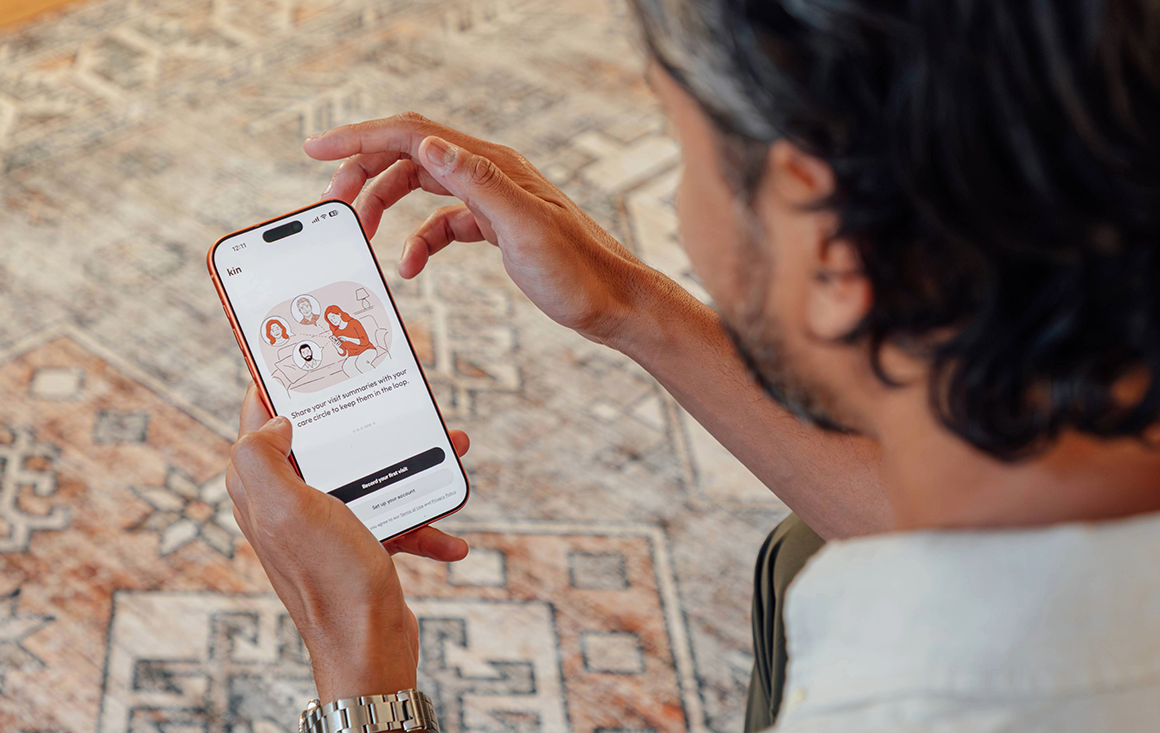
Like other healthcare recording applications, Kin uses artificial intelligence to quickly summarize what’s discussed in a medical appointment. But whereas other ambient scribe programs cater to doctors and medical offices to assist with charting and record-keeping, Kin is all about the patient. Each summary is generated at a sixth-grade reading level—the average for American adults—and includes next steps.
Alwyn points to studies that show 40-80 percent of medical information delivered during an appointment is immediately forgotten by the patient. “When the visit itself is only 15 minutes to discuss medication changes, labs, follow-ups, etc., and often in a moment when your mind is drawing a blank from being overwhelmed,” Alwyn says, “we exist to make a very complex and oftentimes stressful situation easy to understand and reengage with after the fact.”

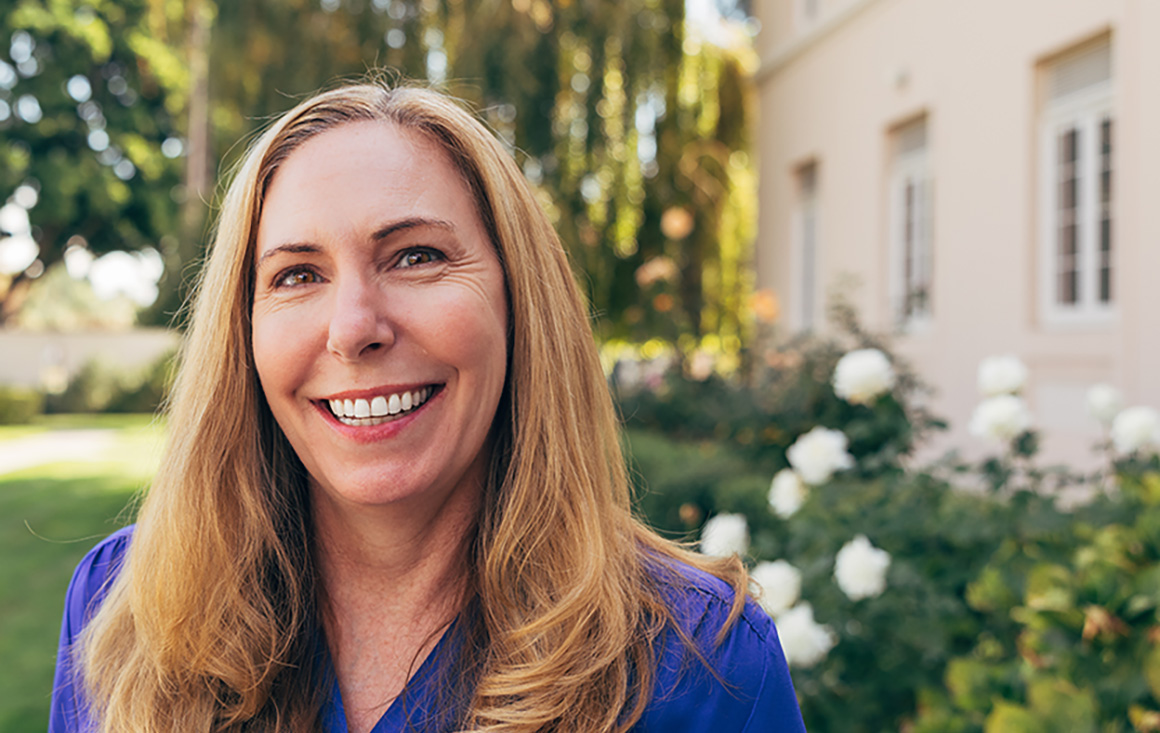
Kyle Alwyn ’15. Photo courtesy Kin Health.
In addition to appointment summaries and to-do lists, the app offers the ability to share everything with family members—or kin. Before, “it would be an impossible game of telephone to coordinate care among families,” Alwyn says. “We’re providing tools to strengthen your network of loved ones.”
Growing up in a medical family and majoring in computer science at Santa Clara, Alwyn says it felt like a natural career move to focus on the intersection of healthcare and technology. He built Hey Doctor, an online medical consultation service, and sold it to the prescription platform GoodRx. Following several years working with GoodRx, Alwyn linked up with physician brothers Arpan and Amit Parikh to co-found Kin, which raised $9 million in seed funding in May.
“There’s no greater surface to improve upon than the American healthcare system,” Alwyn says. “I think everyone has some connection to it and a story of how the system has failed them, either personally or for a loved one. The gaps we can metaphorically fall through are tremendous.”
Alwyn understands that some people might be skeptical about involving AI in something as sensitive and serious as their medical journeys but maintains that Kin offers a highly effective use of AI’s “superpower”: to distill very dense information into easy-to-read summaries. He says users must get permission from their doctors to record appointments and the app encrypts all patient data. Moreover, he says, the company utilizes specialized medical models of machine learning to ensure summaries are accurate.
Stacy Yam MBA ’23 recently came aboard as head of Kin’s go-to-market operations, focusing on how to build partnership channels with clinics and clinicians to get the app in front of more patients. She strongly believes healthcare should be patient-led and says AI offers a great opportunity for patients to have more control over their health journeys.
“From my perspective, if we look at women’s health, it’s a notoriously confusing space to navigate. For example, if you have endometriosis or PCOS [polycystic ovarian syndrome which has recently been renamed PMOS, or polyendocrine metabolic ovarian syndrome], it takes years to be diagnosed properly,” says Yam, who documents her own health and fertility journey on the Substack “Eggs & Ops.” With an app like Kin, “we can take information we’ve received from one specialist and bring it to another and get a quicker resolution to our own health experiences.”
That feeling of ownership, of understanding exactly what’s happening with your own health—and being able to more directly involve your support network—is incredibly valuable, the team at Kin contend. And it’s something Alwyn and Yam feel strongly is in line with the values espoused at Santa Clara. “We’re doing something new and innovative and bringing it directly to the people who can benefit most,” Yam says.
Alwyn, meanwhile, wants to create tech that helps the most people. “We want to build a consumer health tool that can be used by everyone,” he says. “Kin is built for patients by patients and doctors. It’s building around the patient, which is ironic because for the most part our healthcare system has been more so built by and for providers and insurance. We hope to change that.”

The mission of the Computer Science and Engineering department is to graduate students who are prepared to excel in the field of computing, whether their objective is to enter the workforce or to continue for advanced studies. Our programs combine the theoretical foundations of computing with the practical engineering knowledge vital to industry.
Learn more about computer science and engineering at Santa Clara University