Tell Me Something New: A Life of Musical Discovery
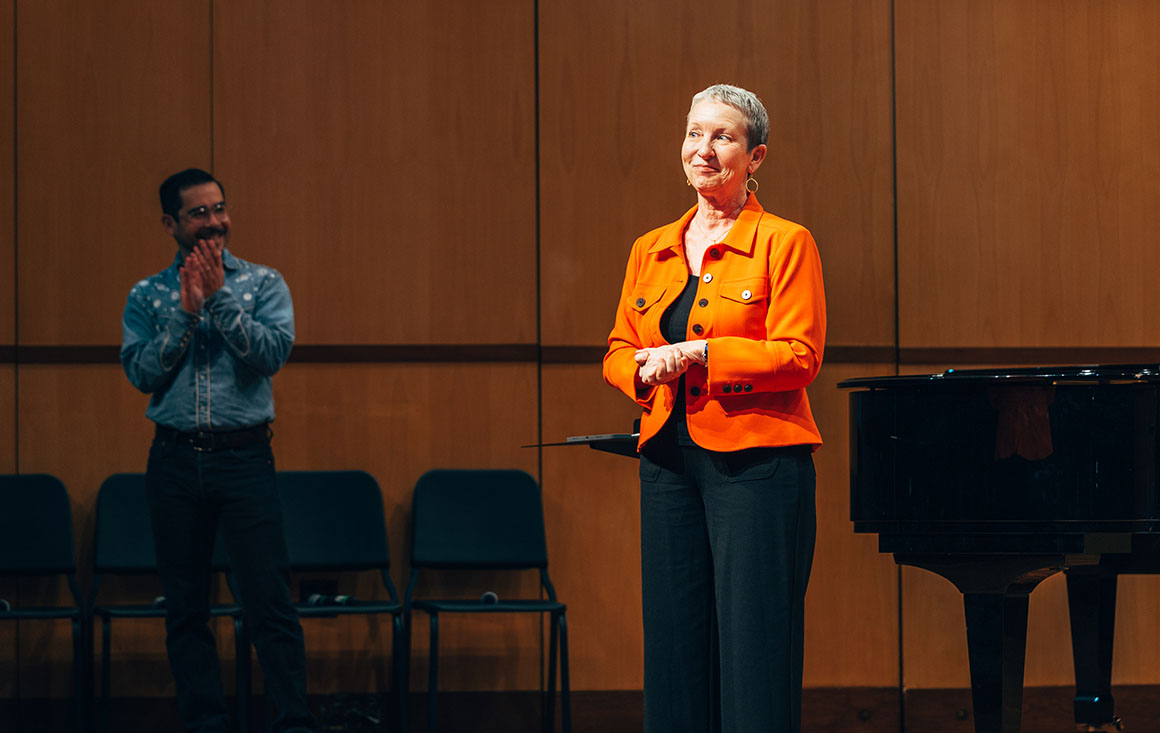
I’ve always loved making music. I still remember running to my neighbor’s house to play the piano as a little girl in St. Louis—so often that my parents finally bought one for our home. What I loved most was the feeling of discovering something new each time I sat down at the piano. That sense of curiosity has never left me, and it continues to shape the way I approach music today.
I’ve now been a professional pianist for nearly 40 years, performing and recording on stages around the world. Each time I perform, I return to that same sense of exploration—listening for something I haven’t quite heard before, finding new connections in the music, and allowing it to unfold in the moment. When that happens, audiences feel it too. There’s a shared awareness in the room, a sense that something meaningful is taking place in real time.
I feel a similar connection in my work with students as a professor of music at Santa Clara University. I began teaching shortly after earning my undergraduate degree in piano performance at the Oberlin Conservatory of Music and completing my master’s and doctorate at the Eastman School of Music. In the years that followed, I lived in New York City and London, where I explored life as a freelance musician. At a certain point, I began looking for a more permanent position in academia—one that would provide stability, support long-term artistic projects, and offer the creative freedom and institutional trust necessary to build a meaningful life in both performance and teaching. When the opportunity to interview at Santa Clara presented itself, I was thrilled, and it proved to be exactly the kind of environment I had been hoping to find.
Over the years, I’ve had the privilege of teaching across the curriculum—from theory to history, improvisation to composition, and applied teaching to ensemble coaching—while working closely with students at many different stages of their musical development. In my teaching, I try to set an example of what a life in music can be—one that remains open, curious, and engaged. That means not only developing technical skill, but also encouraging students to listen deeply, take artistic risks, and remain receptive to new ideas. Some of my students go on to build careers in music, while others pursue entirely different paths. What matters most to me is that they carry with them a meaningful connection to music and the arts.
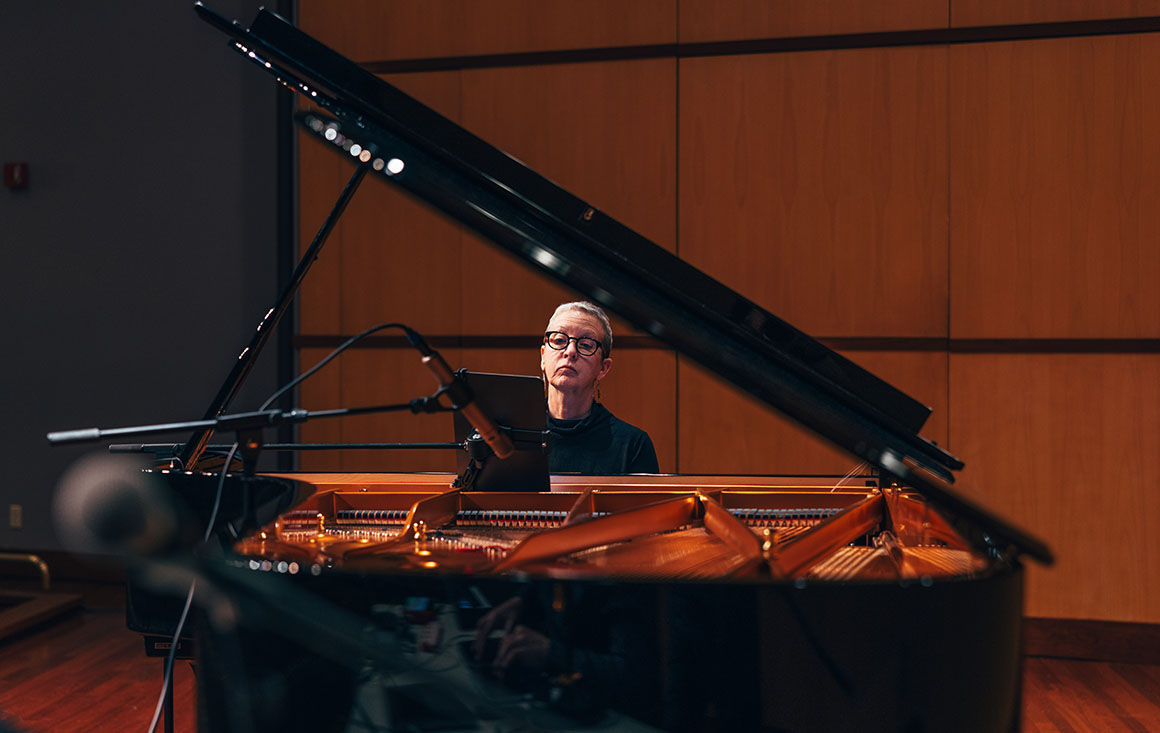
These experiences have deepened the connection between my performing life and my teaching, allowing students to see how music is created, shaped, and brought into the world. More recently, the opportunity to serve as the Frank Sinatra Chair in the Performing Arts has made it possible to expand this work in especially meaningful ways—supporting extended artist residencies, new commissions, and ambitious collaborative projects that bring together students, faculty, and guest artists. It has been a unique opportunity to imagine programming on a larger scale and to create experiences that might not otherwise be possible within the regular rhythm of the academic year.
Music offers a way of engaging with the world—it invites us to listen more closely, to reflect, and to respond. If even one student carries that experience forward into their future lives—whether by supporting the arts in their community or simply making time to listen—then I feel I’ve done my job.
Today, when I walk through the halls of the music department, I hear everything: students singing, ensembles rehearsing, visiting artists in the classrooms and performance spaces working with our students. There is a constant sense of activity and possibility. I am deeply grateful for the extraordinary career I have at Santa Clara—one that has allowed me to explore my strengths as a pianist, teacher, and leader in the arts. Music has been my life’s work, and it continues to reveal something new each day.

The Department of Music at Santa Clara University provides an intellectual and stimulating artistic environment fostering individual expression and creativity through the study of music and musical performance.