Why social media is taking a toll on our body image and self-worth
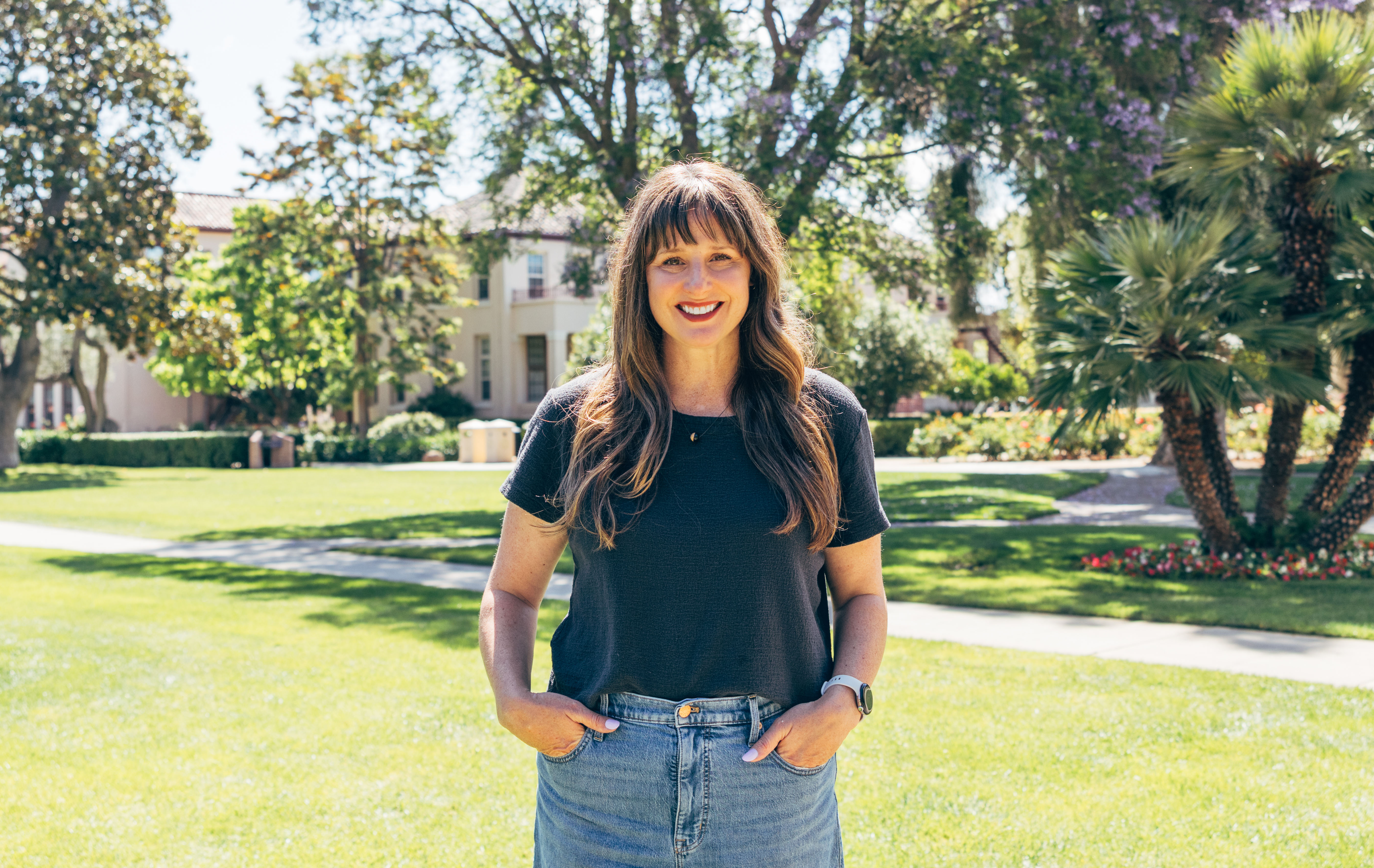
Katy Bruchmann is an associate professor of psychology at Santa Clara University. She leads the Social Cognition and Comparison Lab, where she works with students on social media research ranging from the impact of fitness inspiration content to the recent rise of AI-generated influencers. Her research examines how comparing ourselves to others—whether in person or on social media—shapes the way we see ourselves, particularly when it comes to how idealized images online can lead people to feel worse about their own bodies.
What questions or challenges are at the heart of your current work?
Women spend an inordinate amount of time thinking about how they look—trying to be thinner, perfecting their eyebrows, learning makeup techniques to look younger. It’s backed by data that women experience dissatisfaction with their appearance at much higher rates than men. Why are women spending so much time and energy worrying about something that’s such a small part of who they are? I study one contributor to this: how people compare themselves to others on social media. We still have this idea that what’s posted on social media is more real or authentic than traditional media, so we engage with what we think are real women online, whether they’re our friends, influencers, or celebrities. But these doctored, idealized images can lead women to feel worse about themselves and fixate on how they look to other people.
One challenge I find really interesting involves college women specifically. Despite being closer to the beauty ideal in terms of age and appearance, they actually have worse body image than other demographics of women. I’ve found that these women are comparing themselves to other fit, attractive, young women on campus and social media, rather than thinking more globally about what’s normal. As I continue research in this area, one of my questions is how can we help college-age women cut this cycle when they’re perhaps most vulnerable?
I’m also really interested in Fitspo, or fitness inspiration imagery, which has tens of millions of posts on Instagram and TikTok. It turns out that regardless of what kind of Fitspo you’re looking at, whether it’s someone teaching you how to do a deadlift or simply posing in a sports bra and shorts, it still has a really negative impact. It doesn’t actually motivate exercise or healthy behaviors the way people perceive it to. What actually happens is women start feeling worse about their own bodies.
The third challenge I’m working on comes from a project on the rise of virtual influencers, or completely AI-generated images of people that look real. These AI women are absolutely flawless: stunningly beautiful faces, glossy hair, idealized bodies. Brands love working with them because they’re far less expensive than real people. They can promote any product, anywhere at any time because they’re not real, just built by code. But they’re essentially lying to people. There’s a major ethical issue here. If you’re looking at this person thinking, “I wish I looked like her” but she’s actually computer-generated and something we could never realistically achieve, what is that doing to us as a society?
Why is this issue important for the world to address at this time?
Poor body image can be a big risk factor for eating disorders and serious mental health issues like depression and anxiety, which can ultimately lead to a lower quality of life and well-being for women. But, it can also have more immediate consequences that you might not expect. I teach my students about a study where the researchers asked women to try on either a sweater or a swimsuit in front of a three-way mirror, and then take a GRE-level math test an hour later. Women who had tried on the swimsuit performed significantly worse, as that act alone triggered rumination about their appearance that ultimately interfered with their ability to focus on the math problems in front of them. This is just another example of women spending cognitive energy thinking about their appearance when they could be directing that energy toward school, work, relationships, physical health, or anything else that actually matters to them. We want more people in the world to thrive, not suffer, so it’s important to understand why we compare ourselves to others so we can implement practices that keep us from doing so.
Why have you chosen to dedicate your career to this research?
I took a psychology of gender class in college and learned about the concept of “beauty sickness,” the idea that women spend the bulk of their emotional energy worrying about what other people think their body looks like, rather than thinking about how they themselves feel. That class was taught by Renee Engeln, who coined the term and wrote the book, Beauty Sick. Learning about beauty sickness made me realize how much mental energy women spend on appearance—energy not spent doing meaningful work, like building relationships or helping people. Think about how much we could do, and what a difference we could make in the world if we weren’t thinking about how we look to somebody else.
There’s also the lived experience part. How I look is probably not even in the top 10 most interesting or important things about me, yet I remember giving it so much attention for much of my life. That felt like such a waste. Every young woman that walks into my classroom or lab is sort of stuck in this cycle of worrying about whether they look okay, instead of being seen as smart, capable, strong, courageous, and kind—all the attributes we should be focused on more. Figuring out how to interrupt that cycle and help girls and women lead fuller, happier lives without obsessing over one part of themselves is what keeps me coming back to this work.
How have your students impacted your research?
Working with my students is the perfect blend of scholarship and teaching. In my lab, students assist on different projects by collecting and analyzing data, and after spending some time learning theory and the different paradigms we use, they start coming up with their own ideas. The virtual influencer project is a perfect example—it came from a student, Madeleine Maestre ’27, who brought the idea to our lab based on something she’d seen on social media. I would have never known this existed without her, and the project we’re working on will become her senior thesis.
It’s incredibly rewarding to help mold these students into the young scientists they’re becoming. It’s so special to form relationships with my students and stay in touch after they graduate. I get to celebrate their successes in the real world and see how what we’re doing at Santa Clara continues to inspire them for years to come.
What’s a book in your field that you think everyone should read?
Definitely Beauty Sick: How the Cultural Obsession with Appearance Hurts Girls and Women by my mentor from college, Renee Engeln. I think it is required reading for women and parents of young girls. It’s not a parenting book, but it really set the tone for how I wanted to parent my own kids. Renee Engeln combines empirical evidence with interviews of all different kinds of women about their experiences with beauty sickness, this obsessive preoccupation with the way we look. She also talks about things we can do to change those feelings within ourselves and for the people around us. Engeln does an amazing job of highlighting this shared experience among women, and then interrogating it. She writes it in a way that is super accessible to an everyday audience. You don’t have to be a scholar or psychologist to read this book, but the evidence is there if you want to dig deeper.
What stuck out to me the most is that children learn so much about the value of appearance just from the way their mother talks about her own body. I think it’s equally important for boys and girls to have women in their lives showing them that how they look is only one aspect, and not nearly the most important thing about themselves.

The Santa Clara psychology department believes actions, thoughts, and feelings are best understood as the result of psychological, neurological, developmental, social, and cultural influences. The composition of the faculty reflects this broad approach, with members who specialize in clinical psychology, cognitive psychology, developmental psychology, educational psychology, health psychology, lea