Doctor of Education
Experience the Santa Clara Difference
Our vision imagines a region and world in which everyone has access to an inspiring education and the psychological tools and support to propel them toward flourishing lives of meaning, purpose and connection. Our education is characterized by Strong Values, Social Justice, Transformative, Diverse Community.
OUR PROGRAM
Rooted in the Jesuit tradition at Santa Clara University, the mission of the Doctor of Education (EdD) in Social Justice Leadership program is to educate and prepare leaders of competence, conscience, and compassion. Our EdD graduates will be leaders who work across a broad spectrum of fields, from schools to universities and nonprofit entities whose focus is to promote the common good as they transform lives, schools, organizations, and communities.
We prepare leaders by cultivating the knowledge, skills and dispositions needed to lead complex organizations. Our Jesuit tradition leads us to a set of core values, including “cura personalis” – or care for the whole person, developing men and women for others, centering our actions in social justice and equity, and engaging in a cycle of learning and collaboration, action, and reflection in our work.
The EdD in Social Justice Leadership equips graduates with the 21st-century knowledge, skills, and dispositions necessary to lead complex organizations with the goal of building a more humane, just, and sustainable world.
AREAS OF SPECIALIZATION OFFERED:
Higher Education Leadership
Focus is on issues and complexities related to higher education, with particular attention to building and sustaining effective colleges and universities.
PreK-12 Leadership
Focus is on the specific issues and complexities related to PreK-12 schools.
Social Impact Leadership
Focus is on the specific issues and complexities related to the communities served by social impact or community-based organizations.
Doctor of Education Highlights
Course Sequence
| YEAR 1 SUMMER | YEAR 1 FALL | YEAR 1 WINTER | YEAR 1 SPRING |
|---|---|---|---|
|
Presession - Foundation of Doctoral Studies (1 unit) Servant Leadership for Mission & Values Driven Organizations (3 units) |
Leadership for Diversity, Equity & Inclusion (3) Concentration Elective (3) |
Moral and Ethical Basis of Leadership (3) Organizational Leadership (3) |
Communities, Schools, & Critical Social Theory (3) Values-Based Leadership Development Plan (1) Introduction to Research Methods (3) |
|
YEAR 2 SUMMER |
YEAR 2 FALL |
YEAR 2 WINTER |
YEAR 2 SPRING |
|
Leadership Integration and Vision Statement(3) Concentration Elective (3) |
Social Inquiry Methods & Research Collaborations I (3) Concentration Elective (3) |
Social Inquiry Methods & Research Collaborations II (3) Leading People and Organizations (3) |
Social Inquiry Methods & Research Collaborations III (3) Concentration Elective (3) |
|
YEAR 3 SUMMER |
YEAR 3 FALL |
YEAR 3 WINTER |
YEAR 3 SPRING |
|
Dissertation Proposal I (3 - hybrid) Dissertation Proposal II (3 - hybrid) |
Communities of Inquiry: Dissertation in Practice I (3 - hybrid) Dissertation Research Supervision (3) Specialization Elective (3) |
Communities of Inquiry: Dissertation in Practice II (3 -hybrid) Concentration Elective(3) Dissertation Research Supervision (3) |
Communities of Inquiry: Dissertation in Practice III (3 - hybrid) Dissertation Research Supervision (3) |
Admissions Information
Admissions Information
- Click here to view upcoming application deadlines.
- Students must possess an MA in a related field - Students without an MA will be considered on a case by case basis, but will be generally
required to complete an additional year of course work unless they have extensive prior
graduate work (e.g., a teaching credential based on graduate coursework). - 3 to 5 years of work experience
- Interview with program faculty
- The Ed.D. program is not open to international applicants requiring an F-1 student visa.
- A minimum 3.5 GPA in their graduate coursework.
- Transfer Units. As a “post-MA” degree program, students will not be able to transfer in “units” from prior coursework, but can petition to waive specific course requirements if they have taken very similar classes before, allowing them to enroll in more advanced coursework.
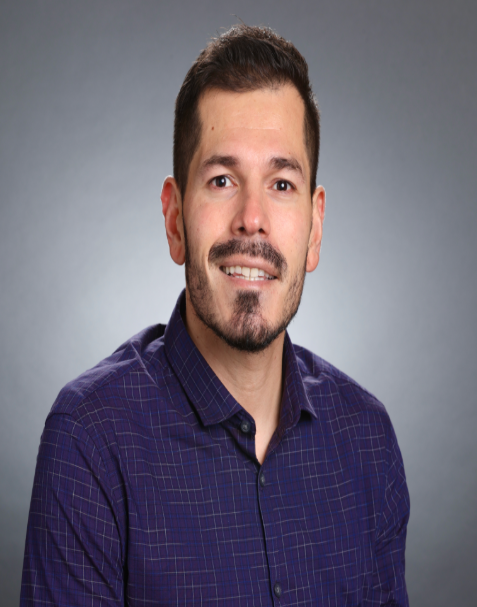
Marco A. Murillo, PhD, Associate Professor of Education, Director of Educational Leadership
Marco A. Murillo, PhD, is an Associate Professor of Education in the School of Education and Counseling Psychology at Santa Clara University. Prior to joining Santa Clara University, he served as Postdoctoral Scholar at UC Los Angeles and UC Berkeley.
Dr. Murillo’s educational leadership courses include Servant Leadership, Leading for Diversity, Equity, and Inclusion, and Using Data to Drive Organizational Change. He is committed to preparing students to lead in increasingly diverse schools and organizations through a social justice lens.
Dr. Murillo’s research critically examines the educational trajectories of minoritized students, focusing on college preparation and completion. His current research applies a capital and funds of identity framework to examine how Latinx immigrant-origin college students tap into their identity to navigate two- and four-year colleges.
He earned a BA in Political Science and History from the University of California San Diego and a PhD in Education (Urban Schooling) from the University of California, Los Angeles.