Stories
We are All Human
Reflections from the Costa Rica Immersion | Summer 2025
- Simone Smith '28
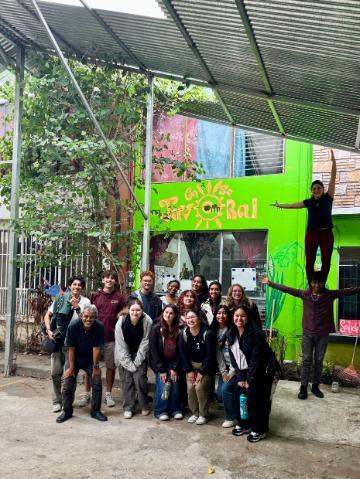
After my first year at Santa Clara University, I had the fantastic opportunity to go to Costa Rica on an Immersion with the Ignatian Center. During this immersion, a group of 10 other students and I spent 7 days engaging in activities, holding discussions, learning about Costa Rica, and reflecting on who we are and how we can learn and grow from these experiences in Costa Rica. Throughout my experience, not only did I learn a great deal more about Costa Rica, but my perspective on the country and what it is like for people who live there changed. This immersion prompted me to reflect on who I am, what I want to do with my life, and the gift of education that I have earned.
On the first day of the immersion, we visited Casa Javorai, where we met Pastor Julio, a Lutheran pastor, and his daughter, Celeste. Casa Javorai was established in 2019 as a religious and LGBTQ Cultural Center for youth. It has become a haven for LGBTQ youth who had nowhere else to turn. During our discussion, we talked about how Costa Rica tends to be xenophobic and racist, and how it is very contradictory to what Costa Rica preaches. Pastor Julio and Celeste both view Costa Rica as a melting pot, but a problematic and unwelcoming one. They are currently combating this problem through art. Art enables us to connect on an empathetic level, helping us to better understand emotions, regardless of language or personal barriers. Casa Javorai is working to expand as an art center for those who cannot afford to attend or purchase art. During our time there, we danced and sang songs about current events in Costa Rica. From this conversation, I left with my heart full of hope, joy, and happiness because of all the good work they are doing at Casa Javorai. I want to bring something like this back to my small hometown of Quincy, California, to continue fostering appreciation for the arts and a sense of community among LGBTQ youth. Because in the end, we are all human.
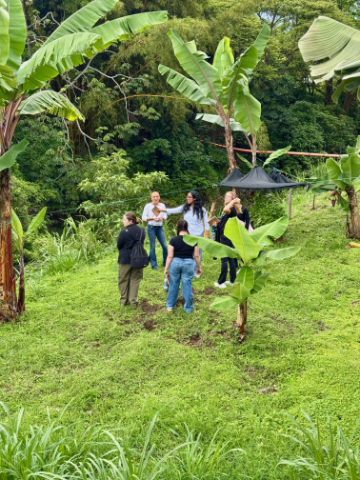
Another experience from this Immersion that impacted me (and continues to now that I am home) was a visit to Casa de Esperanza, an HIV and Drug Abuse Clinic for women and men in Costa Rica. I knew that my emotions would be deeply affected as both of these topics hit very close to home. We heard stories from people at Casa de Esperanza about how they have found not only a place to live and get treatment for HIV, but also a community full of compassion. Each person there has the goal of finding a path, and I gained so much knowledge about how I can continue to help my family members and those within my community who have HIV. I will continue to talk and listen to them, work to understand the process of depression and acceptance, help provide tools, and break the stigma of their condition, recognizing that we are all humans.
At La Universidad Biblica Latinoamerica, we had a conversation with Social Psychologist M.Ed. Andrea Cuenca Botey about women in rural Costa Rica. During our discussion, we began by emphasizing the importance of understanding that we are discussing women in rural areas everywhere, not just Costa Rican women in rural areas. In addition to the extent of nomenclature when discussing this issue, such as ruralidad, which is defined as a space where people have limited access to services. Because of how relatable they were to the life I have lived, the gender gaps that most resonated with me included, access to resources (such as scholarships, economic support, and specialized healthcare services), the amount of domestic labor, salary discrimination, access to jobs with decision-making power, and the lack of technology.
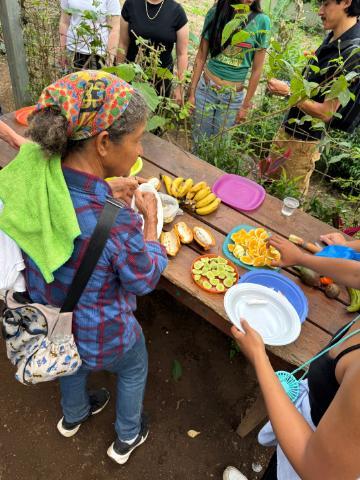
Beyond ruralidad and the smaller number of jobs available, there is an increase in violence. Femicides have increased by 82% due to domestic violence. The pandemic compounded this problem because it caused women and girls to be trapped in confinement with their aggressors, all around the world. Furthermore, sexual assault in rural areas increased as well, with the abuser typically living within the home. For every one reported, ten go unreported. The nature of these problems is further compounded by the increased tourism, which has led to increased prostitution of children, mostly 14-17-year-old girls, highlighting different complex realities for multiple people in Costa Rica when it comes to ecotourism.
These were some of the most challenging conversations I had throughout the entire immersion. Hearing stories from HIV and drug abuse survivors, and about women in rural areas and their statistics of sexual and domestic assault, made me realize that many more people across the world face the problems faced by Costa Ricans. Although we were born in different parts of the world, overcoming the same problems highlights the common thread; we are all human.
Similarly to Casa Javorai, we witnessed the importance of art and music in the Nicaraguan Uprising. During this time, we had the opportunity to meet Oscar and Marco, musicians from Nicaragua who are living as refugees in Costa Rica, having escaped the war in Nicaragua. Through listening to their music and hearing their stories, I realized the profound impact music can have. They had arrest warrants because they were writing these songs in protest against the government, furthering people's thinking of Nicaragua as a dictatorship, not a democracy. Oscar drew parallels from the book 1984 by George Orwell, and continually hearing so many similarities between what is happening in Nicaragua and the United States is jaw-dropping. And it made me wonder, how long will the US last before it turns as bad as Nicaragua, if we aren’t already there today?
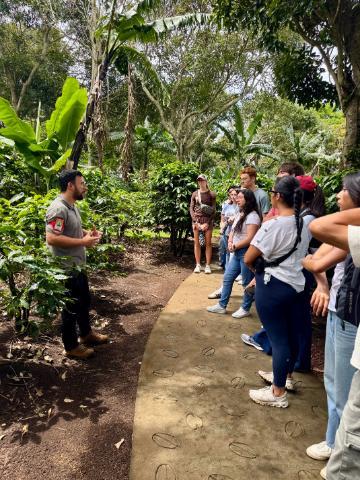
Although I could write about these conversations and experiences from this Immersion forever, I have chosen to focus on my top learning experiences, reflecting on how they have impacted me now and what I want to continue doing in life going forward. Following this immersion, I aim to dedicate more time to social justice initiatives worldwide. I want to continue to educate myself further to be better equipped to help others. I still want to become a Human Rights Attorney and engage in advocacy work; now I understand what that entails for other countries. This immersion also taught me about my own biases and how my position in this world is a privilege, and to use this privilege to speak up and to stand up for those in need. In the end, a common thread throughout every single day we were there is that we are all human and we are all here for each other, no matter how different we may seem on the outside. We all need to be there for each other or else problems will continue to grow bigger and bigger. This experience has taught me more than any quarter in the classroom. I will forever be grateful and changed by the stories of those I have met in my time in Costa Rica.