Jesica Siham Fernández: What can young people teach us about social change?
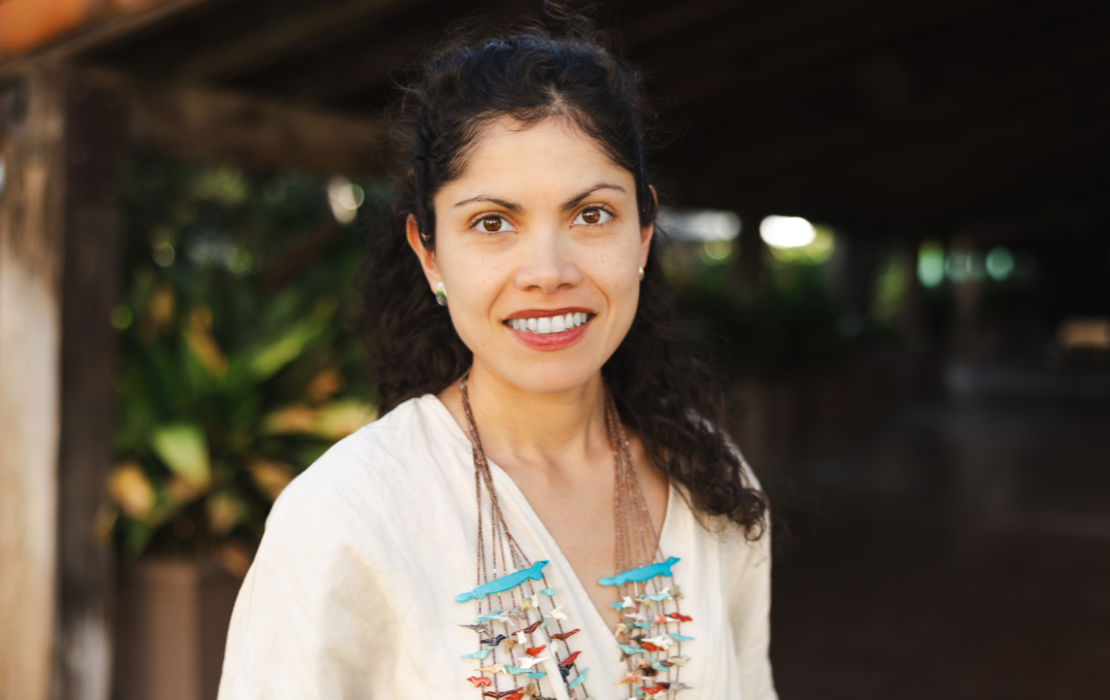
Jesica Siham Fernández is the author of “Growing Up Latinx: Coming of Age in a Time of Contested Citizenship” and co-editor of the “Handbook of Decolonial Community Psychology.” In 2024, she received the 2025 Fulbright-Schuman Fellowship to conduct archival research at the European University Institute in Florence, Italy, where she examined the Young European Federalist movement, specifically youth sociopolitical development and European Union discourses on economic, migrant, and environmental issues.
This series highlights how Santa Clara scholars connect their research to the Jesuit values of curiosity, reflection, and service to the common good.
What questions or challenges are at the heart of your current work?
My work is trying to understand how young people, especially those in elementary and middle school, develop their social and political awareness. I’m deeply interested in how they make sense of the social, cultural, and political aspects of their worlds and how their lived experiences shape those understandings. Too often, we underestimate their awareness and insight, but when we truly listen to their stories, frustrations, hopes, and ideas, we realize they have thoughtful perspectives on issues like immigration, war, and human rights. My goal is to create spaces and opportunities where their voices can be heard and valued, allowing them to express their critiques and visions for a better world.
Why is this issue important for the world to address at this time?
Supporting youth sociopolitical development and well-being is urgent because the social and political decisions we make today directly shape the world young people will inherit. Even though they may not yet have full civic rights, such as the ability to vote, young people are already deeply engaged in political and social life in classrooms, communities, and through digital platforms. They are forming opinions about issues like immigration, racial justice, climate change, and people’s rights and freedoms, and social media has amplified their ability to connect, share ideas, and organize across generations and borders. Historically, youth have been at the forefront of movements for justice. From the Children’s March in Birmingham to the Dreamers movement, they continue to be powerful catalysts for change. If we want a more equitable and conscious society, we need to invest now in creating spaces that nurture their voices, critical thinking, sense of agency, and well-being.
Why have you chosen to dedicate your career to this research?
My commitment to this work is deeply rooted in my own lived experiences. Growing up, I witnessed social and economic injustices in my community, but didn’t have the language to understand or express them. That personal journey of questioning and seeking understanding has shaped my desire to explore and study how young people make sense of the world around them. As I worked with youth as a tutor, afterschool program coordinator, and organizer, I saw how perceptive, passionate, and hopeful they are. They ask the hard questions, they imagine new possibilities, and they remind me that change is both necessary and possible. I’ve dedicated my career to this research because young people continually teach me about courage, creativity, and radical hope. They keep me grounded, inspired, and committed to building a future where their voices truly matter.
How have your students impacted your research?
My students have had a profound impact on my research and on how I think about teaching and learning. I’ve learned so much from my college students, especially those who join my research projects and work with me in the Youth for Justice Project (YJP) afterschool program in San Jose. In that program, I collaborate with undergraduate students, many of whom I’ve had in class, to co-develop curriculum and lesson plans for middle school youth. It’s been inspiring to see how motivated they are to make ethnic studies and environmental justice content accessible and engaging for younger students, especially since many of them didn’t have exposure to these topics when they were their age in school.
Watching my students translate complex frameworks like critical race theory or intersectionality into lessons that a middle schooler can understand has taught me a great deal about the power of relationality, adaptation, and creativity in education. They remind me that learning is reciprocal—when we teach, we also learn. Their enthusiasm and commitment encourage me to think differently about how knowledge is shared and how theory can be transformed into something living, relevant, and empowering for all ages.
What is a book in your field that you think everyone should read?
One book I always return to is “This Bridge Called My Back: Writings by Radical Women of Color,” edited by Gloria Anzaldúa and Cherríe Moraga. It’s an anthology first published in 1981, and it remains profoundly relevant today. The book reminds us of the importance of human connection, care, and community, and that real systemic change begins with seeing and honoring one another across differences. I first encountered it as an undergraduate student, and it’s continued to guide me through my career and teaching.
Two other books that deeply influence my thinking are “Emergent Strategy: Shaping Change, Changing Worlds” by adrienne maree brown, which offers beautiful guidance on how to nurture meaningful relationships and organize for change rooted in compassion and connection, and “We Were Made for These Times” by Kaira Jewel Lingo, which blends mindfulness, meditation, and healing practices. I use many of its activities, like breathing exercises and body awareness, with my college students and middle schoolers in the YJP afterschool program. Learning to be present and grounded is a lifelong skill and a daily practice that strengthens our ability to care for ourselves and others.
Select articles and interviews with Jesica Fernández:
- “And now we resist”: Three testimonios on the importance of decoloniality within psychology, Journal of Social Issues
- Siena’s Contrade: A Reflection on Environmental Interconnectivity
- Developing social and political understanding to create change

Seeking answers to the most timely and important social justice issues, Ethnic Studies empowers every student with a vital understanding of their changing world.