Stories
Reflections from the 2026 Jean Donovan Fellowship
The Practice of Presence | Learning Through Accompaniment
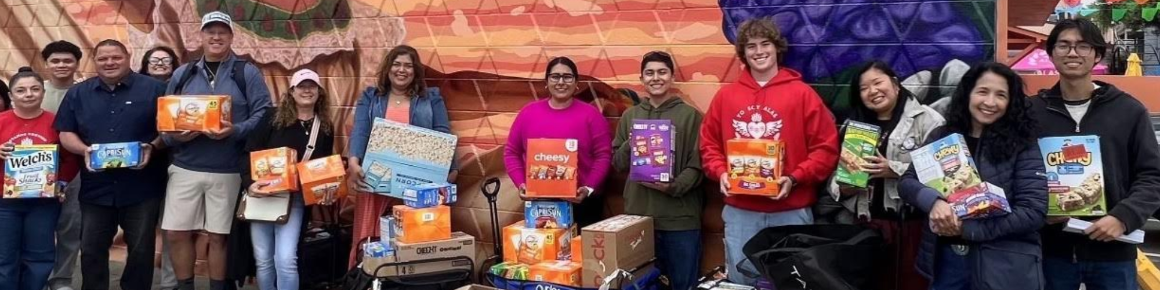
This past summer, three students set out on their Jean Donovan Fellowship thinking service was about what they could do for others. What they brought back was something quieter: a new understanding of what it means to stay, listen, and to walk alongside a community. From the California Coast to Chile to India, each of them learned that showing up is where the work begins.
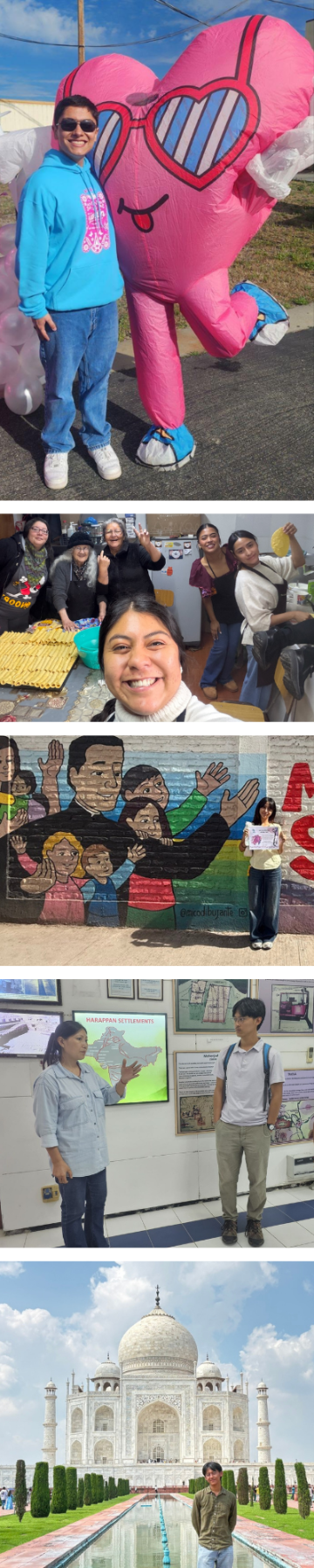
Through Ayudando Latinos a Soñar (ALAS), an organization in Half Moon Bay that works for social wellness through mental health care, education, and immigration support, Reese Alvernez ‘29 spent his summer working at El Jardin Summer Camp, chaperoning surf camp, and supporting families and community events. Having already volunteered with ALAS for a year and a half, he came in with a clear idea of what advocacy meant.
“What changed through this fellowship was my understanding of the complexity and scale of the work required to turn those values into a sustained action,” Reese reflected. “I saw that addressing the root causes of an issue does not mean overlooking the immediate needs of the people experiencing it, just as providing immediate support does not mean losing sight of the larger systems that created those needs.”
In his final week, he joined the Farmworker Services team on the Farmworker Equity Express Bus. “Bringing services directly into the community reflects an understanding that support should adapt to the people being served,” he said.
Some of his favorite memories were the lighter ones. “Joy, celebration, and connection are part of what makes a community resilient, Reese shared. “The children at the summer camp reminded me that creating a space where someone can feel safe, supported, and able to have fun is itself meaningful.”
He learned something about himself, as well. “I also became more comfortable recognizing that I do not always need to have an answer,” he reflected. “Sometimes being present, paying attention, and helping in whatever way is needed is enough.”
For Maria Perez Fernandez ‘27, serving with Hogar de Cristo in Chile, which welcomes those experiencing poverty with love and dignity, meant dividing her time between a comedor (community hall), a salar cuna (nursery), and Universidad Alberto Hurtado. “I had come to Chile with a goal of practicing accompanying others by being present, listening, supporting, and learning alongside the communities I was working with,” she reflected.
At the comedor, she prepared food, served meals, and cleaned up afterwards. “Something as simple as sitting together and eating became meaningful because it allowed me to be part of the community rather than simply feel like someone who had to come to ‘help,’” Maria shared. “One of my favorite memories was cooking tacos together and sharing part of my culture through food.”
She spent most of her time at the sala cuna, supporting the teachers and playing with the children. “Sometimes accompaniment is simply sitting beside a child, playing with them, helping them when they need something, or being someone they recognize and feel comfortable around,” she said. On her last day, the teachers told her they would miss her. “It was such a heartwarming feeling to know that my presence had meant something to them.”
At the university, Maria surveyed international students about their welcome and presented her findings to her supervisor. “It felt meaningful to know that something I created could continue to be useful after I left,” she reflected.
The summer changed how she understands service. “Now, I understand that meaningful service is not always about doing something big,” Maria shared. I arrived in Chile prepared to serve, but I am leaving knowing that I received just as much as I gave.”
At Child Family Health International’s Global Health Program in Delhi, India, Julian Ozaeta ‘29 spent six weeks accompanying local health professionals in a city entirely new to him. “My JDF experience in Delhi, India, was, essentially, both surreal and reality-defining,” Julian reflected.
The program’s rotations led through outpatient clinics, multi-specialty hospitals, government schools, and patients’ homes. “Staying curious about and present to the contexts I entered, as well as being conscious of my own personality, allowed me to absorb so much knowledge,” Julian shared.
One home visit in the first week, made with a CanSupport palliative care team, was dedicated to bereavement after a patient has passed. “There, I learned about the great importance of family and ritual in this end-of-life care context,” Julian said.
Outside the program, traveling alone through Delhi and learning its metro system built a new confidence. “Indeed, I truly stepped into my own independence during these six weeks, though the sense of communication throughout it all, especially in my weekly activities, helped to ground me,” Julian reflected. “My personal and professional growth was not just my own labor, but that of all the individuals I encountered, as well.”
The reflection is far from over. “Moving forward, I will continue to process and reflect upon my incredible and insightful experiences in India while discerning how I can translate them into action and advocacy,” Julian shared.
Across each placement, these students learned that service begins with presence. Whether riding alongside farmworker families, sharing a meal in Chile, or listening to health workers in Delhi, they found that showing up with openness and humility matters as much as any task. They returned home not with a finished experience, but with relationships, questions, and a commitment to keep walking alongside others.
~ by Camila Perez '27