Thou Shalt Flourish
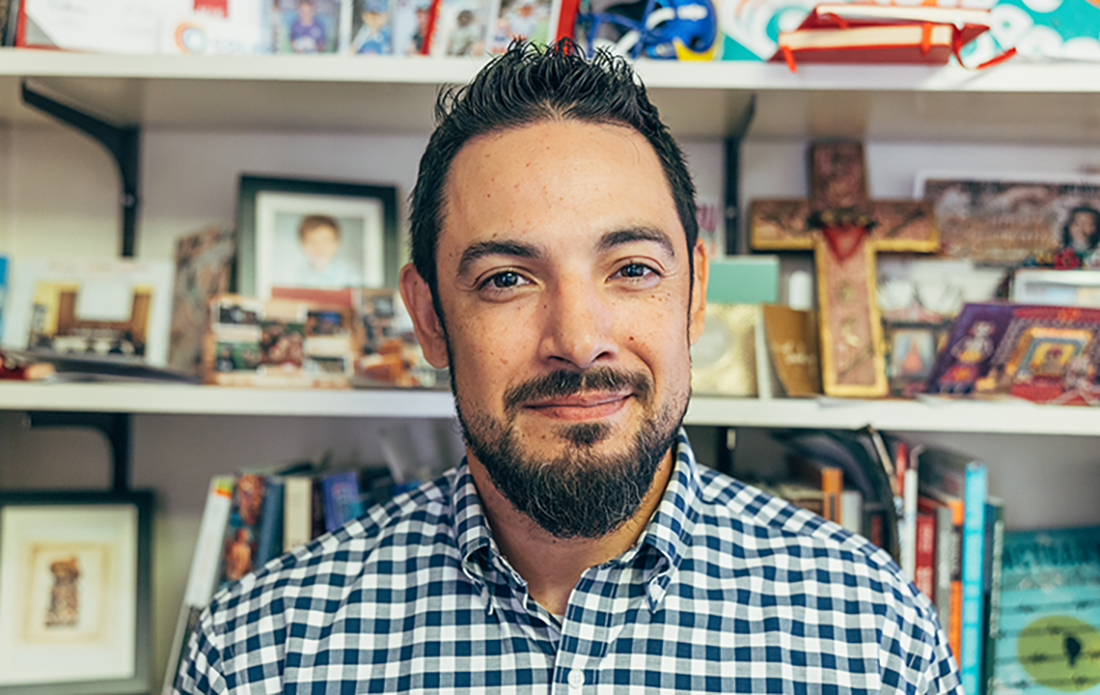
Throughout his childhood, Paul Schutz’s family was deeply active in their Catholic parish in the north side of Evansville, Indiana. His dad, Daryl, was on the parish council and its finance committee. His mom, Bobbie Ann, sang in the choir and worked in the parish school. Schutz himself was engaged in music ministry, singing and playing piano, trumpet, and percussion instruments.
“I received my faith from people who loved me and told me that the essence of faith is to love others,” he recalls.
Those foundational views on faith would blossom further when, at age 24, Schutz needed a job after a two-year stint with Teach for America. He landed a gig as director of music and liturgy at St. Mary Catholic Church in downtown Evansville—just a few miles from where he grew up.
There, he found a parish more noticeably and fully alive—living out the meaning of Church—than he’d ever seen before or has seen since. Virtually the entire community was active in social justice ministries: staffing an on-site food pantry and a community soup kitchen; ministering to LGBTQ Catholics; joining people of other faiths for prayer services; or taking an active role in making the Sunday liturgy lively, engaging, and meaningful. Women preached the homily regularly.
What the community was not doing as a whole was hyper-focusing on “heavenly salvation,” or spending their time enforcing rules that mostly would serve to exclude people from participation. Instead, the parish helped its members discern what it meant to flourish, to become the fullest versions of themselves and decide how they might serve God and others within an expansive community dedicated to their Catholic faith.
“This is what it means to be a Church,” Schutz remembers thinking. Instead of staying just a year as he’d originally intended, he stayed for nearly five years—until the pastor, Steve Lintzenich, planted the idea that Schutz might be a good theologian. At nearly 30 years old, he set off to pursue his master’s and Ph.D in systematic theology from Fordham.
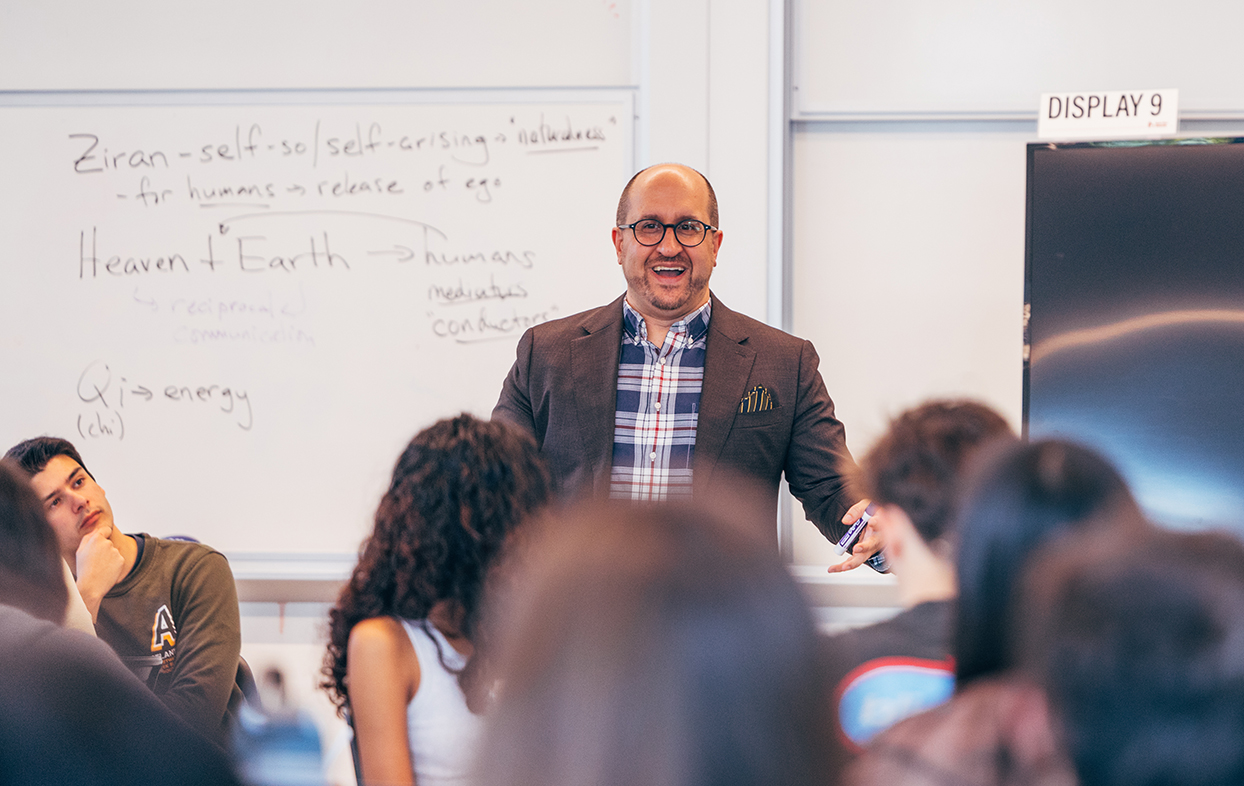
Now, years later and a professor in Santa Clara University’s religious studies and pastoral ministries programs, Schutz has published a book highly influenced by his time at St. Mary.
Through careful historical and theological analysis, “A Theology of Flourishing” posits that the main focus on Christianity should not be a hyper-focus on achieving salvation in Heaven, but rather on living out God’s will that each person and creature—living and nonliving— should flourish while on Earth, and provide for the collective flourishing of all. The book received top honors—the 2026 Gold Medal in Theology—from the Illumination Awards, which recognizes outstanding publications and creative works in Christian theology and spirituality
Schutz grounds the book’s vision in the words of Jesus as recounted in the gospel of John: “The thief comes only to steal and kill and destroy. I came that they may have life, and have it abundantly.”
Living to Atone v. Living to Flourish
This Earthbound fullness-of-life view of faith is a steep departure from the prominent approach for many Christians, whose spirituality is often rooted in overcoming sin and achieving union with God in Heaven. The fullness of life under such a viewpoint, Schutz posits, is achieved only in death, where salvation finally serves as a means to “righting a wrong, paying a debt, or overcoming the sinful conditions of earthly existence to achieve a kind of union with God that is not possible in this world.”
A theological reorientation toward flourishing would have countless implications, to be sure.
Instead of the purpose of a Christian life being to keep oneself pure for Heaven, Christians would be called to “draw creation towards its fulfillment in the present,” he says. Sin would no longer be viewed as a foundational condition of humankind, but rather would be anything that “gets in the way of God’s will that all things should flourish,” says Schutz.
Schutz recognizes that this shift reorients a commonly held Christian belief about the nature of humanity. But this reorientation also points the world to another, perhaps deeper truth: that God's primary intention is that all things may experience the fullness of life in the world on the way toward their ultimate fulfillment in union with God.
How many American Christians, he wonders, would be comfortable or passively accepting of the oppression of immigrants, discrimination against women or LGBTQ communities, environmental degradation, or the normalization of gun violence, if they saw God’s call in their life to ensure individual and collective flourishing?
“What if we were attuned to the realities of injustice and oppression in all their forms, to violence of any kind, as violations of God’s will that all things may flourish in the fullness of what they are?” he wonders.
A true theology of flourishing would focus heavily on ways communities, institutions, or groups can become institutions of flourishing. That includes helping each person joyfully discern the fullness of life to which the Holy Spirit is calling them, as well as ensuring that the institution itself made choices supportive of both individual and collective flourishing.
The Catholic Church might not be so fearfully resistant to the idea of women becoming deacons, or even priests, for instance, if promoting individual flourishing were seen as a primary call of Christians, he muses.
“What if a woman experiences and discerns what would otherwise, if she were a man, be viewed as an authentic call to ordained ministry in the church?” Schutz asks. “Who are we to say that that's not an authentic call that is drawing her toward her own self-actualization through her relationship with God and others?”
A theology that believes all creatures, not just humans, are called by God to flourish also would require a deep reflection and mindfulness about the realities of the world and each person’s and each creature’s place in it, he says. Each person would seek to discern what God intends for their own thriving and to maintain a thriving Earth for all.
Theologians, Saints, and Flourishing
Schutz’s book uses numerous Biblical and theological foundations as support for a theology of flourishing.
His scholarly arguments focus on the writings of saints and theologians that tend to get overshadowed by the likes of St. Augustine or St. Thomas Aquinas. He finds support among the works of early scholars such as St. Gregory of Nyssa and the mystical theologian St. Hildegard of Bingen. He quotes extensively from thinkers like John Duns Scotus, the 13th-century Scottish Franciscan priest whose view of Jesus’s Incarnation as the ultimate “first act of love,” supports a world view of flourishing, compared with Aquinas’s view of the Incarnation as primarily a means toward salvation from sin. He also cites modern thinkers like Grace Jantzen, a pioneer in rejecting religious obsession with death and salvation in favor of “natality” and flourishing.
For all his visioning, Schutz notes that he’s not trying to serve as an agitator for any specific change in the Catholic Church or its members.
“One of the things I’m very aware of is the role a theologian plays and the role a theologian doesn’t play in the life of the Church,” he says. Theologians “are deeply engaged with the tradition, thinking with the tradition and trying to understand it more fully.” As such, he says, theologians may hope that “over years, or decades, or centuries,” their work “comes to inform the Church’s consciousness… contributes to a deepening of reflection, or discernment in the Church about what the future looks like.”
He does, however, find great hope in the Church’s current focus on “synodality,” which he says could lead to policies that support individual and communal flourishing. Synodality calls for deep, prayerful listening to the people of a given church, diocese, or even the entire Church, as a way of discerning the right path forward.
“I see a real harmony between the synodal approach initiated by Pope Francis and continued by Pope Leo, and what a theology of flourishing is all about,” said Schutz.
At the same time, he realizes that a true shift to a theology of flourishing might have radical consequences.
Even the best-intentioned Christian these days is still likely to think that the work of social justice means making a social media statement, donating to a cause, or “liking” a progressive point of view on social media. By contrast, Schutz believes a true commitment to flourishing involves “embodied care for one another.”
Showing up to feed the hungry. Supporting or advocating on behalf of someone who is being oppressed. Not ignoring the impact of one’s actions on the long-term viability of the planet.
These ideas show up in countless accounts in scripture, such as in Matthew’s warning that Jesus will separate followers like a shepherd separates goats and sheep, based on who fed the hungry, tended the sick, or visited the imprisoned. “What Jesus is saying is the essence of following Him is expressed through practices of embodied care for one another,” he says.
“Embodied care for all things is the primary expression of a theology of flourishing.”

Not only a matter of belief, religion is a primary mode for creating a sense of belonging and influences the entire scope of human societies, including ethical and political systems. Religious Studies engages life and culture: faith and history, theology and ethics, texts and ritual, science and technology, art and literature, race, ethnicity and gender.