Mateo Carrillo
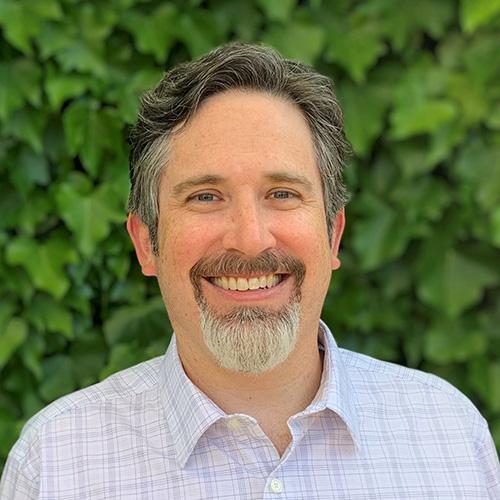
Mateo J. Carrillo
Mateo J. Carrillo is Assistant Professor of Latin American and Caribbean History whose research analyzes the intersections of built and natural environments, rural development, technology, migration, and race in Mexico and the U.S.-Mexico borderlands.
His first book, Paved with Good Intentions: A Technological History of Transnational Mexican Migration (currently in production with the University of North Carolina Press), explores how the expansion of road and water infrastructures after the Mexican Revolution created both the conditions and conduits for mass Mexican migration to the United States.
Carrillo’s current research projects explore the racial, cultural, and hemispheric legacies of the mid-nineteenth-century Californio “bandit” Joaquin Murrieta as well as the California roots of Mexico’s early-twentieth-century petroleum industry.
Education
Ph.D. in History, Stanford University (2019)
M.A. in History, California State University, Fresno (2011)
B.A. in History, Santa Clara University (2002)
Publications
- "The Communal Roots of Mexico’s Maquila Industry: Urbanization, Land, and Inequality in Ciudad Juárez, 1960-2000." Latin American Research Review 60, no. 3 (September 2025): 648-671. [Published Open Access June 2024: [https://doi.org/10.1017/lar.2024.35.]
- “Migrant Flows: Hydraulic Infrastructure, Agricultural Industrialization, and Environmental Change in Western Mexico, 1940-64.” Environmental History 26, no. 2 (April 2021): 231-254.
- “Ejidos, Urbanization, and the Production of Inequality in Formerly Agricultural Lands, Guadalajara, Mexico, 1975-2020.” Land 9, no. 12 (December 2020). [co-author]
- “The Bracero Program, 1942-1964: The Demise of the Mexican Revolution and Birth of the U.S. Immigration Crisis.” CSUF Division of Graduate Studies, 2011.
- “The Geography of Extremism: The Role of Physical Place in the Ideologies of US Hate Groups, Separatist and Survivalist Communities, and Paramilitary Movements.” Historical Perspectives [SCU undergraduate journal of History] 7, no. 2 (February 2002).