Stories
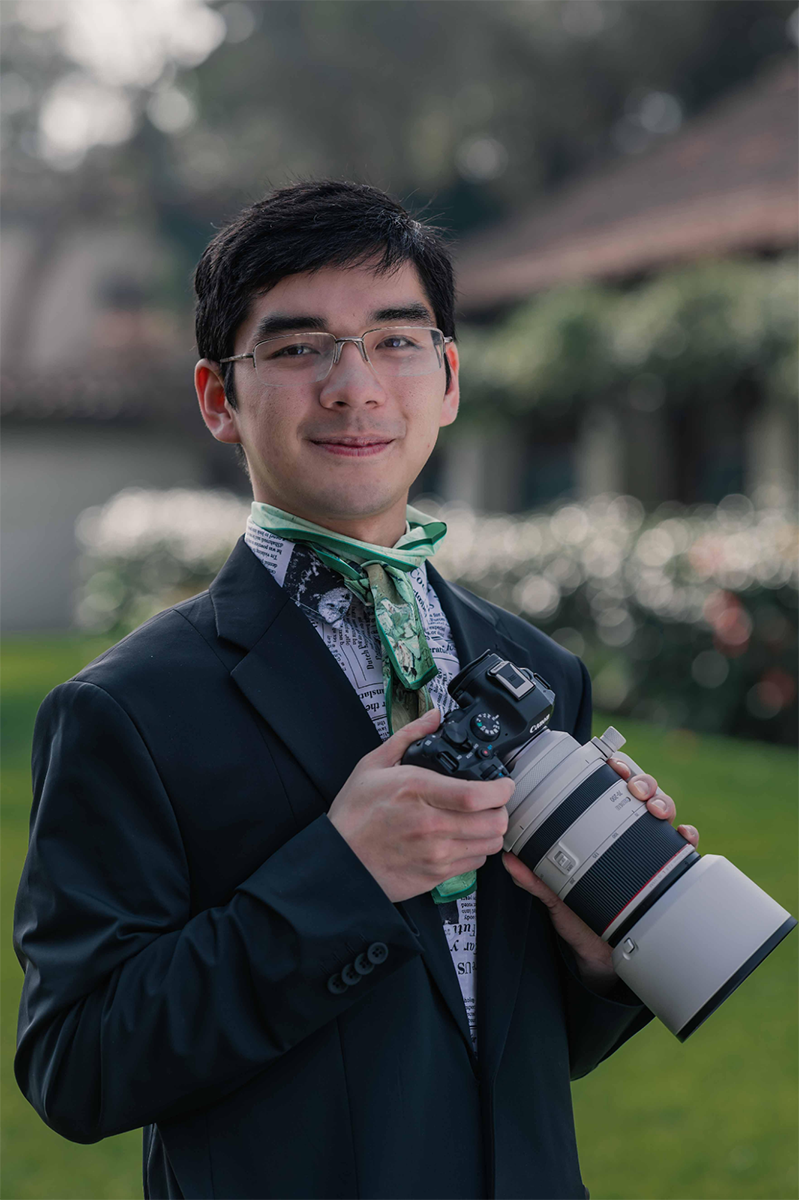
Finding a Home in History
Prof. Estruth sat down recently with Dylan Ryu, class of 2026, to discuss his journey and experiences as a History major.
When did you decide to become a History Major?
In the Winter quarter of my freshman year.
How did you decide to be a History Major?
Because of the faculty and community surrounding our department. I originally came into Santa Clara University as a Math Major, with the intention of adding on a major from the Leavey School of Business. However, after my first quarter at the University, I didn't feel well supported by my current faculty and felt fairly lost in terms of my confidence in finding the right classes to take. It was in my Winter quarter in my first year that I took the first sequence of my Cultures and Ideas I, the history of Slavery and Unfreedom, with Dr. Michael Brillman. I had always enjoyed history in high school, but never thought of majoring in history because I thought what could I do practically with the major. I really enjoyed that class with Dr. Brillman, from the discussion format to the friendly environment he fostered amongst students, and helped by the fact that I always enjoyed writing essays more than taking tests. Dr. Brillman was the first person at this University that I felt supported and seen by a professor. I then soon switched into the History Major and became what some of the students jokingly call "history refugees."
Can you tell us a little bit about your work as a History Ambassador?
As a History Ambassador, I act as a face for the department to help attract interest in the history discipline. This means that I help out with various promotional events like speaking to prospective students, visiting current underclassmen in their classes to answer questions about what it's like being a history major, and organize our annual History Day event. I always enjoy speaking with prospective students as they are in the beginning stages of exploring a more flexible and expansive academic world beyond just high school. In a lot of ways, the ambassadors act as "myth busters," as we share the various ways that taking history courses builds practical skills beyond just memorizing dates and names. Skills like writing and developing ones voice in a world where more and more things are beginning to sound the same because of artificial intelligence, being able to craft and articulate one’s ideas, how to research, and how to critically think about the world around us.
Can you tell us a little bit about your work with the History Club?
As president of the History Club, my goal is to create a fun environment for students, and if I can inject some historicallness that's a bonus. We host events ranging from movie nights, trivia, museum visits and last quarter we even went to the Northern California Renaissance Faire. Through the History Club, we're able to engage students who aren't history students and maybe aren't even humanities students. Where the ambassadors are directed by faculty, the club is pretty much solely run by students. We do have our faculty advisors, Drs. Wigmore and Carrillo, who provide amazing support. But the club is a way for students to really design and organize events catered to our own interests.
Are there other ways to plug into the History Major that you would recommend to fellow students?
I think the biggest boon to taking history here at SCU is that, through our courses, students can complete all but a handful of core requirements. There's also a wide variety of classroom learning formats between our faculty. Some professors prefer more discussion-based courses, some prefer more lecture, some focus on longer essays where others focus on shorter in class writings. If you are someone who is only familiar with history through high school, primarily either AP or IB courses, then in my opinion, you've only been exposed to a sliver of what history could be. For non-majors, you take a couple of courses here and there that fit your interests – whether that be the Histories of Activism, Modern Japan, Soviet Union, the Civil War, Gay and Lesbian history and much more. For those who are majors, take advantage of the wealth of support that our faculty can provide to you.
What are the moments you will look back on most fondly as a History major after you graduate?
In terms of history courses, my favorite memories will come from taking the history seminar 115S with Dr. Andrews. Since our major isn't huge, you get to know your fellow history majors and minors. In that class, I knew everyone fairly well, so we were able to have great discussions that definitely went off into tangents (but I just call that cohort building). Beyond that, I will always remember all the support and guidance I have received from the faculty. From the personal confidence that Dr. Brillman helped me build in his class to the academic and personal growth I have gained from Dr. Andrews. Most parts of SCU want to support students, but in our department, you can really feel that love, care and desire for us to succeed.