March 12 - June 14, 2025
(closed March 17-31, 2025)
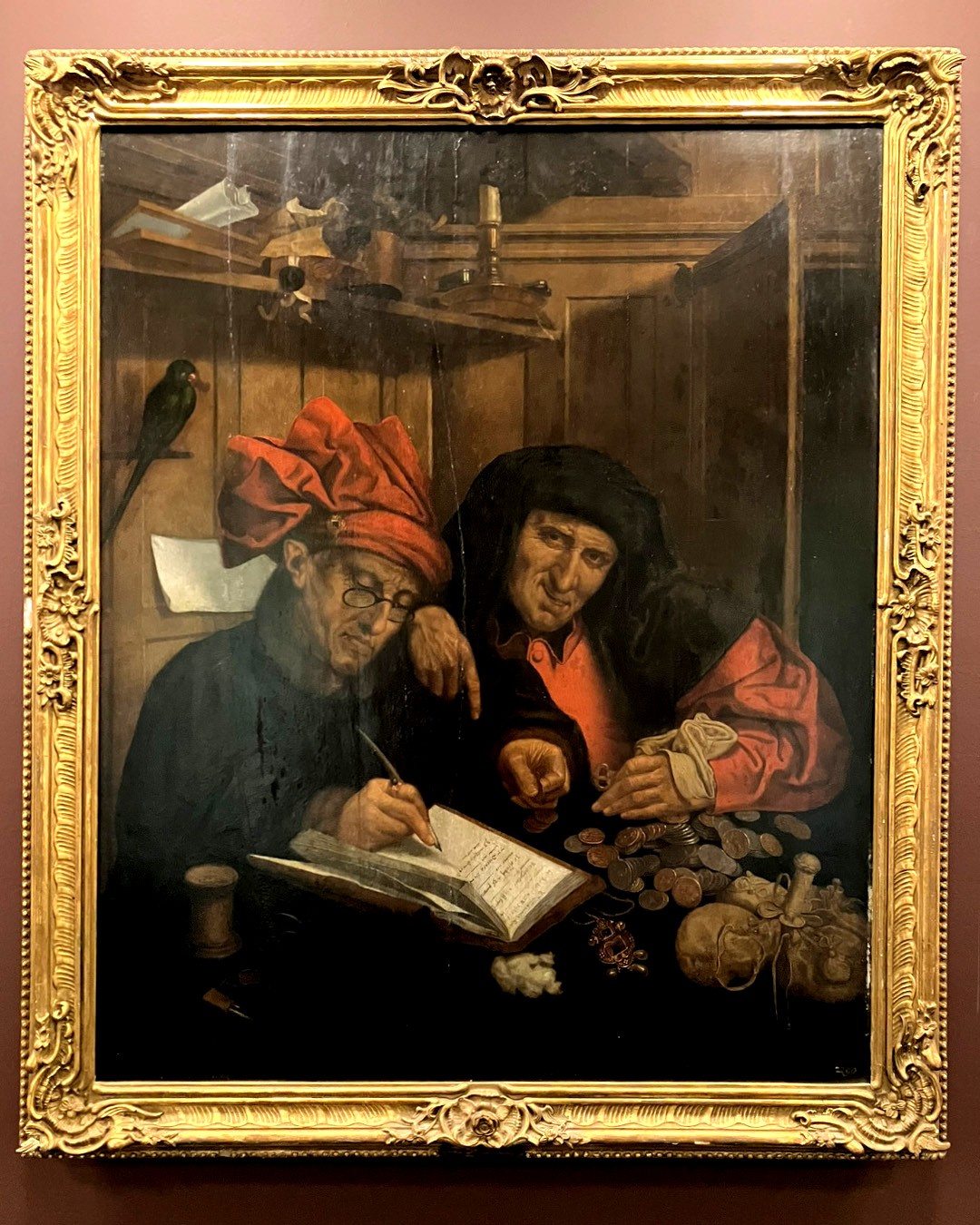
In the 1520s, the Venetian art chronicler Marc’Antonio Michiel toured a private collection in Milan where he paused in admiration before a striking painting of two men engaged in accounting matters. Michiel attributed the painting to “Jan van Eyck, a Flemish painter, from around 1440.” Michiel’s record provides the first account of the pictorial genre that has come to be known as “The Tax Collectors.” The location of the painting Michiel saw and its attribution to one of the great masters of Northern European painting cannot be verified. However, what is certain is that this subject gained remarkable popularity in the early 16th centuries in the Low Countries. Over twenty versions of the Tax Collectors have survived to the present day, including the painting at the heart of this exhibit. The artists who created these variants include Quintin Messys (d. 1533, Antwerp) and Marinus van Reymerswale (d. 1546, Zeeland).
Thanks to the generosity of a private collector in Silicon Valley, Santa Clara University students enrolled in the 2025 Art History Capstone were given the opportunity to research this painting and develop this exhibition. Every aspect of this installation is the result of their collaborative and curatorial efforts. To fully understand the painting, and to better recreate a traditional Renaissance study, they have read widely on a range of topics relating to Northern European visual culture, economics, and collecting practices.
Each student has authored an original essay inspired by the painting which has been published in the accompanying exhibition catalogue.
Faculty-Driven Exhibition Series
The Faculty-Driven Exhibitions series invites SCU faculty from diverse disciplines to use the de Saisset's collection* as a pedagogical tool providing students the opportunity to engage critically with objects and to reimagine their fields of study differently.
*Thanks to the generosity of a private collector in Silicon Valley, students in this class were given the opportunity to research a historic painting not held in the Museum's collection. Visit the de Saisset Museum to see this exhibition and learn more about about this historic painting that has not been on public view for more than 150 years!