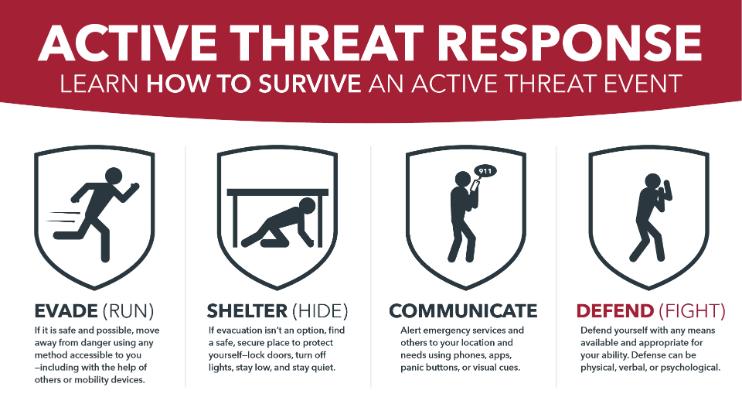
An active threat is any situation that presents an immediate and ongoing danger to the safety of Santa Clara University students, faculty, staff and guests. In addition to individuals using firearms (active shooters), other types of weapons and erratic behavior can create active threat situations. The following information is provided to the University's campus community to assist with individual awareness and preparation.
Before
-
Watch Santa Clara Police Department's Active Threat/Shooter presentation video HERE
-
Identify multiple escape routes from your normal places of work or study.
-
Identify locations in which you can hide if necessary. Look for places with locking doors and window blinds or covers.
-
Understand the plans for individuals with disabilities or other needs.
During
-
EVADE (RUN) If it is safe and possible, move away from danger using any method accessible to you – including with the help of others or mobility devices.
-
SHELTER (HIDE) If evacuation isn’t an option, find a safe, secure place to protect yourself, lock doors, turn off lights, stay low, and stay quiet.
-
COMMUNICATE Alert emergency services and others to your location and needs using phones, apps, panic buttons, or visual cues.
-
DEFEND (FIGHT) Defend yourself with any means available and appropriate for your ability. Defense can be physical, verbal, or psychological.
-
Call or text 911 only when it is safe for you to do so.
After
-
Follow the instructions of law enforcement officers when leaving the area. Keep your hands visible and remain calm.
-
Aid the wounded only if it is safe for you to do so and you are able to help.
-
Understand that affected areas may be a crime scene and access to retrieve personal belongings or to resume normal operations may be severely limited.
-
Seek out professional counseling services if needed. For students, Counseling and Psychological Services (CAPS) offer crisis counseling. For faculty and staff, the employee assistance (EAP) offers similar services.
More Safety Tips:
- Lock and barricade doors
- Seek cover and barricade yourself and others by placing as much material as possible between you and the threat
- Turn off lights and close and blinds or curtains (to make the area appear unoccupied)
- Place cell phones in silent mode (quiet notifications as well)
- Block any view through windows if possible
- Keep occupants calm, quiet, and out of sight (utilize Psychological First Aid if trained)
- Do not approach emergency responders, let them come to you
- Do not sound the fire alarms unless there is a fire. Fire alarms alert people to evacuate a building. Evacuation during an active threat event could place people in harm’s way.
- Raise both your hands over your head when approached or confronted by emergency responders. This is the universal surrender signal. Otherwise, emergency responders may not know the difference between you and the threat.
Additional Resources