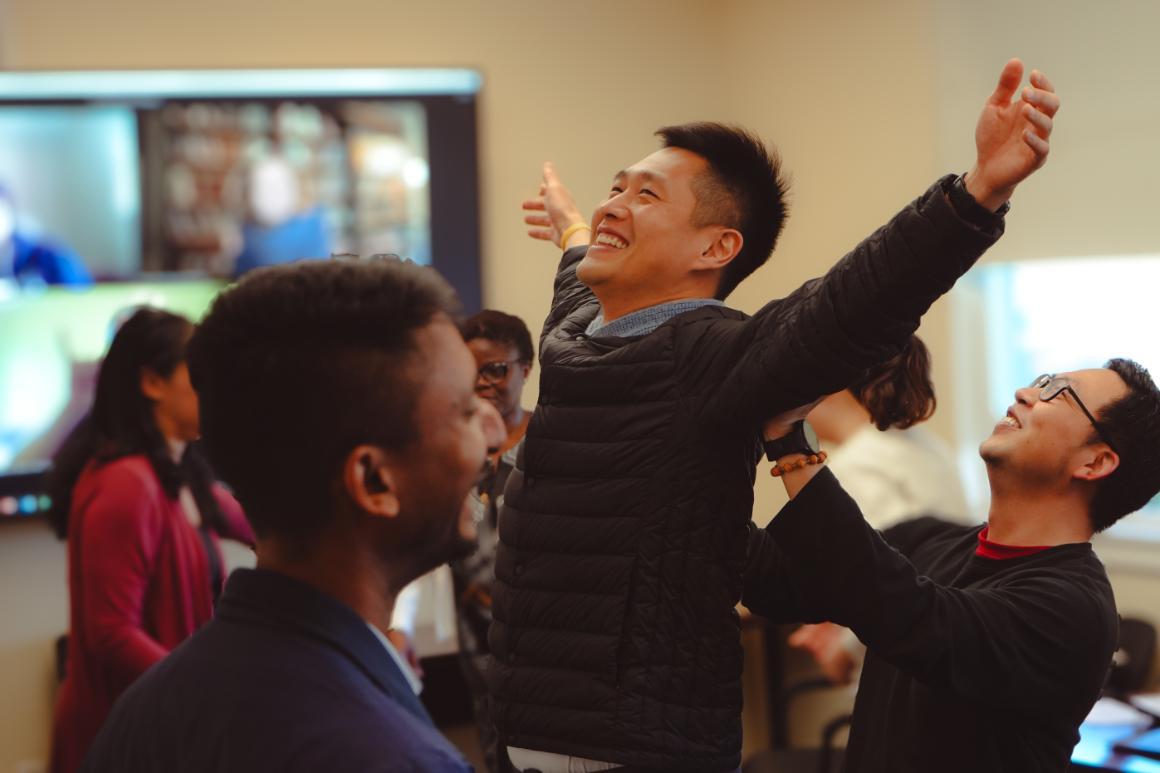
Prepare for a life of faith expressed through Christian service.
People of faith who are called to a ministry of service will thrive in the Jesuit School of Theology's Master of Divinity (M.Div.) program. Whether you are pursuing a lay vocation, religious vocation, or ordination to the priesthood, you will study, learn, and worship alongside a diverse cohort of men and women seeking the Magis, that sense of being called to do more.
Possible Career Paths with a M.Div.
Intro Slide
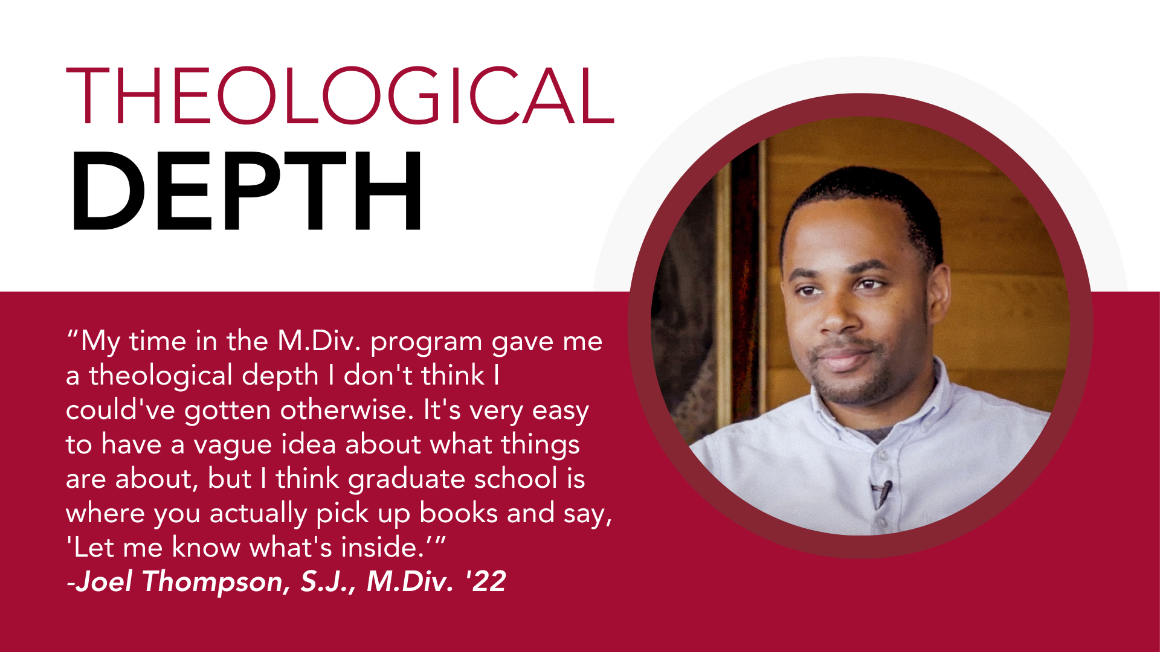
Student testimonial
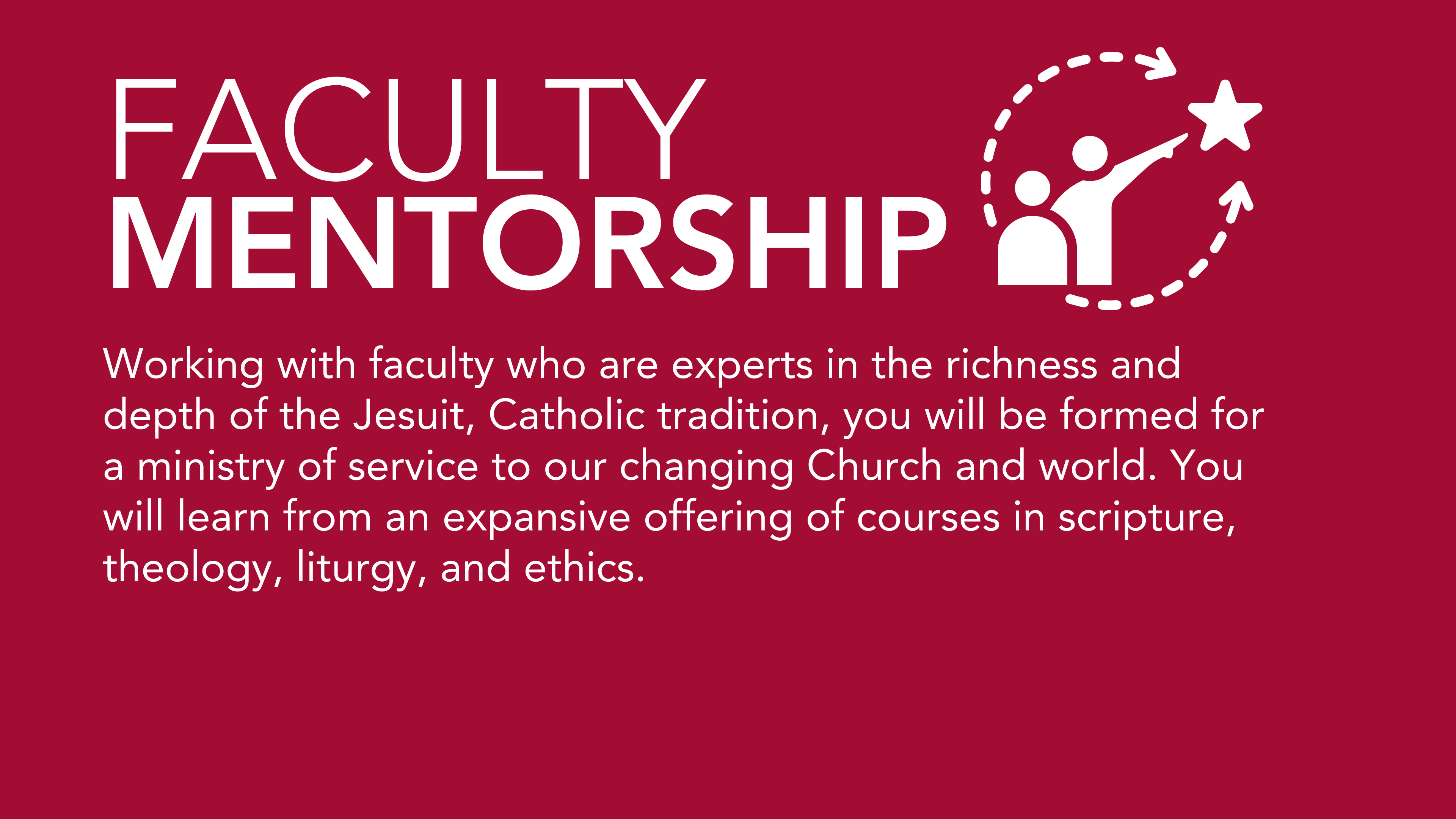
Faculty mentorship
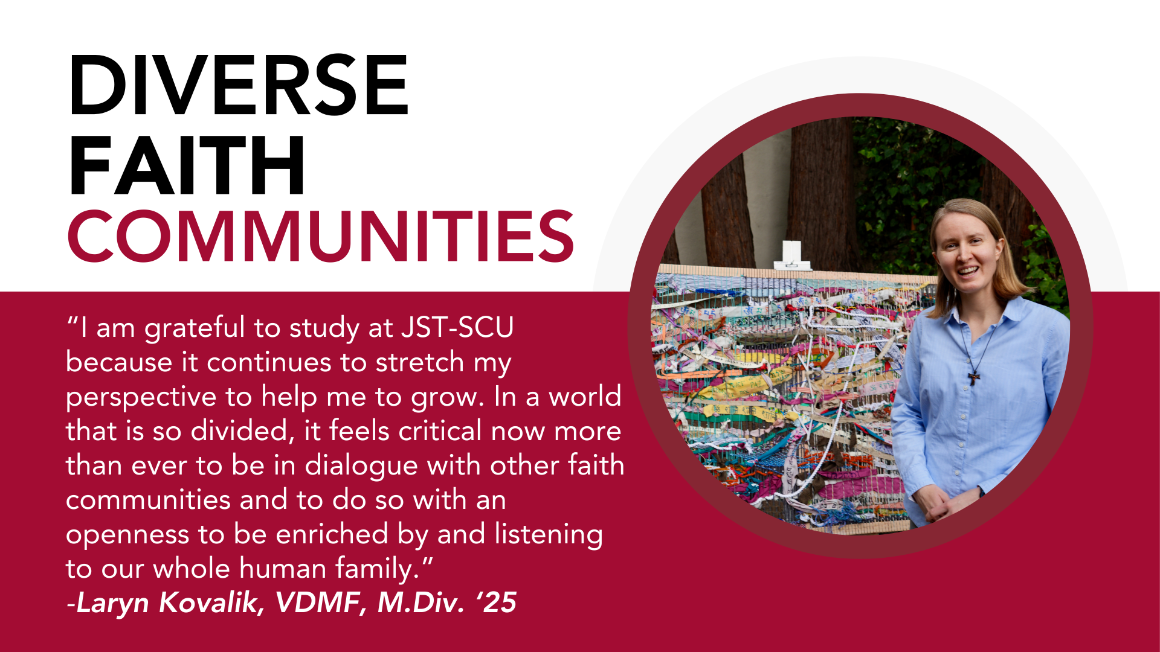
Student testimonial
Theological
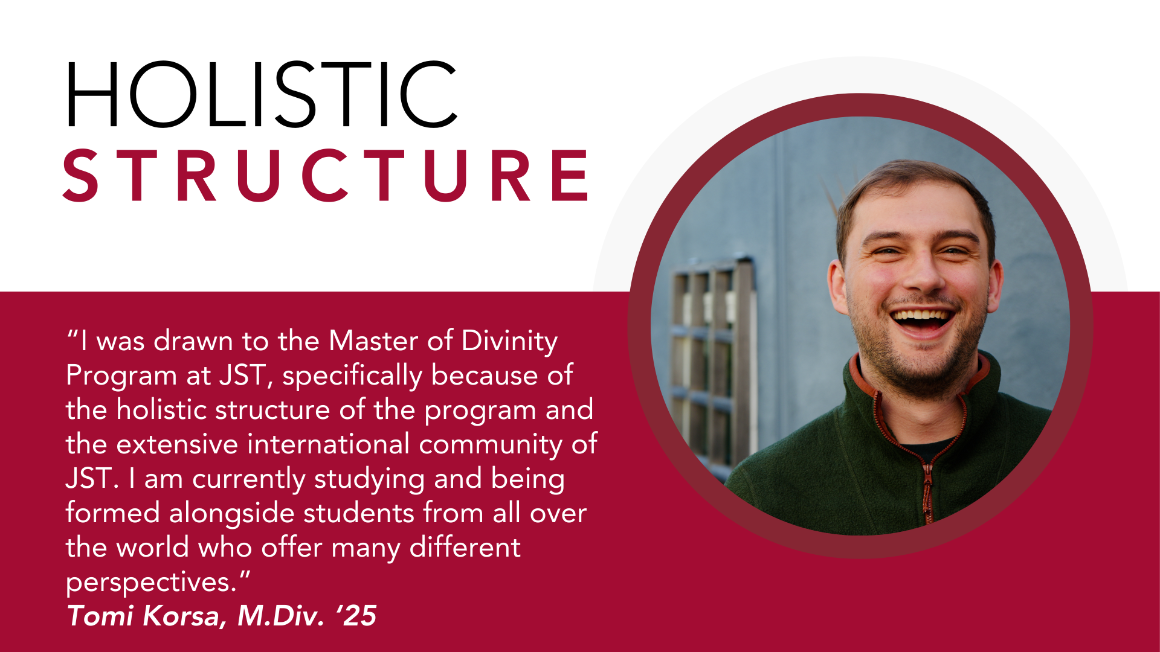
Student testimonial 3
Student testimonial 3
Final slide
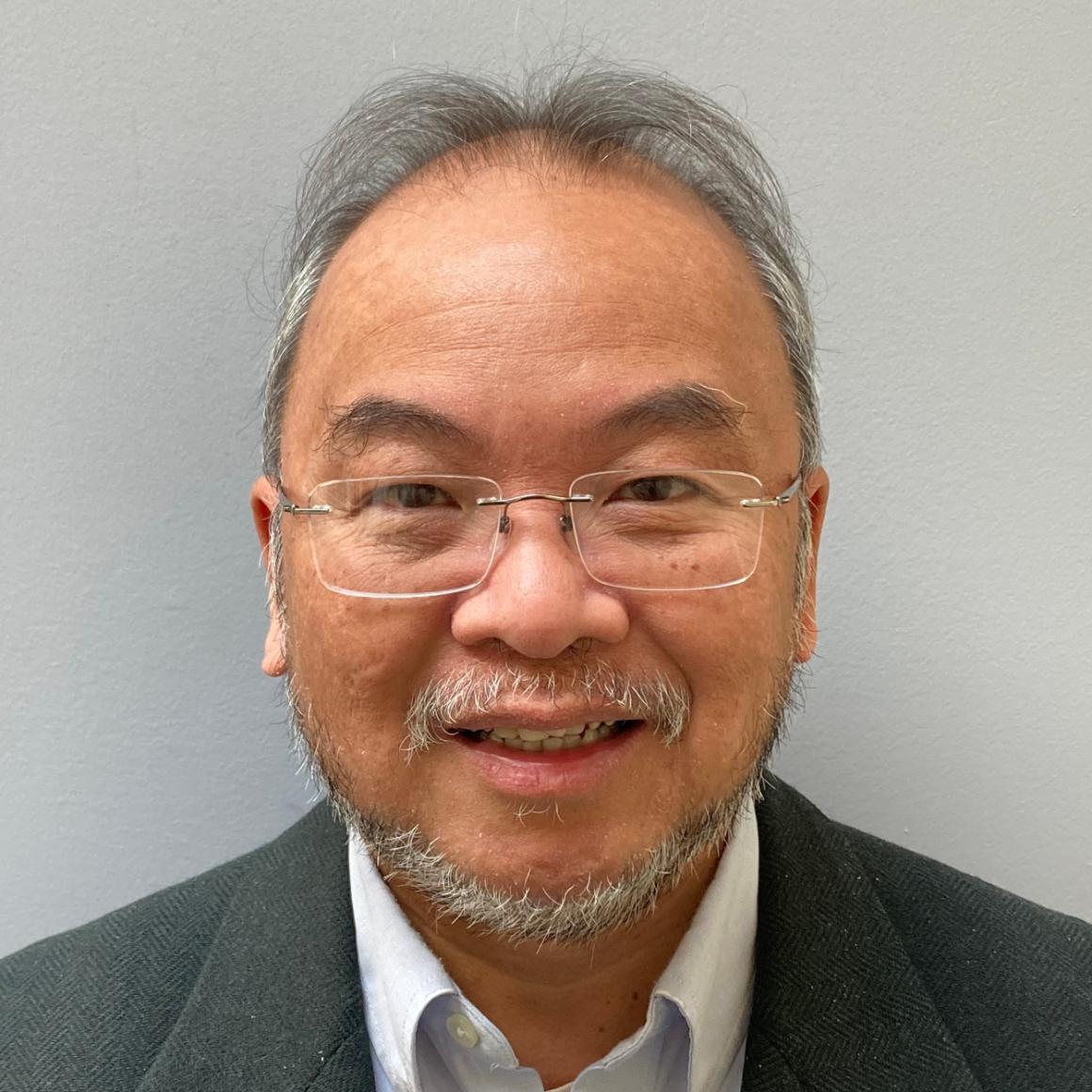
Meet the Director of the M.Div. Program
Associate Professor of Historical and Systematic Theology, Anh Q. Tran, S.J., Ph.D., is the director of the M.Div. program. He teaches core courses in systematic theology and interreligious studies.
Learn MoreStart your application
Our priority application deadlines are February 1 for the fall and September 15 for the spring.
Apply Now
Program structure
A full-time student in the Master of Divinity program may expect to complete the degree in three academic years, but must complete the program within six calendar years from their date of first registration. 9-12 semester units is the normal full-time course load; in addition, up to 3 units may be taken each year during the January intersession. For a more complete explanation of the program requirements, please review the Master of Divinity (M.Div.) program handbook.
Year One (21 credits)
The first year of coursework consists of foundations in Scripture, the history of Christianity, systematic theology, and Christian ethics.
- Bible (6 units)
- Christian Ethics (6 units)
- Systematics (3 units)
- History, Art and Culture (3 units)
- Ministerial Formation (3 units)
Years Two and Three (60 units)
Students will take 48 units in distribution courses, electives, and field education.
- Bible (9 units)
- Systematics (9 units)
- History Art & Culture(6 units)
- Christian Ethics (3 units)
- Spirituality (3 units)
- Field Education (6 units)
- Ministerial Formation (3 units)
- Electives (9 units)
Students will take 12 units in pastoral courses.
- Litury(3 units)
- Preaching (3 units)
- Ministerial Skills (6 units)
- Note: Within the three pastoral course categories above, ordination-seeking students must include courses in Canon Law (3) and Confessional Rites and Practices (1.5), which fall under the “ministerial skills” category, as well as Celebrational Rites and Practices (3), which falls under the “liturgy” category.