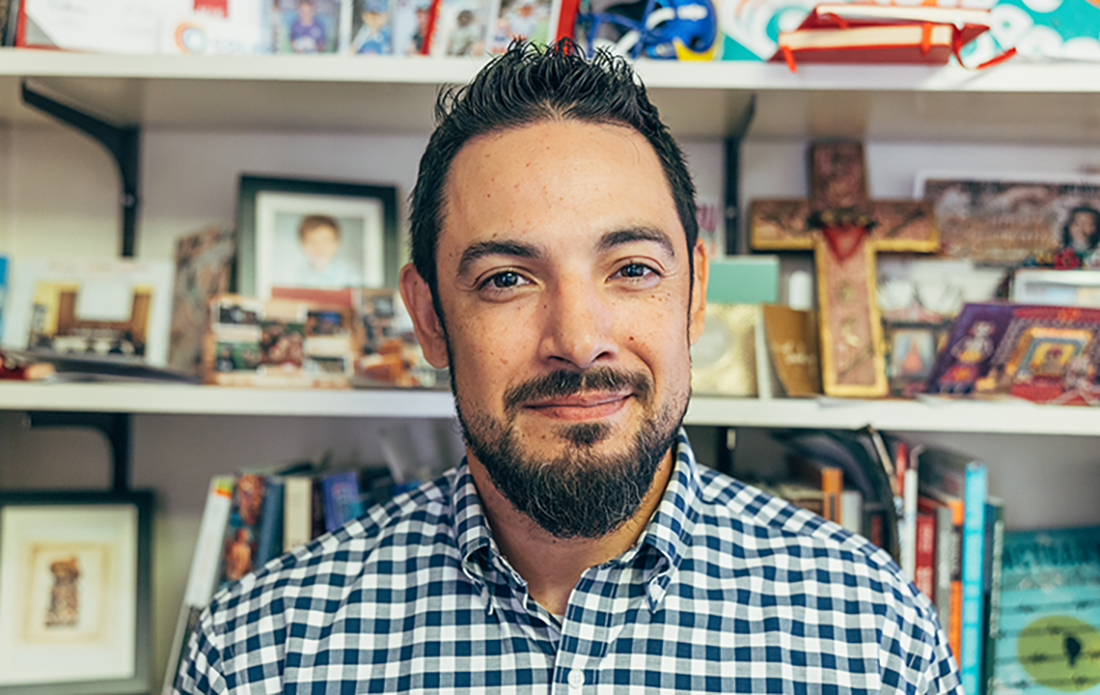
Bryan Neider ’78 walked away from his Silicon Valley career. Santa Clara guided him to what came next.

If given the choice to stay in a lucrative C-suite role at one of Silicon Valley’s most storied companies or dive headfirst into a leadership role at a nonprofit, which would you pick?
For Bryan Neider ’78, the answer was simple. He had spent more than two decades at Electronic Arts—joining pre-IPO and eventually rising to senior vice president, CFO of Worldwide Studios, and COO of global operations, guiding operational efficiency and product quality. After 25 years, he started asking himself: What’s next?
At this point in Neider’s career, he started exploring board member roles at other organizations, including nonprofits such as AbilityPath, a Bay Area organization supporting children and adults with developmental disabilities. Though he had no personal connection to disability, over his 12 years of board service, he came to understand their mission from the inside.
So, in 2016, when the CEO of AbilityPath asked if Neider would consider stepping into her role after she retired, Neider considered the unexpected offer seriously.
“When you have an opportunity to do good and pay it forward,” he says, “sometimes that calling happens to you. I didn’t go looking for it. It happened.”
As he considered the opportunity, he found himself talking to John Denniston ’92 at a Santa Clara University board meeting. Denniston had recently left a partner role at venture capital firm Kleiner Perkins to lead St. Vincent de Paul Catholic Charities, and Neider asked for his advice.
“‘It’ll probably be some of the hardest work you’ve ever done,’” Neider recalls being told. “‘But it’ll be the most rewarding work you’ve ever done. Just do it.’”
Rooted to rise
That instinct to choose the harder and more meaningful path didn’t come out of nowhere. A Bay Area native, Neider first encountered Santa Clara University as a teen, when, on a casual drive, his father pointed out NFL quarterback Dan Pastorini ’71 training on his alma mater’s practice field off El Camino Real.
His father, who had studied at Stanford and knew the Jesuit tradition, declared it “an extraordinary school.” When Neider graduated early from high school, his father’s praise stuck with him, and Santa Clara was the only place he applied.
What he found there reshaped him.
He switched from accounting to history, agreeing with the Jesuit philosophy that a holistic humanistic education built on curiosity, ethics, and critical inquiry would be more valuable to him in the long run than a narrower professional track, which he figured he’d pursue at the graduate level.
Neider still remembers the three religion courses he took, taught by Ted Mackin, S.J.— classes he describes as unlike anything he’d encountered: probing, demanding, alive. The midnight Masses he attended were as Socratic as they were sacred.
“I felt the balance of Santa Clara’s intellectual curiosity, openness, and values-based education just really resonated with me,” he shares. “It’s had a profound effect on my life.”
Those habits of mind followed him into his career.
Across 26 years in finance, operations, and development at EA, Neider’s management philosophy ended up distinctly Jesuit: adapt to the environment rather than bending it to your whim; recognize that the people who work for you often know more than you do; lead like a coach.
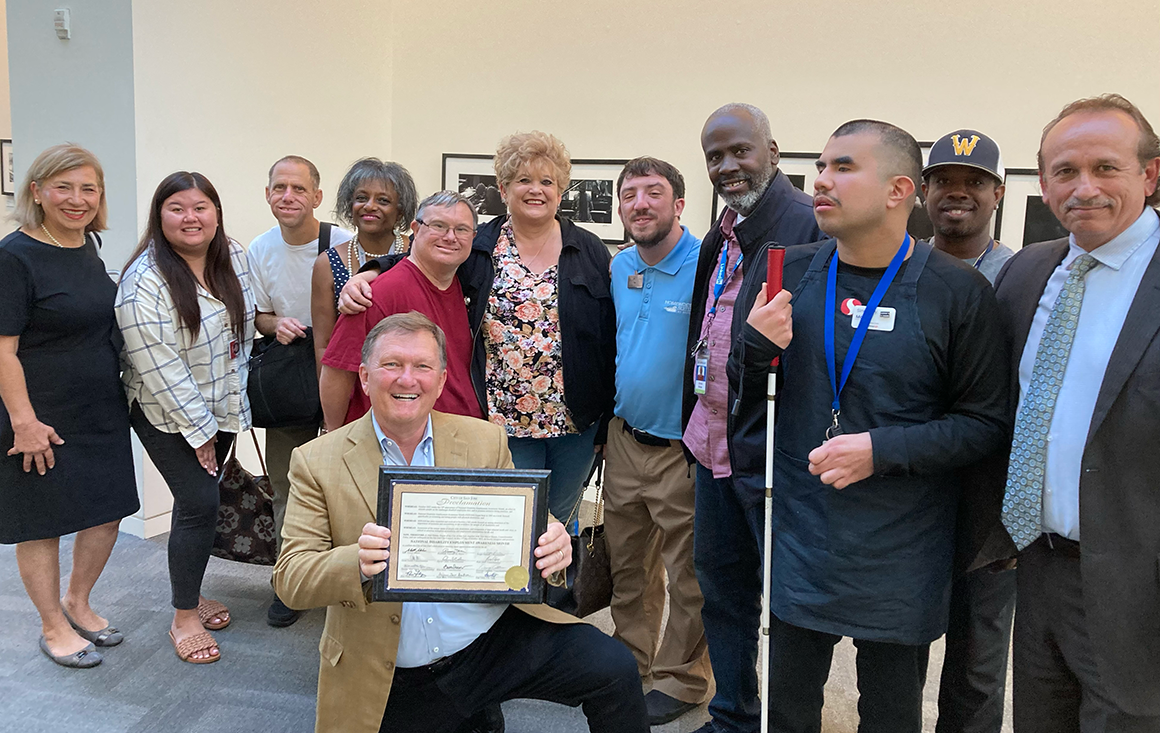
AbilityPath recently received a commendation from the city of San Jose.
Progress needs humility
Now 10 years into his tenure as CEO at AbilityPath, Neider still talks about the organization with the same enthusiasm as someone in their first year.
The nonprofit, which turned 106 this June, serves approximately 1,500 children and adults with developmental disabilities each week. Its 300-person team runs inclusive preschools, children’s therapy programs, adult and family support programs, cooperative living homes, and a summer camp in the Cupertino Hills. The summer camp notably brings counselors from 11 countries to serve some 800 campers, and is one of the only overnight camps of its kind remaining in Northern California.
This work, he says, has been a continuous lesson in humility.
“The human condition, no matter what form we are in, is universal,” he says. “Meeting people where they are, without judgment—that’s probably been one of the best lessons I’ve ever learned.”
AbilityPath is still growing. The organization recently opened an art studio in Palo Alto that gives nonverbal individuals a means of self-expression, and they’re launching an inclusive preschool in early August that embeds therapists and early interventionists directly into a traditional classroom.
Another development he’s excited about is a new AI platform that has given their therapists more than 20 percent more time with patients by unburdening them from administrative paperwork.
“It is always about being person-centered,” Neider says. “How is this tool going to help us serve others better?”

Neider dressed up as painter Bob Ross during a fundraiser for AbilityPath’s new Creative Arts Program. Photo by Cage and Aquarium.
Neider has never stopped thanking Santa Clara for its impact on his life, and has made it a personal point to give back and help others at the University find their callings to service. Since his graduation, he’s served as president of the Alumni Association and then on the Board of Regents, and helped seed what became the Ciocca Center for Innovation and Entrepreneurship.
He and his wife have also maintained a scholarship fund for more than 15 years, awarded annually to graduating seniors entering service work with organizations like AmeriCorps or the Jesuit Volunteer Corps.
“Every time I hear what those students are doing, it just makes me proud to be part of Santa Clara.”

Ciocca Center is a resource hub and academic development program that promotes and encourages the Entrepreneurial Mindset across campus through academics, competitions, and on-campus programs and events.