Breaking News
Latest research: Food Systems and the Global Climate Negotiations
Article analyzes the prospects for a sustainable food system after the 2025 COP global climate conference
Christopher Bacon and Stephen R. Gliessman published an editorial in Agroecology and Sustainable Food Systems that assessed the food system outcomes of the largest global climate conference in 2025. In their assessment of the COP 30 climate negotiations, they analyzed "backsliding and bright spots" of this critical implementation summit with a focus on possibilities for food system transformation. The authors found that the final COP 30 agreement involved backsliding by omitting any mention of industrial agriculture’s fossil fuel dependence, commodity-driven deforestation, and the food system's contribution to a third of global climate emissions.
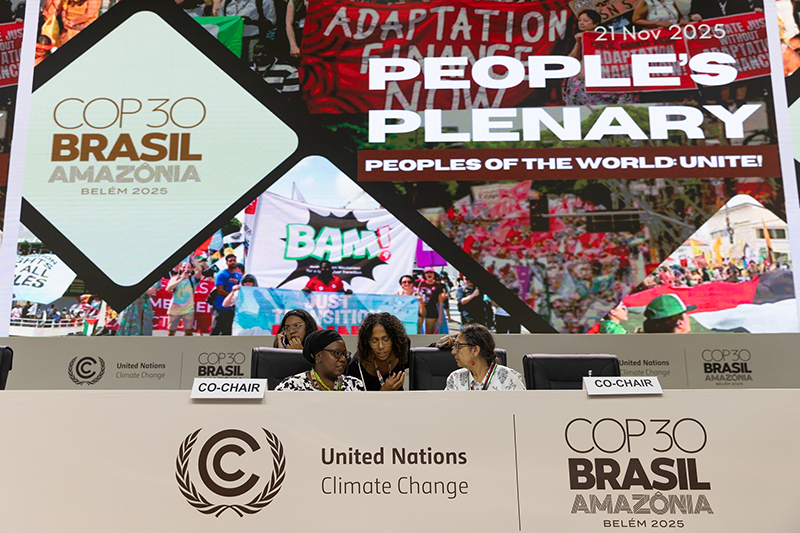
However, they also highlight seeds of possibility in several side agreements and the power of a robust resistance. These seeds of change included: (1) Faith-based collaboration, as more than 60 faith-based institutions announced their divestment from fossil fuels. (2) The Belém Declaration as leaders from 43 countries pledged to foreground social justice, hunger, and poverty alleviation in climate action, and (3) The estimated 70,000 people who participated in a climate justice march and the People’s Summit, which paralleled the official conference and put forth an alternative agenda that recognizes the human right to food and leverages agroecology to guide grassroots and governmental cooperation to accelerate transitions towards sustainable food systems and more peaceful relations.
Members of civil society during the People’s Plenary during the 2025 COP 30 Climate Negotiations (Photo: UN Climate Change - Kiara Worth)