Breaking News
Water Justice in California’s Central Valley and Nicaragua
Progress on Research and Advocacy for Clean Water in California’s Central and Salinas Valleys, and an Application with Climate Forecasts for Farmers in Nicaragua
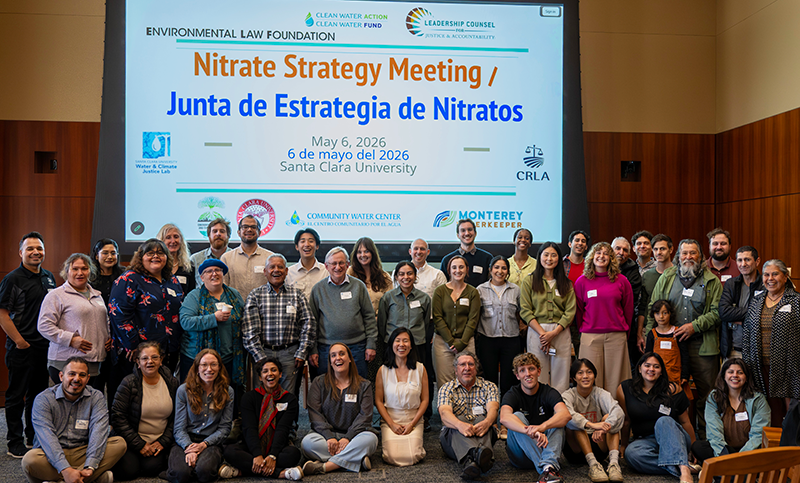
Many communities in California’s Central Valley have long faced contamination of the shallow groundwater that supplies their wells with nitrates and other agricultural chemicals. Yet, California does not have statewide enforceable limits on nitrate discharges (or other contaminants). In addition, existing monitoring is insufficient in many places to determine where and when drinking water is safe or whether contamination levels are improving or worsening over time. As a result, rural and historically marginalized communities have lived with nitrate and other agricultural contaminants in their drinking water for decades. Iris Stewart-Frey and SCU’s Water and Climate Justice Lab is part of a coalition that includes the Community Water Center, the California Rural Legal Assistance Inc., Natural Resources Defense Council, the Environmental Law Foundation, and others, to limit nitrogen discharges on farmlands by engaging in state regulatory processes such as CV-SALTS, the State waterboards expert panel, Ag 4.0 and the Dairy Order.
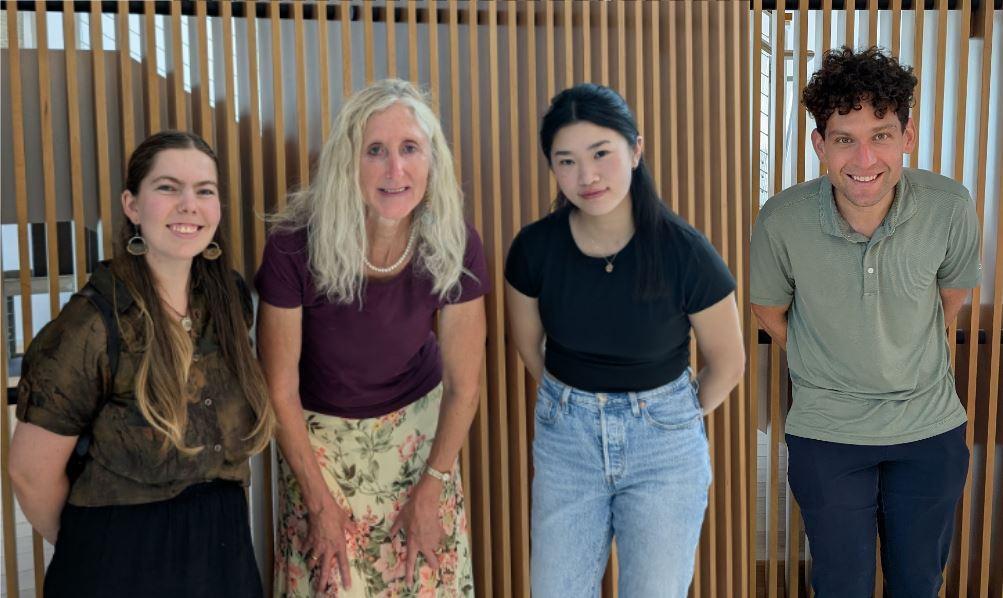
Lilah Foster, Iris Stewart-Frey, Samantha Lei, and John Dialesandro
Stewart-Frey addresses these issues in a recent article, co-authored with John Dialesandro (SCU Environmental Studies & Sciences) and students Samantha Lei and Lilah Foster, which continues the research team’s long-term work on nitrate contamination in drinking water wells. The article evaluates California’s stakeholder process, known as CV-SALTS, which might serve as a model for controlling nitrate contamination elsewhere. Using Groundwater Ambient Monitoring and Assessment Program data from 2000–2023, the authors explore multiple factors that contribute to nitrate contamination and how the CV-SALTS process has addressed them. The findings suggest that while uncertainties remain about where nitrate is above safe levels, this contamination has mainly burdened environmental justice communities. In addition, severe drought conditions and the proximity of Confined Animal Feeding Operations (CAFOs) significantly elevated nitrate concentrations, but have not been monitored or considered sufficiently in the CV-SALTS process. The article develops a new data sufficiency metric to support stakeholder processes in prioritizing areas for monitoring and risk reduction, and offers policy recommendations that could be applied in California and other regions.
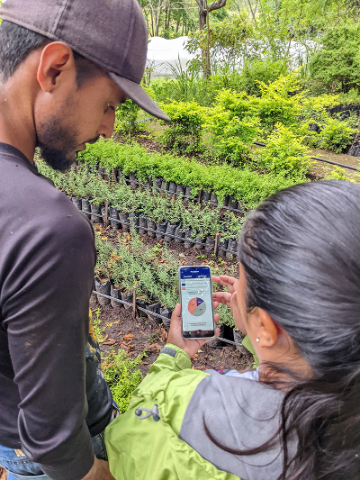
Coping with climate change also requires new forecasting tools for farmers. In another long-term project, Iris Stewart-Frey and collaborators responded to the disproportionate impacts of climate extremes on smallholder farmers by developing frugal innovation tools and strategies to support climate resilience and agricultural decision-making through community-academic partnerships. One outcome from this work is thee NicaAgua mobile app, which integrates real-time weather data, forecasts, and climate trends, with user-friendly visuals and interpretive guidance. This study highlights a frugal, community-driven approach to localizing global climate science for vulnerable farming communities. It proposes effective strategies for designing equitable, accessible digital tools to support climate adaptation, offers lessons on fostering transboundary academic-community collaboration, and contributes to building smallholder farmers’ capacity to manage climate risks in Central America.
Stewart -Frey, Qiuwen Li (Art and Art History) with Ed Maurer and Allan Baez Morales (CESE/FIH), community partner Raul Diaz, and students Bri Guingona ’25 (Environmental Studies) and Arturo Torres Torres Landa ’26 (Computer Science) published a new paper on ‘Challenges and opportunities in building community-driven adaptive capacity under climate change for smallholder farmers in the Global South’ in the Int. J. of Climate Change Strategies and Mmt.