Stories
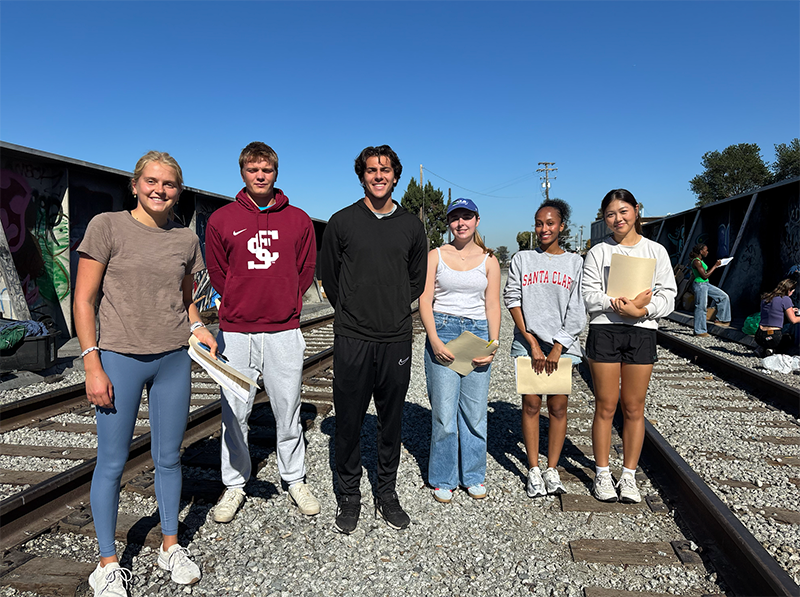
Jesuit Values in Action: The Unhoused Initiative and Public Health Students Partner for Change
SCU public health students partnered with the Unhoused Initiative to document the health effects of displacement, blending research, advocacy, and Jesuit values.
By Maggie Junkins ’26
As homelessness in the South Bay continues to grow into one of the region’s most urgent public health crises, students in Santa Clara University’s Department of Public Health are stepping up to make a difference. Through a collaboration with SCU’s Unhoused Initiative and its newly launched Unhoused Advocacy Legal Clinic, students are using their research skills to document the health impacts of displacement and, in the process, learning what it means to live out SCU’s Jesuit mission of serving humanity through education and action.
Led by Associate Professor Sonja Mackenzie, the senior Public Health Capstone course has partnered closely with Unhoused Initiative staff, including Program Director Marlene Bennett and the clinic’s new Legal Director Brie Mendoza. Together, they are supporting people experiencing homelessness who have lost shelter, property, and personal belongings during recent displacement events across the South Bay.
“Students learn more by doing,” says Professor Mackenzie. “When they are in the community, engaging with real people, learning is elevated. This capstone is an integrated experience where students can bring the tools, methods, and theories they have learned as young public health professionals to address a current issue, in a real-world setting, that is unfolding in our own community.”
Through “wellness audits,” students are conducting surveys to assess the impact displacement has on health and wellbeing. Their questions explore the effects of displacement on physical and mental health and assess access to medical care, clean water, shade, and community connections. The project builds on qualitative interviews conducted by last spring’s capstone class, creating a multi-quarter, mixed-methods research effort.
Tristia Bauman, directing attorney at the Law Foundation of Silicon Valley and community collaborator on the project, recently let students know that a local policymaker has requested their final report of survey findings. Even after the class is over, student work will continue to affect local policy change. As Bauman notes, “Policy making affecting unhoused people is often done without their input, leading to unintended harm to their health and safety. These surveys measure impact on wellbeing, and provide key data for lawmakers to make smart policy choices.” She went on to say, “This work is possible because Santa Clara University students took on the responsibility of connecting directly with unhoused people about the impacts of encampment sweeps. In doing so, they gained data to improve policy making, and also built community connections with our most vulnerable neighbors.”
“The Unhoused Initiative provides a necessary institutional presence to make this kind of community-based research possible,” Professor Mackenzie explains. “Our students are developing a deeper understanding of what it means to support the dignity, health, and humanity of others.”
For Unhoused Initiative Program Director Marlene Bennett, the partnership exemplifies the University’s Jesuit commitment to engaged scholarship and service to others. “We do our best to find ways for the University to use its resources to be actively and intentionally engaged in responding to homelessness in Santa Clara County,” she says. “It’s encouraging to see students and faculty so motivated to uplift the dignity of those who are unhoused.”
Through this partnership, public health students are not only gathering critical data to support advocacy efforts, they are also helping the Legal Clinic document property loss claims for individuals affected by displacement. It’s a hands-on experience that combines education, empathy, and action.
For student Angelee Caballero ’25, the experience has been eye-opening. “In public health, it’s easy to identify a health disparity, gather data, and write about it abstractly,” she reflects. “But when you conduct outreach and community-based research, you see the realities that statistics can’t capture. You witness how displacement affects physical and mental health directly. The testimonies we gathered reflect how systemic neglect and displacement take a toll not only on health but also on dignity. At the same time,” she continues, “I also saw incredible strengths in these communities: people looked out for one another, shared resources, and laughed together. Many were eager to tell their stories because few people ever take the time to truly listen. That reinforced why this project matters; it bridges the gap between data and humanity.”
“As an educator, it’s incredibly moving to see how transformed students become through this work,” Professor Mackenzie says. “This experience will stay with them for the rest of their lives. It’s putting theory into practice—and that's what Jesuit education is all about.”
Students from Professor Mackenzie’s capstone course will present their findings at the Works in Progress session on Dec. 2.
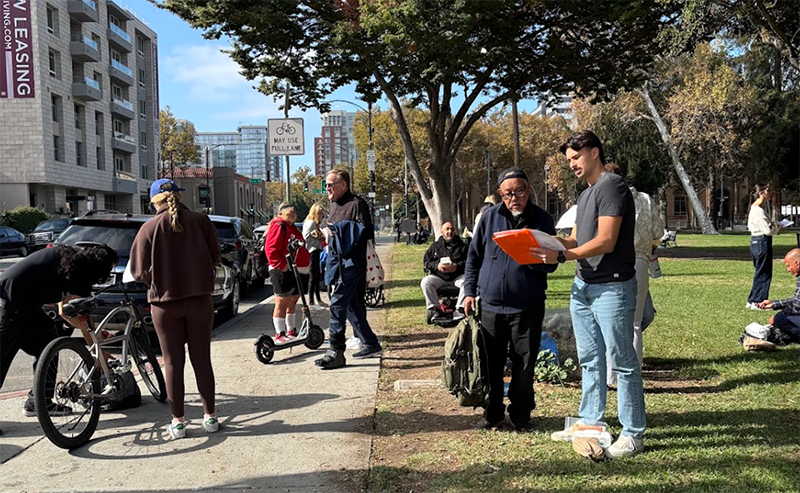
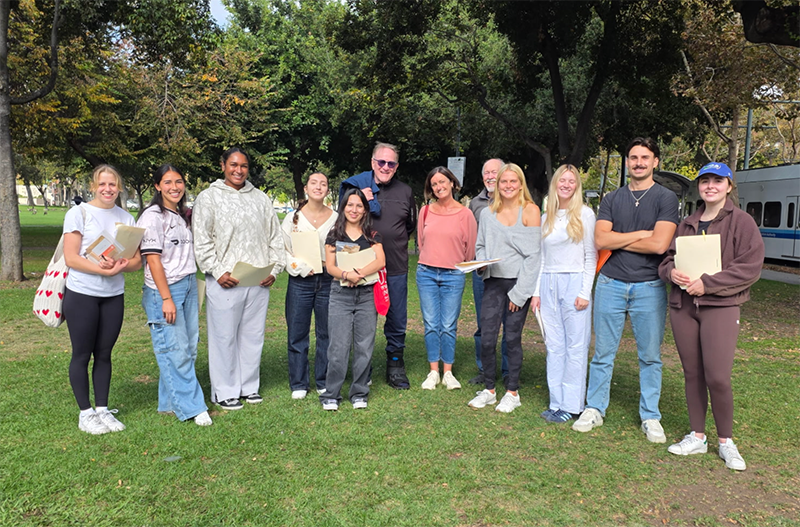 PHSC 190 Senior Capstone students during Wellness survey data collection at St James Park, with community collaborator Todd Langton of Agape Silicon Valley, Unhoused Initiative faculty member Philip Riley and Professor Mackenzie.