
Key Takeaways
- An MBA is a graduate business degree that prepares people for leadership and organisational decision-making.
- MBA duration depends on the program format, with full-time, part-time, online, executive, and accelerated options each following different timelines and pacing models.
- The right MBA type for you depends on how much time you can commit at once and how the program structure fits alongside your career and responsibilities.
Choosing a program of study isn't only about interest or credentials. It's a decision about whether the years required feel justified by what that field can offer in return.
In 2025, business administration continued to rank among the most in-demand areas of study. At the graduate level, the MBA stands out because it signals a deliberate investment of time into leadership, strategy, and career mobility, often alongside full-time work and personal responsibilities.
Before committing, most prospective students want a clear sense of what they're signing up for, which naturally leads to the questions "How long does it take to get an MBA?" and "Does the time required align with the value they expect to gain from it?"
What is an MBA?
An MBA, or Master of Business Administration, is a graduate degree that prepares people to take on leadership and decision-making roles in business. Instead of focusing on one narrow subject, it covers how organisations work as a whole. Students learn, among many other things, how money flows through a company, how products are marketed and priced, how operations are managed, and how leaders set direction and make decisions.
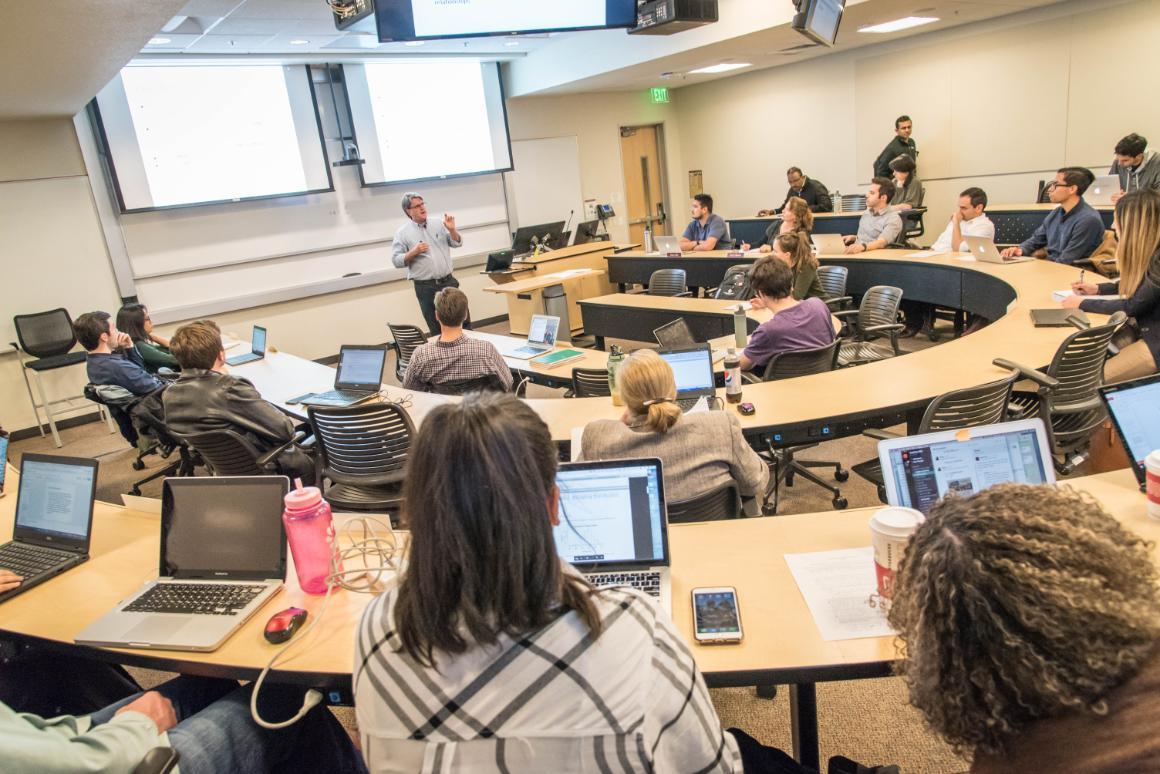
This way of thinking is reflected in how MBA alumni describe their experience. Sonya Duffin, Product Marketing Manager and Leavey School of Business alumna, explains:
An MBA is structured to develop exactly this kind of thinking. It trains professionals to step back from individual tasks, recognise broader patterns, and refine how they approach leadership as business conditions, markets, and expectations change.
MBA Duration by Program Type
MBA programs can be structured in different ways, and the time it takes to complete one depends largely on the format you choose. Program design and scheduling flexibility all influence how long students stay enrolled.
Full-time MBA
A full-time MBA is designed for students who can dedicate most of their time to their studies. Programs typically take one to two years to complete, depending on how the curriculum is structured. Classes are scheduled during the academic year and follow a set calendar based on semesters or quarters, much like an undergraduate program.
Some full-time MBAs include required summer coursework, while others use the summer as a break or as time for internships, consulting projects, or practical experience. This means students may be enrolled year-round or have a short pause between academic years.
Part-time MBA

A part-time MBA allows professionals to pursue graduate business education without stepping away from their careers. Coursework is spread across evenings or weekends, and that is why these programs often take longer than full-time MBAs. Many part-time programs are completed in around two years, though the exact pace depends on how many courses a student takes each term.
At the Leavey School of Business, the Evening MBA is structured as a two-year program that includes summer coursework. This design keeps the overall time to completion comparable to full-time MBAs at schools such as Stanford GSB and Berkeley Haas, even though students remain employed throughout the program.
Instead of enforcing a rigid timeline, part-time programs prioritize flexibility within a clear structure. Students can adjust their course load, combine on-campus classes with selected online electives, and receive individual support from academic and student success teams. This approach allows students to balance professional, personal, and academic responsibilities while continuing to make steady progress toward graduation.
Online MBA
Online MBA programs differ widely in how they are structured. Some follow a cohort model, where students progress together on a defined schedule, while others allow more independent pacing. This flexibility can influence how long the program takes, though most online MBAs are designed to be completed in about two years, even when students follow different study patterns.
At the Leavey School of Business, the Online MBA uses a cohort-based structure while offering added flexibility through four start dates each year: fall, winter, spring, and summer. Courses are organised by quarter, but the online format reduces scheduling conflicts that can occur in on-campus programs. This can make it easier for some students to take on a heavier course load if their circumstances allow. While the program is presented as a two-year experience, the structure gives students greater control over how they manage their time within that framework.
Executive MBA (EMBA)
An executive MBA is intended for professionals who already hold senior or leadership positions and want to deepen their strategic and managerial expertise. Most EMBA programs take around 18 months to complete. While the overall timeline is shorter than many part-time MBAs, the pace is more concentrated, reflecting the experience level of the participants.

The schedule is typically set in advance and follows a predictable rhythm, often combining in-person sessions with online coursework. This structure allows participants to plan ahead and manage study alongside demanding professional commitments.
At the Leavey School of Business, the Executive MBA follows this hybrid approach, pairing limited on-campus sessions with online learning. The program is structured to fit the realities of executive-level work, offering a defined timeline without treating the degree as an accelerated version of a full-time MBA.
Accelerated MBA programs
Accelerated MBA programs differ by design, with their structure centred on completing the degree in the shortest possible time. These programs often take 12 to 16 months, compared to the traditional two-year timeline. The shorter duration comes from continuous study across the year, heavier course loads per term, and fewer breaks, with less room for electives or pacing adjustments.
Accelerated formats suit students who want to complete their degree quickly, but they require sustained focus and a significant time commitment over a shorter period.
Factors That Affect How Long an MBA Takes
MBA timelines vary across program formats as well as within individual programs. While each MBA type follows a general structure, the actual time it takes to complete the degree is influenced by the following factors.
Course load per term

The number of courses a student takes each term plays a major role in determining how long an MBA takes to complete. Students who take more courses at once can move through the program faster, while those who reduce their course load may extend their timeline. This choice is often determined by work intensity or personal availability, especially in part-time and online programs where pacing is more flexible.
Program structure and academic calendar
MBA programs are organised around different academic calendars, which influence how quickly students can accumulate credits. Some programs use semesters, others follow a quarter system, and summer enrollment is not always required. Programs that operate continuously throughout the year allow steady progress, while those with longer academic breaks may spread coursework over a longer period, even when the total credit requirement is the same.
Transfer credits or waivers
In certain cases, students may be eligible to waive specific courses or transfer prior graduate-level credits. When approved, this reduces the number of courses a student needs to complete, which can shorten the overall timeline. Eligibility rules differ by institution, and decisions are usually based on formal review rather than automatic approval.
Accelerated or dual-degree options
Some MBA options are structured to reduce the total time spent earning multiple degrees. At the Leavey School of Business, dual-degree programs such as the combined MS in Sports Business and MBA allow students to share coursework between degrees, which lowers the total number of courses required.
The JD/MBA follows a different path. Students complete law coursework in their first year before adding MBA classes later on. Because this structure is closely tied to the law program, students typically enter the JD/MBA from Santa Clara University's first-year law cohort rather than applying from outside the university.
Personal scheduling constraints
Individual circumstances also influence how quickly a student can move through an MBA program. Work demands, family obligations, and unexpected life changes can all affect pacing. Many programs recognise this reality by offering flexible scheduling options and individual academic support, allowing students to adjust their progress while continuing toward completion.
How to Choose the Right MBA Timeline for You
Choosing the right MBA timeline for yourself starts with an honest assessment of how much time you can realistically commit each term. Coursework and group projects require more time than many students expect, especially alongside a full-time job. A timeline that looks manageable on paper needs to fit your weekly and seasonal workload in practice, not just during quieter periods.

Next, consider how an MBA would fit into your life outside of work. Family responsibilities, travel, and other personal commitments can affect how consistently you can stay engaged with the program. If your schedule changes often, a timeline with built-in flexibility may be easier to manage than one that moves very quickly.
Your current career stage also matters. If you are early in your career and focused on moving into a new role, finishing sooner may feel important. If you already have professional experience and are studying while working, a longer timeline can give you more space to apply what you learn on the job and reflect on how it fits your goals.
It is also worth thinking about what you want to get out of the MBA beyond the degree itself. Many students value the chance to build relationships with classmates, faculty, and guest speakers. Those connections often develop over time through repeated interaction, which can be harder to do in a highly compressed program.
The right MBA timeline is one you can maintain without burning out or falling behind. A pace that fits your real life makes it easier to stay engaged and get lasting value from the experience.
Conclusion
An MBA carries value in its own right. The skills and credibility it offers tend to hold up over time, regardless of industry or role. What varies is not the value of the degree itself, but whether a particular moment in your life is the right time to pursue it and how much you can realistically commit alongside work and personal responsibilities.
That's why different MBA formats exist, each designed to fit different schedules and career stages. Evening, executive, online, and accelerated options exist because careers and lives look different at different stages. These formats allow the MBA to adapt to your circumstances rather than forcing you into a single path, making the degree more accessible when timing or availability is a concern.
Those weighing how to pursue an MBA in a way that fits both short-term constraints and long-term goals should explore the programs offered by the Leavey School of Business, as one of the top MBA colleges. The programs offered provide different schedules and learning approaches to help support all students, including working professionals, through completion and beyond.
Frequently Asked Questions
Can I pause or take a break during an MBA program and resume later?
In many cases, yes, though this typically requires formal approval and depends on program policies. Schools usually approach this with a focus on student well-being and academic progress rather than open-ended flexibility.
Does MBA duration differ by country or education system?
Yes, MBA duration can vary by region and education system. Some countries emphasise shorter, more intensive programs, while others offer longer formats that include internships, electives, or flexible pacing options.
Discover Your Next Step
This will only take a moment.